

Key Takeaways
Car Battery Drain
Car battery drain refers to the gradual or sudden loss of stored electrical charge in a vehicle's 12-volt lead-acid battery. It can happen while the engine is off (parasitic drain) or result from a battery that no longer holds a full charge due to age or damage. When a battery drains faster than the alternator can recharge it, the vehicle eventually won't start.
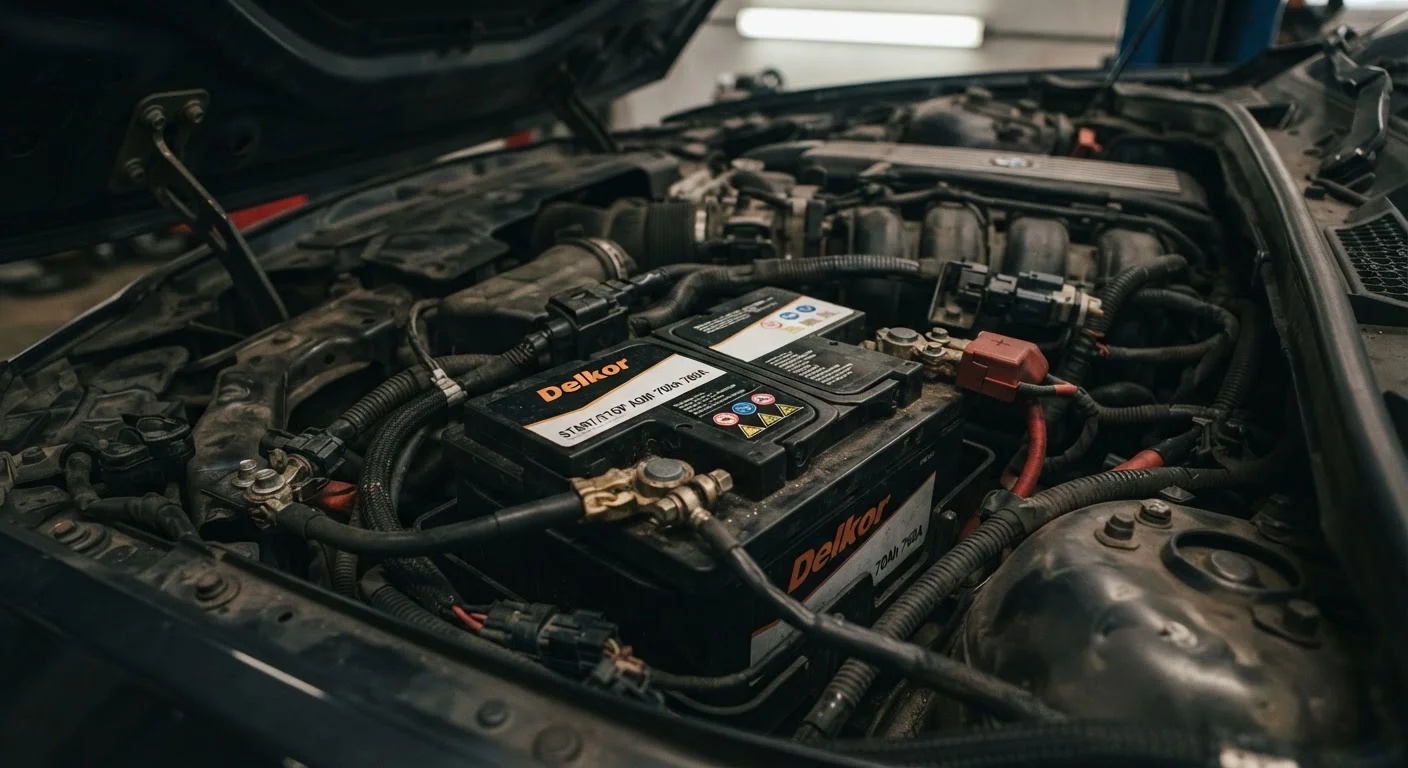
Most passenger vehicles use a flooded lead-acid or AGM (absorbent glass mat) battery rated in cold cranking amps (CCA) and reserve capacity. AGM batteries, common in newer vehicles with start-stop systems, are more drain-resistant but also more expensive to replace.
Why Batteries Wear Out Sooner Than Expected
A car battery isn't just a starting device - it's the backbone of your vehicle's entire electrical system. Every modern convenience, from keyless entry to adaptive headlights, draws from it. That growing electrical appetite is one reason batteries in newer vehicles sometimes wear out faster than older drivers expect.
The average battery lasts 3-5 years, but that number assumes moderate temperatures, regular driving, and no unusual electrical loads. In practice, many drivers encounter failure much earlier. Understanding the specific culprits helps you get ahead of the problem rather than deal with a no-start situation in a parking lot.
This is also a part of the broader picture of keeping vehicle ownership costs under control - a dead battery at the wrong time often leads to towing fees, rushed replacement decisions, and unnecessary expense.
Short Trips: The Silent Battery Killer
One of the most underappreciated causes of early battery failure is a driving pattern that seems completely harmless: lots of short trips. Every time you start your engine, the battery delivers a large burst of current to the starter motor. The alternator - which recharges the battery while the engine runs - needs roughly 20-30 minutes of sustained driving to replenish what was used during a cold start.
If most of your drives are 5-10 minutes long, the battery goes through repeated partial discharge and incomplete recharge cycles. Over months, this cycling degrades the battery's internal plates and reduces its overall capacity. Drivers who primarily run short errands in urban areas are disproportionately affected.
Offset Short-Trip Drain with Longer Drives
If your daily routine involves mostly brief trips, schedule a 30-minute highway drive once or twice a month. This gives your alternator adequate runtime to bring the battery back to a full state of charge. It's a simple habit that can add months - or more - to battery life.
If your routine involves frequent short trips, consider taking a longer highway drive once or twice a month to give the alternator time to fully recharge the battery. A low-mileage or infrequent-use vehicle faces similar challenges for the same underlying reason.
Parasitic Drain and Modern Electronics
Even when your car is parked and locked, it isn't fully asleep. Modern vehicles maintain power to a surprising number of systems: security modules, telematics units, infotainment memory, and keyless entry receivers. This background draw is called parasitic drain, and a small amount - typically under 50 milliamps - is normal.
The problem arises when something draws significantly more. A malfunctioning relay, an aftermarket accessory installed without a proper fuse, or a software glitch in a body control module can pull hundreds of milliamps continuously. A battery in good condition might withstand two or three days of excessive parasitic drain; an older or already-weakened battery could fail overnight.
3-5 yrs
Typical car battery service life
Industry guidance from battery manufacturers and automotive service organizations generally places average battery lifespan in this range under normal operating conditions.
~50 mA
Normal parasitic drain threshold
Most automotive technicians consider parasitic draws below 50 milliamps acceptable; anything significantly above that warrants investigation for a fault.
20-30 min
Drive time needed to recharge after a cold start
Sustained driving at highway speeds is generally required for the alternator to meaningfully restore charge consumed during engine startup.
If you frequently find your battery dead after the car sits for a day or two without any obvious cause, a mechanic can perform a parasitic draw test using a multimeter to isolate the offending circuit. This is worth doing before simply replacing the battery, since a new battery won't fix a drain problem.
Temperature Extremes and Chemical Degradation
Lead-acid batteries rely on a chemical reaction between lead plates and sulfuric acid electrolyte. Both heat and cold interfere with that chemistry, but in different ways.
Heat accelerates internal corrosion and causes electrolyte fluid to evaporate, permanently reducing capacity. Vehicles parked for long periods in direct sunlight or in hot climates are especially vulnerable. Cold thickens engine oil and increases the power demand on startup, while simultaneously reducing the battery's available cranking power. A battery that performs fine at 70°F may deliver significantly less output at 10°F - which is why weak batteries often announce themselves on the first cold morning of the year.
If you live in a region with temperature extremes, it's worth factoring that into replacement timing. Don't wait for a failure - test proactively. And be aware that some widely repeated car care beliefs don't hold up under scrutiny; our piece on maintenance myths that could hurt your car covers several that directly affect how you maintain key components like the battery.
What You Can Do to Extend Battery Life
No battery lasts forever, but a few practical habits can meaningfully extend its service life and reduce the chance of an unexpected failure:
- Test annually after year three. A battery load test measures whether the battery can deliver adequate current under real starting conditions - not just whether it holds a surface charge. Many service shops perform this at no charge.
- Keep terminals clean. Corrosion on battery terminals increases electrical resistance and makes charging less efficient. A visual inspection every few months takes seconds.
- Limit unnecessary electrical load when idling. Running the air conditioning, heated seats, and charging multiple devices while the engine is barely turning over stresses the battery and alternator.
- Address parasitic drain promptly. If your car sits for days at a time, consider using a battery maintainer (sometimes called a trickle charger) to keep the charge topped up without overcharging.
Staying ahead of battery health is one piece of the larger puzzle of understanding real car ownership costs - small, proactive steps consistently outperform reactive repairs when it comes to keeping total spending in check.