

Key Takeaways
Single point of contact for support and changes
When something goes wrong, one call or chat resolves it across all components rather than requiring you to contact multiple vendors separately.
Coordinated disruption handling
Platforms with bundled bookings may automatically adjust hotel stays when flights change, a safety net that disappears when bookings are separate.
Simplified budgeting and checkout
Paying one total upfront makes it easier to track travel spending and avoids the mental load of reconciling multiple charges across statements.
Wholesale pricing can reduce total cost
Some platforms negotiate bulk inventory pricing that individual travelers cannot access independently, particularly on popular routes and hotel chains.
Less flexibility to customize each component
Bundled packages often lock in specific hotels, flight times, or room categories - removing your ability to choose based on personal priorities.
Non-refundable terms are common in packages
To access bundled pricing, platforms frequently require non-refundable bookings, which increases your financial exposure if plans change.
Harder to compare true value
Because individual components are priced as a unit, it can be difficult to verify whether the package total is actually competitive against separate bookings.
Platform-specific limitations on vendor choice
You're restricted to the suppliers a platform has contracted with, which may exclude smaller, independent hotels or specialist operators better suited to your destination.
Our Verdict
Booking through one platform suits travelers who value simplicity, predictable costs, and a safety net when plans change. Building a trip component by component rewards those with time to research, a desire for customization, and comfort managing multiple vendors. For most trips, a thoughtful hybrid - bundling what makes sense and booking independently where it adds real value - is worth considering.
Bundled platforms are ideal for first-time international travelers or those booking complex multi-stop trips, while self-building suits experienced planners who prioritize flexibility and niche choices.
What You're Actually Comparing
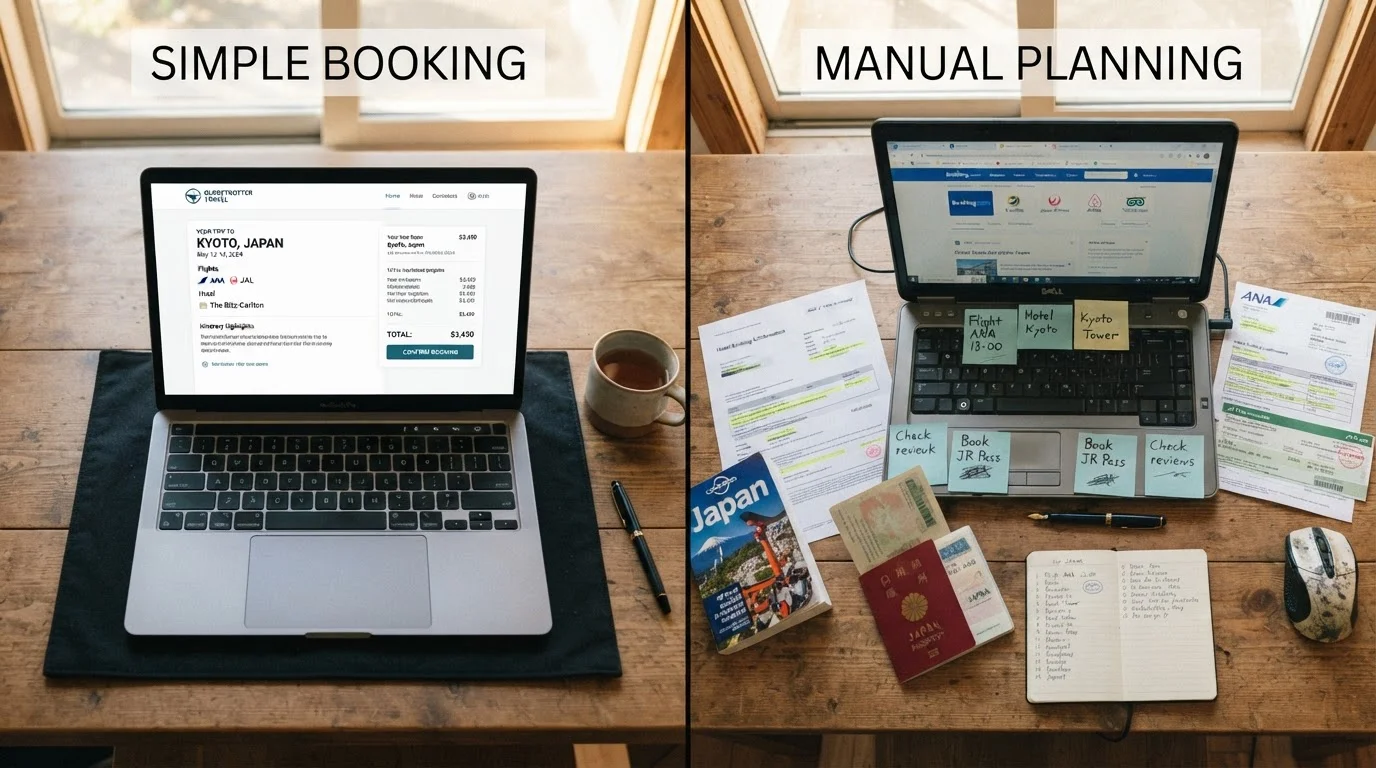
When you book a flight-and-hotel package - or an all-inclusive itinerary through a single platform - you're paying for coordination. One checkout, one customer service number, one confirmation email. When you piece a trip together yourself, you're the coordinator: separate airlines, hotel sites, car rental agencies, and activity providers, each with its own cancellation terms and contact process.
Neither method is inherently superior. What matters is how each interacts with your specific trip - its length, destination, group size, and how much things going sideways would cost you. If you're new to building travel from scratch, understanding the fundamentals before you pay anything is a smart place to start.
The Case for Booking Through One Platform
Bundled booking has genuine advantages beyond convenience. Many platforms negotiate wholesale rates on hotel blocks and seat inventory, meaning the packaged price can sometimes undercut what you'd pay booking each piece separately - though this varies widely by destination and season.
Single point of contact for support and changes
When something goes wrong, one call or chat resolves it across all components rather than requiring you to contact multiple vendors separately.
Coordinated disruption handling
Platforms with bundled bookings may automatically adjust hotel stays when flights change, a safety net that disappears when bookings are separate.
Simplified budgeting and checkout
Paying one total upfront makes it easier to track travel spending and avoids the mental load of reconciling multiple charges across statements.
Wholesale pricing can reduce total cost
Some platforms negotiate bulk inventory pricing that individual travelers cannot access independently, particularly on popular routes and hotel chains.
Disruption protection is another underappreciated benefit. When a single vendor holds your flight and hotel together, a flight delay or cancellation may trigger automatic rebooking support that simply doesn't exist when those two bookings live on different platforms. That coordination can be the difference between a salvaged trip and a costly scramble.
For group travel, consolidation reduces friction significantly. See our strategies for coordinating group trips for how shared bookings can ease decision fatigue and cost splitting.
The Case for Building It Yourself
Self-building gives you precision. You can choose the exact flight cabin, the specific hotel room category, the tour operator that specializes in the region you're visiting - none of which a one-size-fits-all platform may offer. For travelers who care deeply about where they stay or how they get there, this control is worth the extra tabs.
Less flexibility to customize each component
Bundled packages often lock in specific hotels, flight times, or room categories - removing your ability to choose based on personal priorities.
Non-refundable terms are common in packages
To access bundled pricing, platforms frequently require non-refundable bookings, which increases your financial exposure if plans change.
Harder to compare true value
Because individual components are priced as a unit, it can be difficult to verify whether the package total is actually competitive against separate bookings.
Platform-specific limitations on vendor choice
You're restricted to the suppliers a platform has contracted with, which may exclude smaller, independent hotels or specialist operators better suited to your destination.
Timing your individual bookings strategically also matters. How lead times and seasonality interact across booking types can meaningfully shape what you pay when you're managing each component independently.
The hidden cost of self-building is time and organizational overhead. Tracking multiple vendor confirmations, reconciling different cancellation windows, and managing refunds across several platforms adds real cognitive load - particularly when something goes wrong mid-trip.
Watch for Hidden Overlaps in Bundled Packages
Some bundled itineraries include transfers, breakfasts, or attraction tickets that duplicate things you've already arranged separately. Review the full inclusions list before confirming a package - paying twice for an airport transfer or skipping a prepaid breakfast isn't a saving. It's worth building a simple checklist of what each booking actually covers before you finalize anything.
Cost Reality: What the Numbers Actually Reflect
Platform packages often appear cheaper at checkout, but the comparison isn't always apples-to-apples. Bundled hotel rooms may be non-refundable, economy flights may have restricted changes, or the package may include services you wouldn't have chosen and won't use.
~30%
Travelers who report booking regret after a trip
A survey by Skift Research found roughly 30% of travelers experienced dissatisfaction directly tied to booking decisions, most commonly around flexibility and cancellation terms.
2-3x
More vendor contacts needed for self-built trips
Travelers who book flights, hotels, and activities independently typically manage two to three separate vendor relationships compared to a single platform booking.
Self-booked travel can produce genuine savings, especially when you're flexible on dates and layovers. But it can also backfire - a missed connection that strands you between separately booked flights, for example, leaves you absorbing 100% of the rebooking cost. The principles of spending intentionally apply here: the lowest sticker price isn't always the lowest total cost.
A hybrid approach works well for many travelers: book flights independently where you have clear preferences or flexibility advantages, and bundle hotel and transfers where coordination simplifies the trip. This mirrors the logic explored in balancing flexible and scheduled travel planning.
Making the Decision for Your Trip
Ask yourself three questions before choosing an approach. First, how complex is the trip? Multi-city international itineraries with tight connections benefit more from platform coordination than a simple two-leg domestic trip. Second, how risk-tolerant are you? If a disruption would be financially painful, bundled protection may be worth any premium. Third, do you have strong preferences about specific vendors or experiences? If yes, self-building preserves your ability to act on them.
Consider also how your travel style maps onto the format. Solo versus group tour travel involves similar trade-offs between autonomy and support - and the same traveler profile that prefers independent exploration often gravitates toward self-built bookings for the same reasons.
Whatever you choose, read the fine print on cancellation and change policies before confirming. That's the detail that matters most when plans shift - and plans always have a way of shifting.