

Key Takeaways
Why Pet Dental Health Gets So Little Attention
Pet dental care sits in a blind spot for many owners. Unlike a limping leg or a dull coat, dental disease rarely announces itself until it's advanced. Pets can't tell you their gums hurt, and the early signs - mild bad breath, slight gum redness - are easy to normalize or miss entirely.
The result is that oral disease often progresses silently for months or years before a veterinarian catches it during a routine exam. Veterinary organizations have long noted that dental disease is among the most commonly diagnosed health conditions in adult pets, yet preventive care at home remains rare. Understanding the mistakes that lead to this gap is the first step toward closing it.
For a broader look at how routine care often falls through the cracks, see common habits veterinarians flag as concerns.
The Most Common Dental Care Mistakes Pet Owners Make
The mistakes below are not signs of bad ownership - they're patterns that emerge from lack of information, understandable reluctance, and a culture that rarely treats pet dental care as urgent. Each one is correctable.
Assuming bad breath is just normal for pets.
Why it happens: Many owners have never been told what a healthy pet's breath should smell like, so persistent odor gets dismissed as a quirk rather than a warning sign.
Never introducing tooth brushing because the pet seems to dislike it.
Why it happens: Initial resistance leads owners to abandon the idea, often before the pet has had a real chance to acclimate to the process.
Relying on dental treats alone as a substitute for brushing.
Why it happens: Dental chews are easy, pets love them, and their packaging often implies significant oral health benefits.
Skipping annual professional dental exams.
Why it happens: Professional cleanings require anesthesia, which concerns some owners, and the cost can feel hard to justify when a pet appears healthy.
Waiting for visible symptoms before seeking dental care.
Why it happens: Pets hide pain effectively, and many owners assume that if a pet is eating normally, its teeth must be fine.
If you're building other parts of your pet's health routine alongside dental care, the Pet Health & Wellness hub offers guidance on preventive care across multiple areas.
Building a Realistic At-Home Oral Care Routine
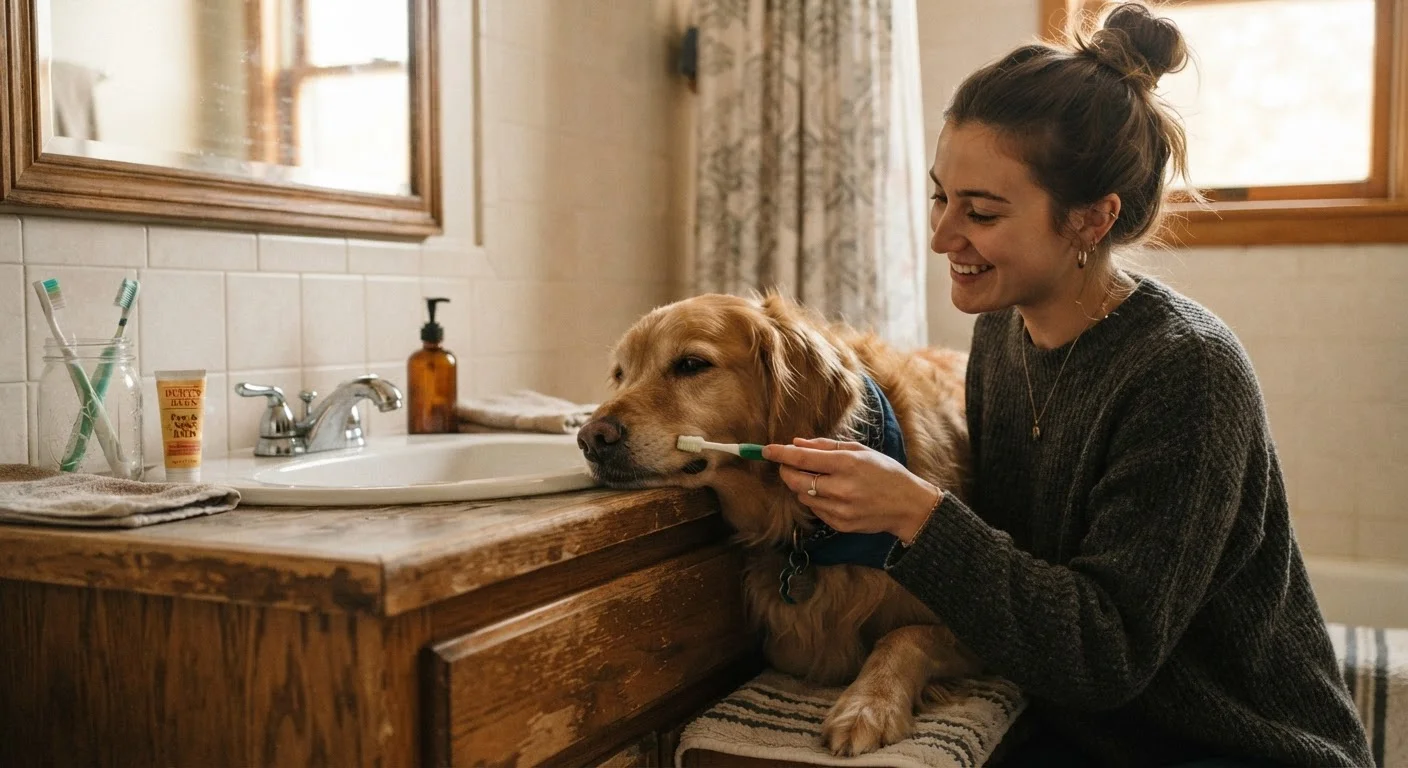
The goal of any home routine is consistency over perfection. Daily brushing with a pet-safe toothpaste is the most effective preventive measure - human toothpaste contains ingredients that are harmful to animals and should never be used. Start with brief, low-pressure sessions: let your pet sniff and lick the toothpaste first, then gradually introduce the brush over several days or weeks.
If your pet absolutely won't tolerate a brush, alternatives exist. Dental wipes, water additives formulated for pets, and certain dental chews can reduce plaque accumulation, though none replicate the mechanical action of brushing as effectively. Think of them as a complement rather than a substitute.
Diet also plays a supporting role. Dry kibble has a mild abrasive effect on teeth, though research on its actual plaque-reduction impact is mixed. For a balanced breakdown of food formats and their trade-offs, see how dry and wet food differ in their effects on pet health.
~80%
Adult dogs with dental disease by age 3
Veterinary dental specialists commonly cite that most dogs show signs of periodontal disease by their third year of life.
~70%
Adult cats affected by dental disease
Estimates from veterinary organizations suggest the majority of cats over age three have some form of dental or periodontal condition.
Professional cleanings under anesthesia, performed by a veterinarian, remain the only way to address tartar buildup below the gum line and to assess for disease not visible to the naked eye. Home care and professional care work together - one doesn't replace the other.
This article is for general informational purposes only and does not constitute veterinary or medical advice. Always consult a licensed veterinarian for guidance specific to your pet's health needs.