

Key Takeaways
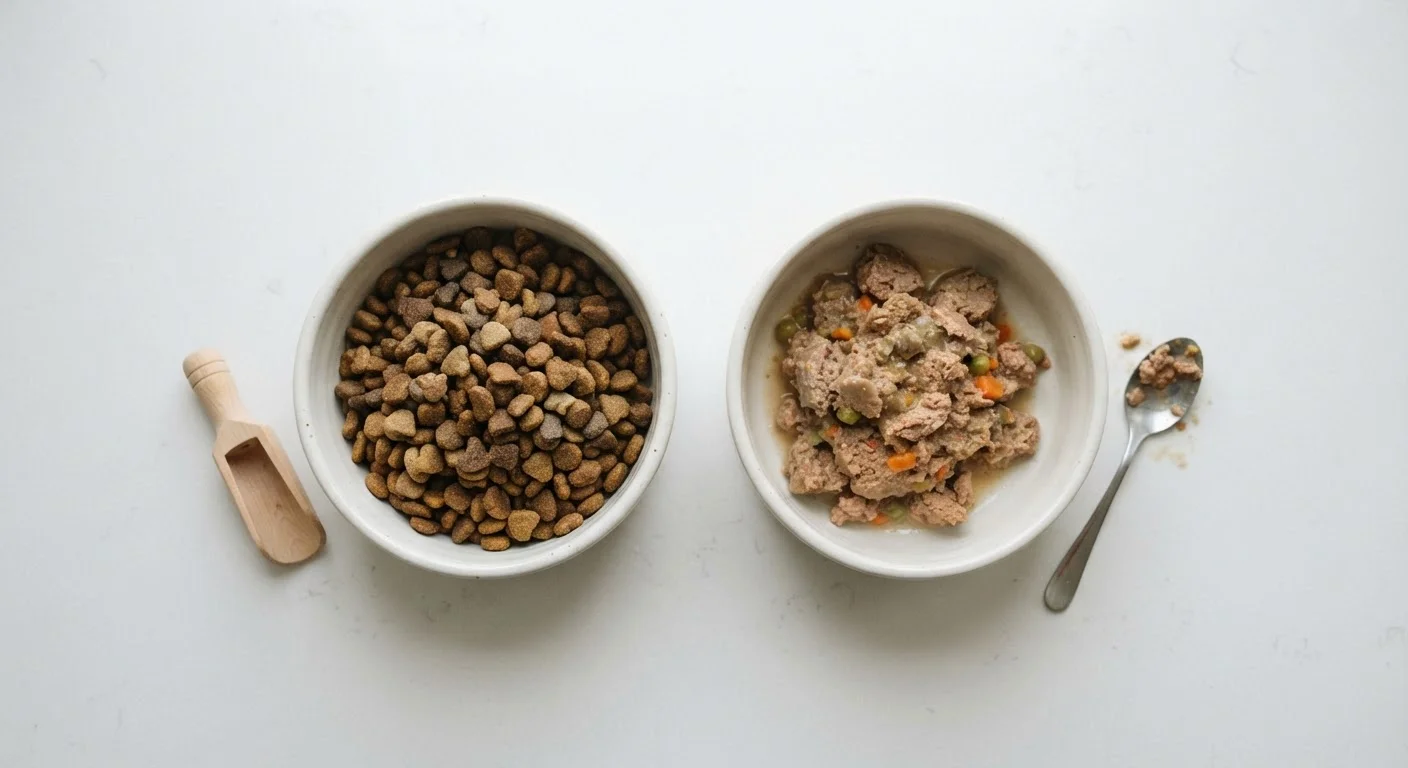
Option A
Dry Kibble
The convenient, calorie-dense everyday staple.
Best for: Pet owners seeking an affordable, shelf-stable food that supports dental health and easy portioning.
Option B
Wet Food
The moisture-rich, palatable alternative.
Best for: Pets who need extra hydration, have dental issues, or are finicky eaters who need palatability encouragement.
If your pet has a history of urinary tract issues or kidney disease
Wet Food
The high moisture content - typically 70-80% water - supports kidney function and promotes urinary tract health more effectively than dry food.
If convenience, cost, and shelf life are your top priorities
Dry Kibble
Kibble stores easily, can be left out longer without spoiling, and generally costs less per calorie than wet food.
If your pet is a picky eater or has a reduced appetite
Wet Food
Wet food's stronger aroma and softer texture tend to be more palatable, making it useful for encouraging reluctant eaters.
If you want to support weight management in an overweight pet
Wet Food
The higher water content means fewer calories per gram, which can help pets feel fuller without exceeding caloric targets - though portion control still matters.
If you want a mixed feeding approach for balanced benefits
Dry Kibble
Using kibble as the dietary base with occasional wet food topper is practical, cost-effective, and keeps meals varied - just recalculate total daily calories carefully.
Understanding What's Actually in Each Format
The most fundamental difference between dry kibble and wet food is water content. Dry kibble typically contains 6-12% moisture, while wet food ranges from 70-82% moisture. That gap has cascading effects on calorie density, palatability, cost comparison, and how your pet's body processes nutrients.
Because kibble has most of its moisture removed during manufacturing, it packs more calories per cup. This makes accurate portioning especially important - a modest-looking scoop can be calorie-heavy. Wet food, by contrast, is bulkier per serving because of its water content, which means pets often eat larger apparent volumes while consuming fewer calories overall.
Both formats must meet AAFCO (Association of American Feed Control Officials) nutritional guidelines to be sold as complete and balanced, but the ratios of protein, fat, and carbohydrates can vary significantly between products within each format. When evaluating either type, reading the guaranteed analysis panel is essential. See our guide to reading pet food labels for help decoding what those numbers actually mean.
| Criterion | Dry Kibble | Wet Food |
|---|---|---|
| Moisture content | 6-12% | 70-82% |
| Calorie density | High per cup | Lower per gram |
| Cost per serving | Generally lower | Generally higher |
| Shelf life (opened) | Weeks in sealed container | 24-48 hours refrigerated |
| Dental abrasion | Mild, limited evidence | Minimal |
| Hydration support | Low | High |
| Palatability | Moderate | Higher for most pets |
| Portioning ease | Easy to measure | Requires careful tracking |
Health Implications Worth Knowing
Hydration and kidney/urinary health: Cats especially are prone to low-grade dehydration because they evolved as desert animals with a naturally low thirst drive. Wet food meaningfully increases daily fluid intake, which veterinary nutritionists generally regard as beneficial for urinary tract health and kidney support. Dogs are more reliable water drinkers, but seniors or those with kidney disease also benefit from added dietary moisture.
Dental health: Kibble is often marketed as supporting dental hygiene because the crunching action creates mild mechanical abrasion. However, the evidence supporting this is limited - most kibble pieces shatter before making real contact with the gumline where tartar accumulates. Wet food does not provide this abrasion, but kibble alone is not a substitute for a proper dental care routine. Our article on dental health in pets covers what an effective routine actually looks like.
Coat and skin: Both formats can support healthy skin and coat when they provide adequate omega fatty acids. If your pet's coat has become dull or flaky after a dietary change, that's worth noting - dull fur can sometimes signal nutritional gaps. Read more in what your pet's coat is telling you about their health.
Weight management: Dry kibble's calorie density makes overfeeding a genuine risk, particularly when owners eyeball portions. Wet food's lower calorie-per-gram ratio offers a natural buffer - though this benefit disappears quickly if portions aren't tracked. Our portion sizing guide breaks down how to calculate appropriate amounts by life stage and activity level.
Practical Trade-Offs for Everyday Owners
Beyond nutrition, the format you choose has real day-to-day implications:
- Storage: Dry kibble can be stored in a sealed container at room temperature for weeks or months. Wet food must be refrigerated after opening and used within 24-48 hours.
- Cost: On a per-calorie basis, dry kibble is almost always less expensive than wet food. For multi-pet households or large breeds, this difference becomes significant over time.
- Mess and odor: Wet food has a stronger smell and leaves residue in bowls more readily, requiring more frequent washing. Kibble is generally tidier.
- Palatability: Wet food typically wins on palatability. The higher fat and moisture content produce stronger aromas that appeal to most pets, making it useful during illness or recovery when appetite is suppressed.
Many owners find that combining both formats - using kibble as the dietary backbone and adding wet food as a topper or occasional alternative - offers a practical middle ground. This approach requires careful portion adjustment to avoid overfeeding, but it addresses both hydration and convenience concerns simultaneously.
This article is for general informational purposes only and is not a substitute for personalized veterinary advice. Always consult your veterinarian before making significant changes to your pet's diet, especially if your pet has existing health conditions.