

Key Takeaways
Why Portion Sizing Matters More Than You Might Think
Overfeeding is one of the most quietly common problems in pet ownership. Unlike a skipped vaccination or a visible wound, excess calorie intake builds gradually - and by the time a pet's weight becomes noticeable, the health consequences may already be taking hold. Excess weight in pets is linked to joint disease, diabetes, and a shortened lifespan, yet most owners who overfeed do so unintentionally.
The core challenge is that feeding guidelines - whether on a bag of kibble or a can of wet food - are population-level estimates written for an average, moderately active adult animal. They are not calibrated to your specific pet's metabolism, spay or neuter status, breed tendencies, or current body condition. Treating those numbers as exact prescriptions rather than adjustable starting points is one of the habits veterinarians most commonly flag as a concern among well-meaning owners.
The good news: getting portions right doesn't require a nutrition degree. It requires understanding three variables - life stage, body weight, and activity level - and learning how to read your pet's body, not just a label.
The Three Factors That Determine the Right Portion
Before you measure a single cup of food, it helps to understand what actually drives calorie needs.
Life Stage
Puppies and kittens have dramatically higher calorie needs per pound of body weight than adults - their bodies are building bone, muscle, and organ tissue simultaneously. Senior pets, on the other hand, typically have lower energy requirements and may also have health conditions that affect nutrient needs. Always use a food formulated and labeled for your pet's life stage, and follow the portion guidance for that specific formula.
Body Weight - Ideal, Not Actual
Feeding charts on packaging use body weight as the primary input, but there's an important nuance: you should aim for your pet's ideal weight, not their current weight if they're already overweight. Feeding a 60-pound dog the portions for a 60-pound dog when that dog should weigh 50 pounds will maintain - or worsen - the excess. Ask your veterinarian to confirm your pet's target weight.
Activity Level
A dog who runs alongside a cyclist for an hour daily burns far more energy than one who takes two short walks. Cats who roam a yard expend more calories than those living entirely indoors. Most feeding guides assume moderate activity. If your pet is significantly more or less active than average, portions need to reflect that reality.
Body Condition Beats the Scale Alone
Weight is one data point, but body condition score gives you more information. A muscular, large-framed dog may weigh more than average while still being lean and healthy. Learn to feel for your pet's ribs (they should be easily felt but not visibly prominent) and look for a visible waist when viewed from above. This hands-on assessment helps you interpret weight numbers in context.
How to Measure Portions Accurately
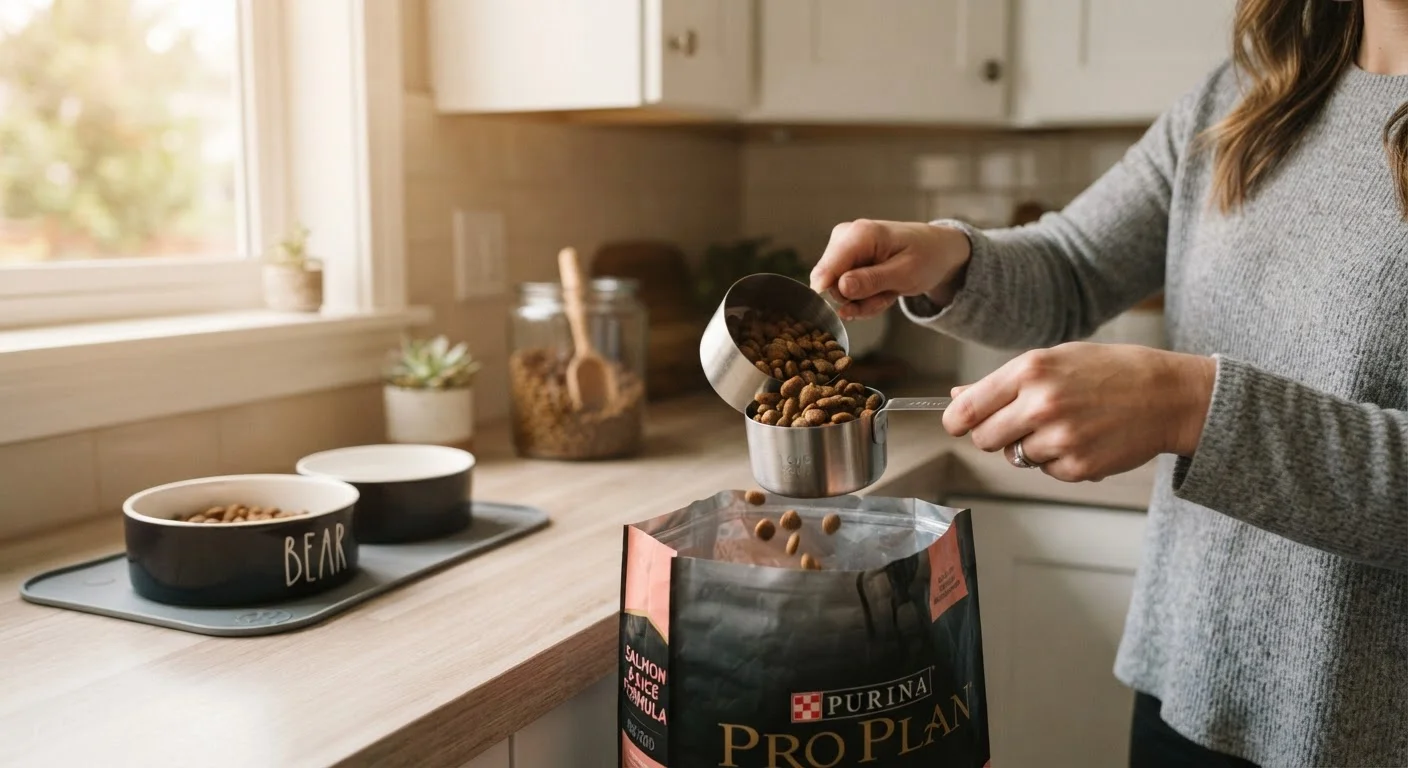
The method you use to measure food affects accuracy as much as the number you're targeting. The most common mistake is using a random cup or scoop without leveling it - which can add 20-30% more food per meal than intended over time.
Confirm your pet's ideal body weight with your vet
Before adjusting portions, establish a target weight. Your veterinarian will use a body condition score (BCS) - a standardized 1-9 scale assessing fat coverage over ribs, waist, and spine - to determine whether your pet is underweight, at an ideal weight, or overweight. Get this number before proceeding.
Read the feeding guide for your pet's specific food
Every commercially prepared pet food carries a feeding guide on the label based on body weight and sometimes life stage. Find the range that corresponds to your pet's ideal weight and note the daily amount. If the guide gives a range (e.g., 1½ to 2 cups), start at the lower end for less active pets and the middle for moderately active ones.
Switch from volume to weight measurement
Use a kitchen scale to weigh portions in grams rather than scooping by volume. Cup measurements vary depending on kibble size, how tightly packed the scoop is, and which cup you use. Weighing eliminates that variability. Most pet food packaging now includes gram equivalents alongside cup measures.
Account for treats, toppers, and extras
Treats, food toppers, dental chews, and training rewards all contain calories. As a general guideline in veterinary nutrition, treats and extras should account for no more than roughly 10% of a pet's daily calorie intake - with the remainder coming from their main food. If your pet receives regular extras, reduce their main meal portions proportionally.
Divide the daily total into appropriately sized meals
Most adult dogs do well with two meals per day; cats often benefit from two to three smaller meals, though individual schedules vary. Divide your calculated daily gram total by the number of meals to find per-meal portions. Avoid free-feeding (leaving food out all day) unless your veterinarian has specifically recommended it, as it makes portion tracking nearly impossible.
Reassess every four to six weeks
Weigh your pet at home (use a bathroom scale: weigh yourself holding the pet, then subtract your own weight) or at the vet clinic every four to six weeks. Compare to the target weight. If your pet is gaining, reduce portions by roughly 10% and reassess again in four weeks. If they're losing weight unintentionally, increase slightly and consult your vet if the trend continues.
Once you've established a portion that supports your pet's ideal weight, monitor their body condition every four to six weeks and adjust accordingly. Weight management is not a one-time calibration; it shifts with age, activity changes, and seasonal patterns. For guidance on separating fact from common feeding folklore, see our overview of pet care myths that even experienced owners sometimes believe.
This article provides general educational information about pet nutrition and is not a substitute for personalized veterinary advice. Always consult your veterinarian for guidance tailored to your individual pet's health status and needs.