

Key Takeaways
Vehicle Depreciation
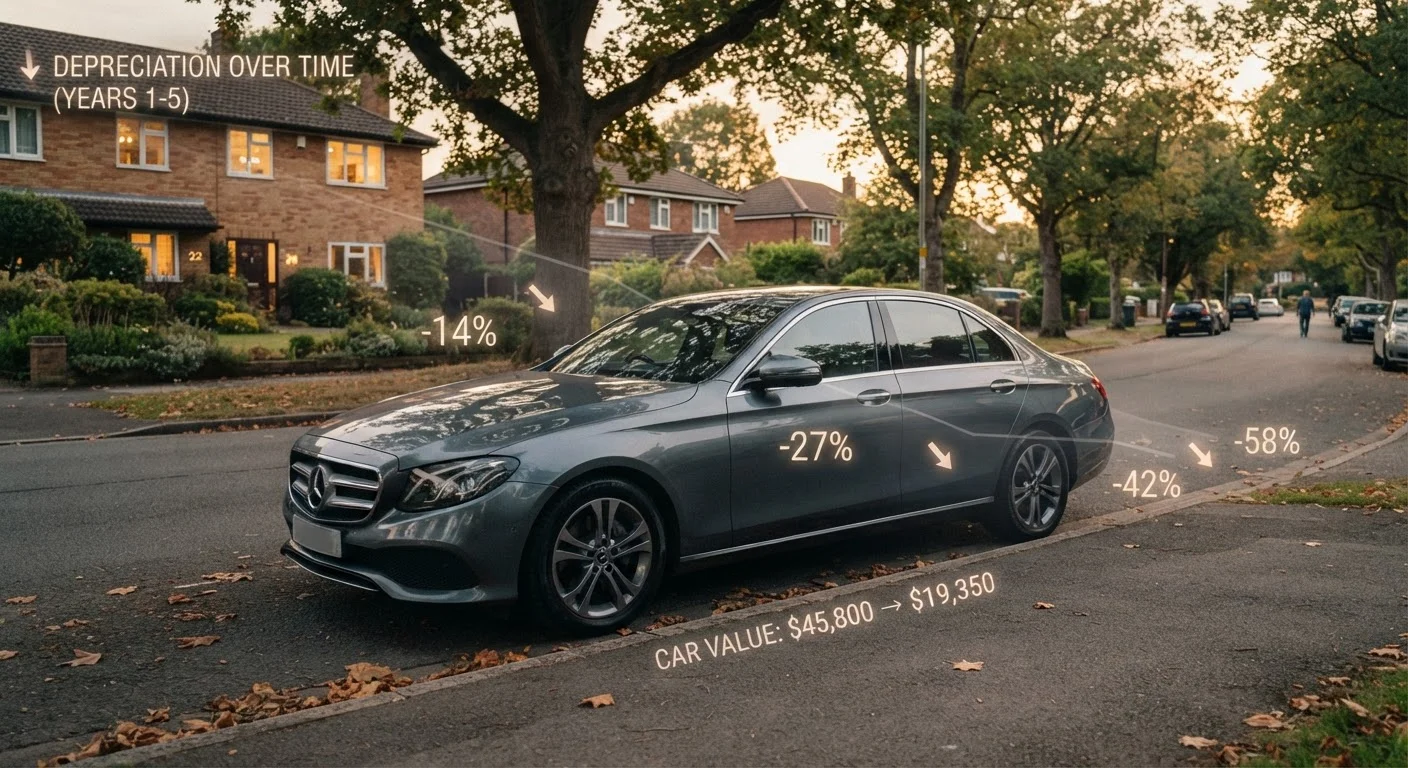
Depreciation is the loss in a vehicle's market value over time. It happens automatically - no accident or neglect required. Every year you own a car, it's worth less than it was the year before, meaning the gap between what you paid and what you'd get selling it grows steadily wider.
Depreciation is a non-cash cost, meaning it doesn't show up on a monthly bill - but it represents real money lost from your net worth with every mile driven.
The Cost You Don't See on Any Invoice
When drivers tally up what their car costs them, they tend to think in concrete line items: the monthly loan payment, the insurance premium, the gas fill-up. What rarely makes the mental ledger is depreciation - and that's a significant blind spot.
Depreciation is the gradual loss of your vehicle's market value over time. It doesn't arrive as a bill. No one sends you a notice. But it's quietly happening every month you own the car, and over a five-year ownership period it typically outpaces every other cost category combined. For a thorough look at how depreciation fits into the broader picture, see The Full Cost of Owning a Car in America.
~20%
Typical first-year value loss on a new vehicle
Industry data consistently shows new cars lose roughly 15-25% of value in year one, with some segments dropping more steeply.
~$3,000-$5,000
Average annual depreciation cost per vehicle
The AAA's annual Your Driving Costs study has long identified depreciation as the largest single component of vehicle ownership expense.
~50%
Value lost in first five years of ownership
Many vehicles retain only 40-60% of their original purchase price after five years, depending on brand, model, and market conditions.
Why Depreciation Hits Hardest Early On
A brand-new vehicle begins losing value the moment it's driven off the lot - not as a cliché, but as a measurable market reality. Buyers in the private or dealer resale market won't pay new-car prices for a vehicle that has left factory-fresh status behind. That first year typically sees the sharpest drop, often in the range of 15-25%.
The pace gradually slows. By years three through five, the annual loss is usually more modest in percentage terms - though the car's baseline value is also lower, so the dollar amounts can still sting. Understanding this curve matters because it directly affects whether buying new, buying used, or holding longer makes sense for your personal budget.
“Depreciation is the silent partner in every car purchase. Most buyers focus on the sticker price, but the real financial story plays out over the years of ownership - in the gap between what you paid and what you'll eventually recover.”
— Cars & Driving Editorial Team, Automotive Ownership Cost Analysts
What Drives the Rate of Depreciation
Not all vehicles shed value at the same pace. Several factors determine where a particular car lands on the depreciation spectrum:
- Mileage: Higher annual mileage shortens the remaining usable life in buyers' eyes, reducing resale value faster.
- Condition: Dents, worn interiors, and deferred maintenance make a vehicle less attractive to future buyers and push its value down.
- Brand and model reputation: Vehicles with strong reliability records and lower ownership costs tend to hold value better because demand stays high in the used market.
- Fuel efficiency: When fuel prices rise, thirsty vehicles become harder to sell, accelerating their depreciation.
- Market demand and inventory: Supply and demand dynamics - including economic conditions and new-model launches - affect resale prices in ways individual owners can't always predict.
High-mileage drivers face a compounding version of this challenge. See why high-mileage drivers face a different financial equation for a closer look at how driving habits shift the math.
Practical Ways to Reduce Depreciation's Impact
You can't stop depreciation, but you can manage its effect on your finances with deliberate choices:
- Hold onto the vehicle longer. The steepest depreciation happens early. Drivers who keep a well-maintained car for eight or ten years spread that initial loss across far more miles and years, dramatically lowering the per-year cost.
- Consider a used vehicle. Buying a car that's two to three years old means someone else absorbed the steepest depreciation curve. The vehicle's value decline from that point is more gradual.
- Keep maintenance current. A documented service history and good mechanical condition support resale value. Routine car maintenance is one of the most practical ways to protect what your vehicle is worth.
- Be mindful of mileage. When possible, moderate annual mileage preserves resale value - useful to consider if you have flexibility in how you use the vehicle.
Depreciation is just one piece of a larger spending picture. Other recurring car expenses - from registration fees to tire replacement - deserve equal attention when building an honest ownership budget. And if you're looking to take a more proactive stance overall, strategies for keeping vehicle costs under control over time cover a range of habits that add up meaningfully. For quick definitions of every major cost category in plain language, vehicle ownership costs: a plain-language reference is a useful companion. Treating depreciation as a real, budgetable cost - rather than an abstract afterthought - is a hallmark of smart spending at every income level.