

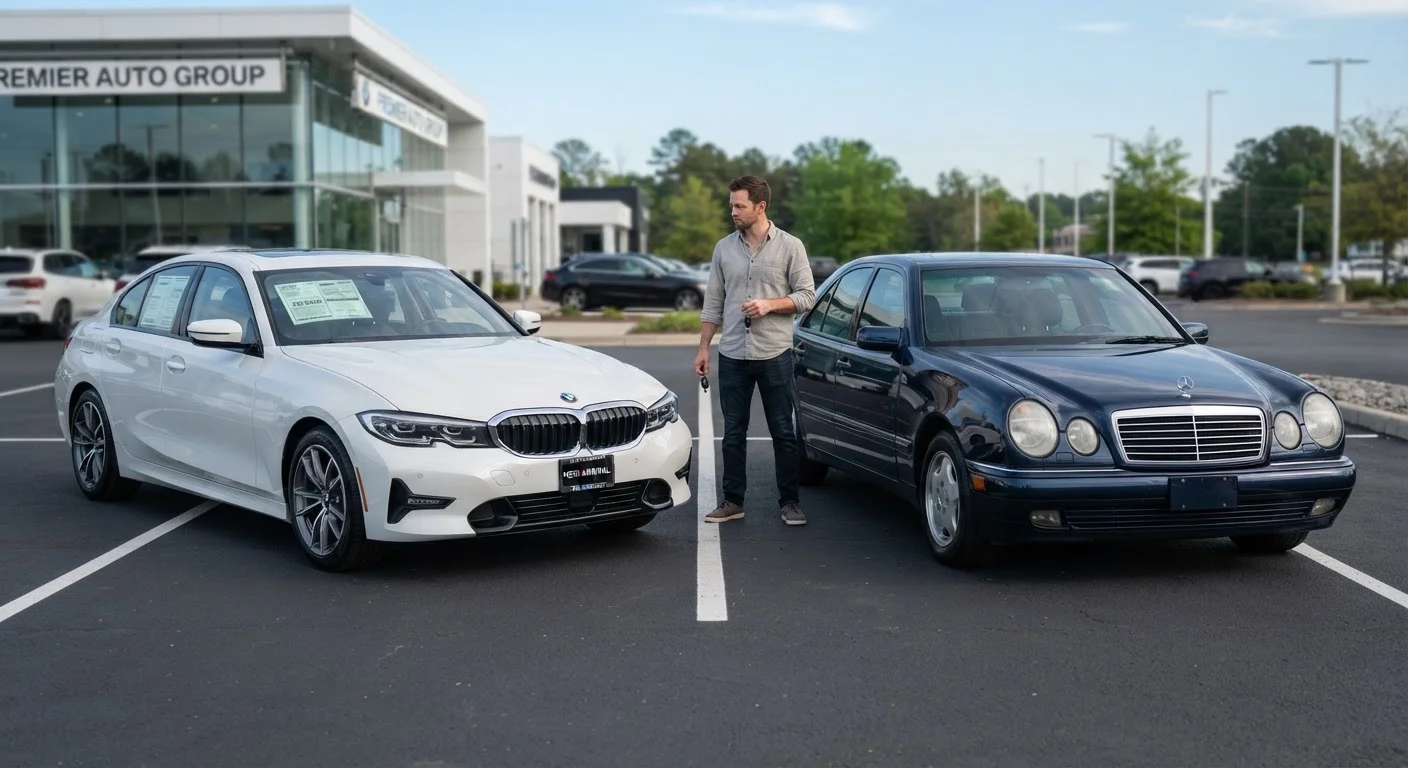
Key Takeaways
Option A
New Car
The latest technology and full warranty coverage - at a premium.
Best for: Buyers who want predictable costs, financing options, and modern safety features without maintenance surprises.
Option B
Used Car
The lower-entry-cost option with more variables to manage.
Best for: Budget-conscious buyers willing to research vehicle history and absorb some maintenance uncertainty in exchange for lower upfront spending.
If you want minimal repair surprises and plan to drive the vehicle for 10+ years
New Car
A full factory warranty and the latest reliability standards reduce the risk of costly early repairs, and long ownership spreads out the depreciation hit.
If you want the lowest total spend over a 3-5 year ownership window
Used Car
Avoiding the steepest depreciation curve - typically the first three years - means you pay closer to the vehicle's stable market value.
If you carry a loan and need to manage monthly cash flow tightly
New Car
New car loans often come with lower interest rates and manufacturer incentives, which can make monthly payments more manageable than a higher-rate used-car loan.
If you drive low annual mileage and want to minimize insurance costs
Used Car
Lower replacement value generally translates to lower comprehensive and collision premiums, reducing one of the largest recurring ownership expenses.
Depreciation: Where the Biggest Cost Gap Lives
Depreciation is the single largest expense for most vehicle owners - and it hits new cars hardest. A new vehicle can lose a significant portion of its value within the first few years of ownership, with the sharpest drop often occurring the moment it leaves the lot. By the time a car is three to four years old, that rapid early decline has largely leveled off.
When you buy a used vehicle that has already absorbed this initial drop, you're effectively letting a prior owner absorb the steepest part of the loss. That's a meaningful financial advantage - but it comes with trade-offs in condition, technology, and remaining lifespan. See our full breakdown of vehicle ownership expenses for context on how depreciation fits into the overall picture.
| Criterion | New Car | Used Car |
|---|---|---|
| Depreciation rate | Steepest in years 1-3 | Slower, more stable |
| Purchase price | Higher | Lower |
| Loan interest rate | Generally lower | Generally higher |
| Insurance premiums | Higher (full coverage often required) | Lower (flexible coverage options) |
| Sales tax at purchase | Higher (based on new price) | Lower (based on used price) |
| Warranty coverage | Full factory warranty | Limited or none |
| Repair predictability | High in early years | Varies by age and history |
| Technology and safety features | Latest available | May lack newer systems |
Financing, Insurance, and Registration: The Recurring Cost Layer
The purchase price is only one dimension of the cost equation. Three recurring expense categories often shift the math significantly.
Financing costs: New car loans typically carry lower interest rates than used car loans - sometimes several percentage points lower. A higher rate on a used vehicle can offset a portion of the sticker-price savings, depending on the loan term and amount borrowed. Before assuming a used car is cheaper month to month, compare the total interest paid over the loan's life.
Insurance: Lenders financing a new car generally require comprehensive and collision coverage, and the vehicle's higher replacement value pushes premiums up. A used car with a lower market value - especially one owned outright - often qualifies for a trimmed coverage package at a meaningfully lower premium.
Registration and taxes: Most states base annual registration fees and sales tax on the vehicle's value. A new car generates a larger tax bill at purchase and, in states with value-based registration, higher annual fees in the early years.
Building a complete vehicle budget means accounting for all three layers, not just the monthly payment.
~20%
Typical first-year depreciation on new vehicles
Industry estimates from sources like Edmunds and NADA suggest many new cars lose roughly 15-20% of their value within the first year of ownership.
1-3 pts
Average interest rate premium on used car loans
According to Federal Reserve consumer credit data, used vehicle loan rates have historically run several percentage points higher than new vehicle loan rates.
$1,000+
Annual repair cost differential on older vehicles
AAA's annual Your Driving Costs research has consistently shown that maintenance and repair expenses rise measurably as vehicles age beyond the warranty period.
Maintenance, Repairs, and Warranty Coverage
New cars come backed by a factory warranty - typically a bumper-to-bumper coverage period followed by a longer powertrain warranty. During that window, most major mechanical failures are covered, giving owners a predictable cost floor. Routine maintenance on a newer model is also generally lower in the first few years.
Used cars vary enormously. A two-year-old certified pre-owned vehicle with remaining factory warranty is a very different proposition from a ten-year-old vehicle with 130,000 miles and no coverage. Repair costs on older vehicles - particularly for electronics, suspension components, and drivetrain parts - can accumulate quickly and unpredictably.
The practical guidance: always have an independent mechanic inspect a used vehicle before purchase, and factor a realistic annual repair reserve into your budget. The plain-language reference on vehicle expense categories can help you estimate what reasonable reserves look like by vehicle age. For strategies on managing these costs over time, see how to keep ownership costs under control long-term.
Certified Pre-Owned: A Middle Ground Worth Considering
Certified pre-owned (CPO) programs offered by manufacturers apply a multi-point inspection and extend limited warranty coverage to qualifying used vehicles. This can reduce the repair uncertainty of a standard used purchase while still capturing most of the depreciation savings. CPO vehicles typically carry a price premium over non-certified used cars, so it's worth comparing the added cost against the coverage offered. Details vary significantly by manufacturer and program.