

| Number of foundational patterns | 6 (squat, hinge, push, pull, carry, rotate) |
| Primary daily relevance | Nearly every physical task maps to at least one pattern |
| Most commonly neglected pattern | Rotation and anti-rotation |
| Equipment required to maintain patterns | None - everyday tasks can sustain all six |
| Who benefits from this framework | All adults, regardless of fitness level or age |
Why Movement Patterns Matter More Than Exercise Routines
Most adults don't think about how they move - until something stops working. A stiff hip makes getting off the floor awkward. A weak upper back turns carrying groceries into a chore. These difficulties usually trace back to the same root cause: underused fundamental movement patterns.
Movement patterns are the basic templates the body uses repeatedly across almost every physical task. They aren't gym exercises - they're the building blocks that exercises are drawn from. Maintaining them supports independence, reduces injury risk, and makes daily life easier. Think of them less as fitness goals and more as baseline capabilities worth preserving.
This article outlines the six patterns most commonly identified by exercise physiologists and movement specialists as foundational for adults. For guidance on fitting regular movement into an unpredictable week, see building a movement routine with a flexible schedule.
Movement Pattern
A fundamental template the body uses to perform a broad category of physical tasks. Squatting, hinging, pushing, pulling, carrying, and rotating are the most commonly recognized foundational patterns.
Hip Hinge
A movement in which the torso leans forward from the hips while the spine stays neutral. It distributes load across the posterior chain rather than the lower back.
Core Stability
The ability of the muscles surrounding the spine and pelvis to maintain a stable base while the limbs move. It supports nearly all six foundational movement patterns.
Posterior Chain
The group of muscles running along the back side of the body - including the glutes, hamstrings, and lower back - that play a central role in hinging, squatting, and carrying.
Anti-Rotation
The ability to resist unwanted twisting forces on the spine. This is as important as the ability to rotate, particularly during asymmetrical tasks like carrying a load on one side.
The Six Foundational Patterns
Each pattern below describes a broad category of movement, why it shows up in daily life, and what a comfortable version of it looks like - without prescribing any specific workout or exercise intensity.
| Number of foundational patterns | 6 (squat, hinge, push, pull, carry, rotate) |
| Primary daily relevance | Nearly every physical task maps to at least one pattern |
| Most commonly neglected pattern | Rotation and anti-rotation |
| Equipment required to maintain patterns | None - everyday tasks can sustain all six |
| Who benefits from this framework | All adults, regardless of fitness level or age |
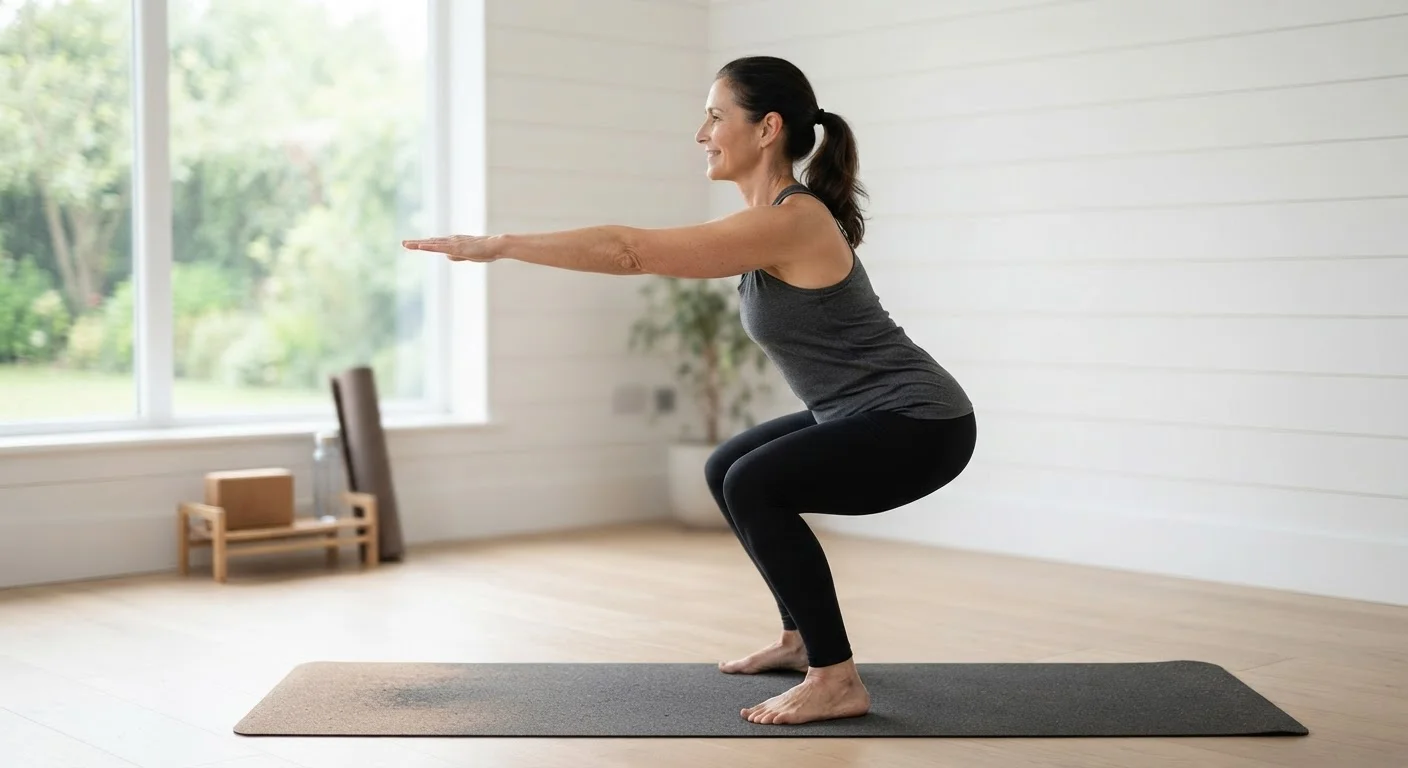
1. Squat
Squatting means bending at both the hips and knees while keeping the torso upright. Sitting into a chair, rising from a low seat, or picking something up from a low shelf all rely on this pattern. A comfortable squat doesn't require going deep or holding weight - it simply means the hips, knees, and ankles can work together through a reasonable range without pain or significant imbalance.
2. Hip Hinge
A hip hinge is a forward lean from the hips with a relatively neutral spine - the back stays long rather than rounding. Picking something up from the floor, loading a dishwasher, or bending to tie a shoe all involve a hinge. Many lower-back complaints are linked to habitually replacing this pattern with lumbar rounding under load.
3. Push
Pushing describes moving a load away from the body, whether horizontally (pushing a heavy door open) or vertically (placing luggage in an overhead compartment). The shoulder joint, chest, and triceps share the work. Keeping this pattern functional involves maintaining basic upper-body strength and shoulder mobility together.
4. Pull
Pulling brings a load toward the body - opening a heavy drawer, pulling a suitcase, or lifting a bag from the car floor. The muscles across the upper back and biceps do most of the work. This pattern is often less practiced than pushing, which can contribute to postural imbalances over time.
5. Carry
Carrying means moving while supporting a load - shopping bags, a child, a backpack. It demands that the core stabilize the trunk while the legs walk and the arms hold. Comfortable carrying relies on coordination across the whole body rather than isolated strength in one area.
6. Rotation and Anti-Rotation
The body constantly rotates and resists rotation - reaching across the body, twisting to look over a shoulder, or stabilizing the spine while one arm reaches. This is the most overlooked of the six patterns, yet it underpins nearly every asymmetrical task in daily life.
For a broader look at mobility and flexibility as they relate to these patterns, the article on stretching, mobility, and flexibility breaks down the key differences in plain language.
How to Keep These Patterns Functional
Maintaining these patterns doesn't require a gym membership or structured programming. Small, consistent exposures work well. Walking involves hip hinge mechanics and rotation. Gardening combines squat, hinge, and carry. Housework engages pushing and pulling regularly.
If a particular pattern feels restricted or uncomfortable, that's useful information - not a cause for alarm. A physical therapist or certified movement specialist can assess which areas would benefit from attention. Returning to a movement that's been avoided for a long time often feels awkward at first, which is normal. What to expect when re-learning a physical skill as an adult applies equally well to movement as it does to hobbies or professional development.
If you're exploring structured ways to work on these patterns, common exercise formats offers a no-pressure overview of options like yoga, Pilates, and circuit training to help you find a fit.
This article is for general informational purposes only and is not a substitute for professional medical or physical therapy advice. If you experience pain, limitation, or injury, consult a qualified healthcare provider before beginning or modifying any physical activity.