

Key Takeaways
Sleep Architecture
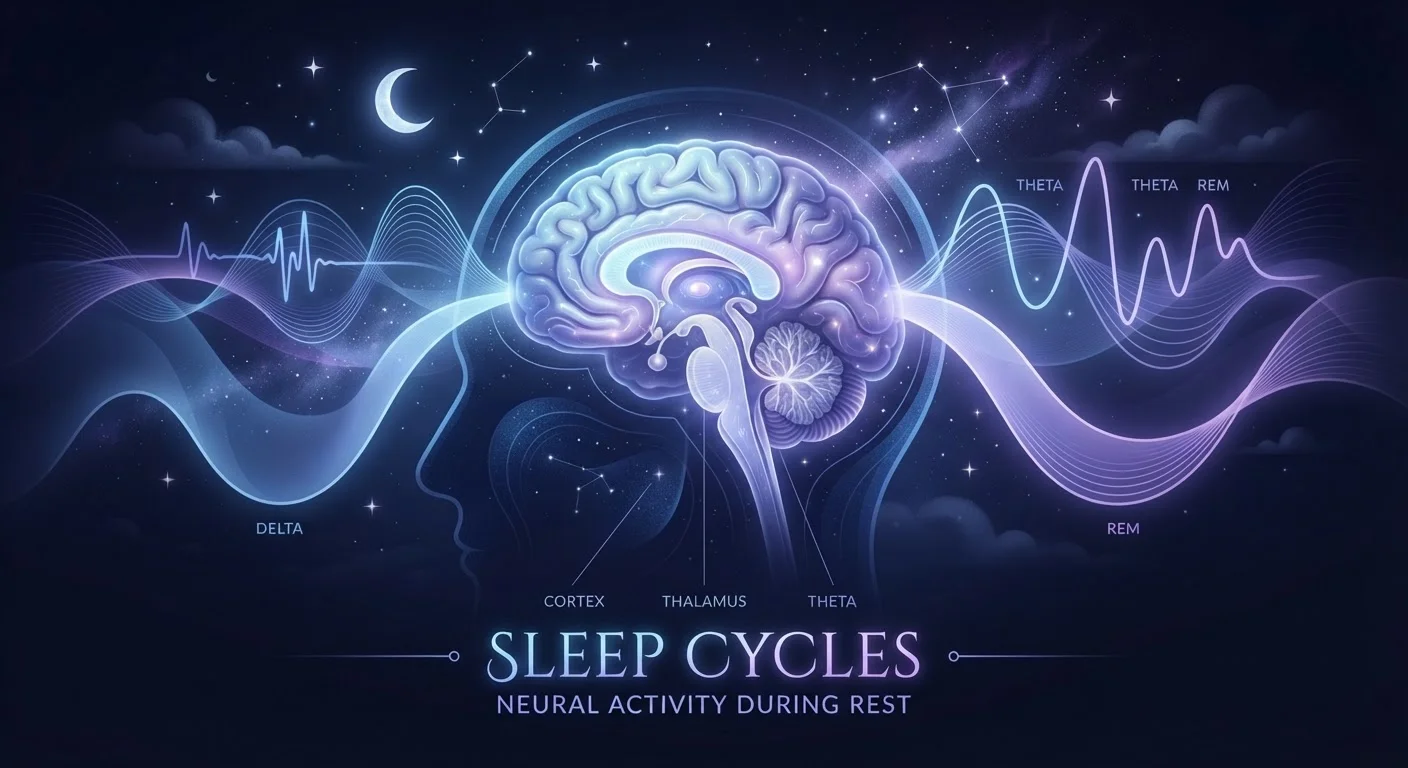
Sleep architecture refers to the structural pattern of sleep stages your brain cycles through each night. A full night of sleep typically consists of four to six cycles, each lasting roughly 90 minutes. Within each cycle, your brain moves through distinct stages - from light sleep to deep sleep and finally REM (rapid eye movement) sleep - each performing different restorative functions.
Sleep stages are classified using electroencephalography (EEG), which measures electrical brain wave patterns. NREM sleep is subdivided into three stages (N1, N2, N3), with N3 representing slow-wave or deep sleep, while REM is characterized by low-amplitude, mixed-frequency activity resembling wakefulness.
The Sleeping Brain Is Anything But Idle
Popular intuition treats sleep as simple downtime - the brain switching off until morning. Neuroscience tells a very different story. From the moment you drift off, your brain enters a tightly choreographed sequence of activity, cycling through stages that each serve a precise biological purpose. Understanding what happens in each stage explains why quality matters as much as quantity, and why consistently shortchanging sleep has real consequences for thinking, mood, and long-term health.
For a broader look at how sleep and mental health influence each other, see the full picture of mind and sleep.
Stage N1: The Transition Into Sleep
N1 is the lightest sleep stage - the brief, drowsy bridge between wakefulness and sleep. It typically lasts just one to seven minutes. Brain activity slows from the alert beta waves of wakefulness to slower alpha and then theta waves. Muscles may twitch (a phenomenon called hypnic jerks), and you can be easily awakened.
Although N1 is short and light, it's a necessary first step. The brain begins reducing its processing of external sensory input, and body temperature starts to drop slightly - both signals that deeper rest is coming.
~45-55%
Of total sleep time spent in N2 stage
According to sleep architecture research published in sleep science literature, N2 is the most dominant stage across a typical night in healthy adults.
4-6
Complete sleep cycles per night
Each cycle lasts roughly 90 minutes; the American Academy of Sleep Medicine recognizes this as the standard pattern for adult sleep.
20-25%
Of sleep time occupied by REM
In healthy adults, REM accounts for roughly one-fifth to one-quarter of total nightly sleep, per established sleep stage research.
Stage N2: The Body Settles In
N2 accounts for roughly 45-55% of total sleep time in healthy adults, making it the most prevalent stage across the night. Heart rate slows, body temperature drops further, and eye movements stop. Two distinctive brain wave features appear: sleep spindles (brief bursts of high-frequency activity) and K-complexes (sharp, high-amplitude wave forms).
Sleep spindles are particularly significant. Research suggests they play a role in consolidating procedural and declarative memories - helping the brain transfer information from short-term to long-term storage. K-complexes appear to help suppress arousal responses so the brain can stay asleep despite minor environmental disturbances.
Stage N3: Deep, Slow-Wave Sleep
N3, often called slow-wave sleep or deep sleep, is characterized by delta waves - the slowest, highest-amplitude brain waves recorded during sleep. It is hardest to be woken from, and if you are, you're likely to feel disoriented (a state called sleep inertia).
This is when the body does much of its physical restoration. Growth hormone is released, supporting tissue repair and muscle recovery. The glymphatic system - the brain's waste-clearance network - is most active during slow-wave sleep, flushing out metabolic byproducts that accumulate during waking hours, including proteins associated with neurodegenerative conditions. Immune function is also reinforced during this stage.
N3 is front-loaded in the night: the deepest, longest periods of slow-wave sleep occur in the first half of your sleep window. This is one reason that cutting sleep short disproportionately reduces deep sleep time.
REM Sleep: The Brain's Processing Workshop
REM sleep - named for the rapid eye movements that characterize it - is neurologically one of the most active states the brain enters. EEG readings during REM resemble those of an awake, alert brain, even while the body is effectively paralyzed by signals from the brainstem.
Dreaming is most vivid and narrative during REM. But its functions extend well beyond dreams. REM sleep is strongly associated with:
- Emotional memory processing: The brain revisits emotionally charged experiences, often in ways that reduce their distress over time.
- Creative integration: Distantly related memories are linked, a process thought to support insight and problem-solving.
- Learning consolidation: Particularly for complex cognitive tasks, REM appears to reinforce learning acquired during the previous day.
REM periods lengthen as the night progresses. The majority of your REM sleep occurs in the final two hours of a typical seven-to-nine-hour window - which means early wake-ups disproportionately cut into REM. To understand what happens when this sleep is chronically insufficient, see why sleep deprivation makes everything feel worse.
Protect Your REM Window
Because most REM sleep occurs in the final portion of your sleep period, even trimming 60-90 minutes off a typical night can cut your REM time nearly in half. If you're consistently waking earlier than planned - whether by an alarm or external noise - consider whether your sleep window is long enough to allow full cycle completion.
How the Cycle Repeats - and Why It Matters
Each roughly 90-minute cycle shifts in composition as the night progresses. Early cycles are weighted toward N3 deep sleep; later cycles contain progressively more REM. This is why both early and late sleep serve distinct biological needs - neither can simply substitute for the other.
Factors like alcohol consumption, inconsistent sleep schedules, and high stress can compress or fragment specific stages even when total sleep time looks adequate on paper. If you suspect your sleep habits may be working against you, nightly habits that quietly undermine sleep quality examines common culprits. For those looking to improve the conditions for healthy cycles, building a wind-down routine that actually sticks offers evidence-grounded starting points.
This article is for general informational and educational purposes only and is not a substitute for professional medical advice. If you have concerns about your sleep health, consult a qualified healthcare provider.