

Key Takeaways
Dietary Fiber
Dietary fiber is the part of plant foods your body cannot fully digest or absorb. Unlike carbohydrates that break down into sugar, fiber passes through the digestive system largely intact. It plays a critical role in gut health, blood sugar regulation, cholesterol management, and feeling full after meals.
Fiber is classified as either soluble (dissolves in water to form a gel-like substance) or insoluble (adds bulk to stool). Both types are found in whole plant foods and contribute distinct health benefits.
Two Types of Fiber, Two Different Jobs
Fiber isn't a single substance - it's a broad category that nutritionists divide into two main types, each with a distinct role in the body.
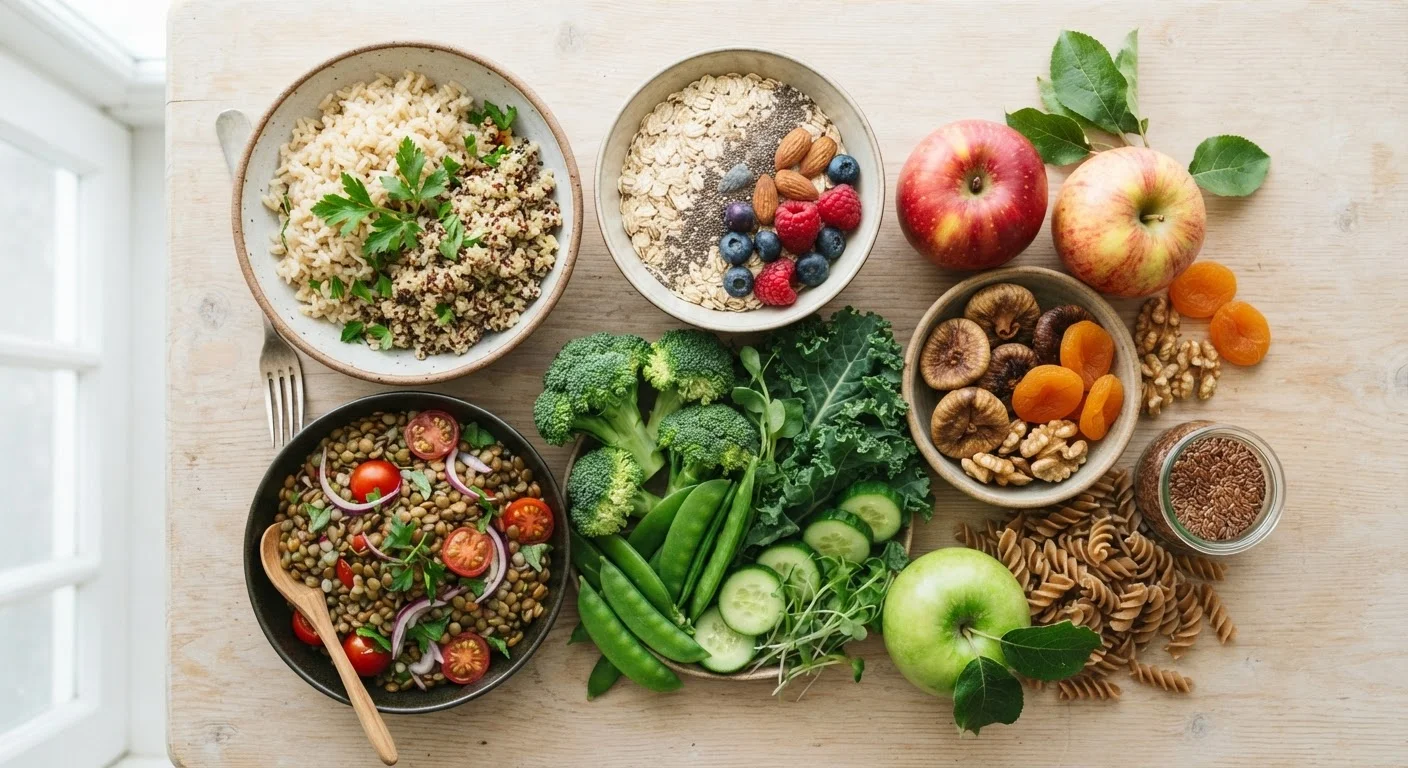
Soluble fiber dissolves in water and forms a viscous gel in the digestive tract. This gel slows digestion, which helps stabilize blood sugar levels after meals and reduces the absorption of LDL ("bad") cholesterol. Oats, barley, apples, citrus fruits, and legumes are particularly rich in soluble fiber.
Insoluble fiber does not dissolve in water. Instead, it adds bulk to stool and speeds the passage of material through the intestines, supporting regular bowel movements and reducing constipation. Whole wheat, bran, nuts, and most vegetables are good insoluble fiber sources.
A well-rounded diet includes both types - and because many whole plant foods contain a mix of the two, eating variety naturally provides both. For a broader look at how fiber fits into your overall macronutrient picture, see our macronutrients explainer.
Build Fiber In Gradually
If you're currently eating a low-fiber diet, aim to increase your intake over two to four weeks rather than all at once. A sudden spike in fiber can cause gas and bloating as your gut bacteria adjust. Drinking more water alongside fiber-rich foods helps ease the transition considerably.
Why the Fiber Gap Is a Real Health Concern
The gap between recommended and actual fiber intake in the US is substantial - and it has real consequences for health over time.
~15g
Average daily fiber intake for US adults
According to data cited by the Dietary Guidelines for Americans Advisory Committee, most US adults consume roughly 15 grams of fiber per day.
25-38g
Recommended daily fiber intake for adults
The Dietary Guidelines for Americans recommend 25 grams daily for women and 38 grams for men, varying slightly by age.
95%
Americans falling short of fiber recommendations
The Dietary Guidelines Advisory Committee has identified dietary fiber as a "nutrient of public health concern," noting that the vast majority of Americans do not meet recommended intake levels.
Research consistently links low fiber intake to higher rates of constipation, elevated LDL cholesterol, less stable blood sugar, and reduced microbial diversity in the gut. The gut microbiome - the trillions of bacteria living in your digestive tract - relies heavily on fermentable fiber as a fuel source. When fiber is scarce, these microbial communities can be negatively affected.
On the other hand, higher fiber intakes are associated in observational research with lower risks of cardiovascular disease and type 2 diabetes, though it's worth noting that correlation in dietary studies doesn't always confirm direct causation. The overall weight of evidence, however, is strong enough that major health organizations consistently recommend increasing fiber consumption for most adults.
Practical Ways to Eat More Fiber Every Day
Closing the fiber gap doesn't require a dramatic dietary overhaul. Small, consistent substitutions add up meaningfully over time.
- Switch to whole grains. Choosing whole wheat bread, brown rice, or oatmeal over refined counterparts can nearly double the fiber in a meal.
- Add legumes regularly. A half-cup of cooked lentils or black beans provides roughly 7-8 grams of fiber. Stir them into soups, grain bowls, or salads.
- Keep skins on produce. Much of the fiber in apples, potatoes, and pears sits in the skin. Washing thoroughly and eating the skin preserves it.
- Snack on nuts and seeds. Almonds, sunflower seeds, and chia seeds offer a convenient fiber boost alongside healthy fats.
- Front-load vegetables. Aim for at least half your plate to be non-starchy vegetables at lunch and dinner.
Increase intake gradually - adding too much fiber too fast commonly causes bloating and gas. Pairing fiber-rich foods with adequate fluid intake helps the digestive system adjust. If you're curious about separating fiber-related health claims from popular myths, our article on common nutrition myths covers several misconceptions worth knowing.
This article is for general informational purposes only and is not a substitute for professional medical or nutritional advice. Consult a qualified healthcare provider before making significant changes to your diet, especially if you have a digestive condition or chronic health issue.