

Key Takeaways
Fixed vs. Variable Costs
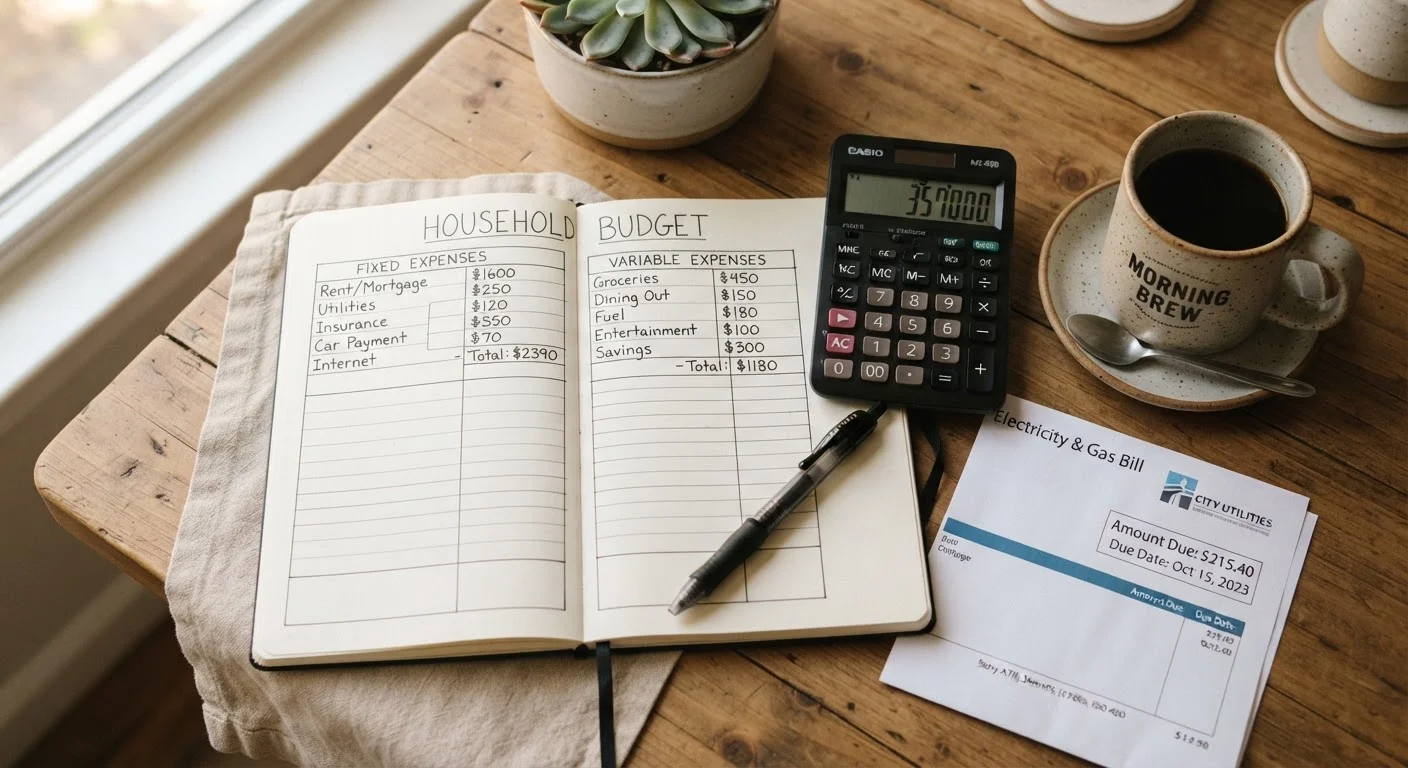
Fixed costs are expenses that stay the same amount every month, like rent or a car loan payment. Variable costs change from month to month depending on your behavior or circumstances, like groceries or gas. Knowing which category each expense falls into helps you predict your spending and build a more accurate budget.
Some personal finance frameworks add a third category - 'periodic' or 'irregular' costs - for expenses that are fixed in amount but don't occur monthly, such as annual insurance premiums or semi-annual car registration fees.
Why This Distinction Matters for Your Budget
Most budgeting struggles come not from careless spending, but from failing to anticipate costs accurately. When you lump all expenses together, it's hard to know what's truly flexible and what isn't. Separating your spending into fixed and variable categories gives you a clearer picture - and a more honest one.
Think of fixed costs as the floor of your monthly obligations. They're the bills you owe regardless of what you do that month. Variable costs sit on top of that floor, and their height depends largely on your choices. Once you can see both layers clearly, you can start making smarter decisions about where your money actually has room to move.
This concept is foundational to nearly every budgeting framework. If you want to go deeper on the vocabulary used in budgeting, this plain-language glossary covers the terms you'll encounter most often.
Fixed Costs Aren't Always Permanent
It's easy to treat fixed costs as untouchable, but many can be renegotiated or eliminated over time. A refinanced mortgage, a renegotiated insurance premium, or a cancelled subscription all reduce your fixed cost floor. Reviewing fixed expenses once or twice a year - not just variable ones - is a sound financial habit.
Fixed Costs: The Predictable Layer
Fixed costs are expenses where the dollar amount doesn't change from month to month. Your landlord expects the same rent on the first of every month. Your auto lender expects the same loan payment. Your student loan servicer sends the same statement. These don't flex based on your behavior - they're locked in by a contract or commitment.
Common fixed costs include:
- Rent or mortgage payments
- Car loan or lease payments
- Student loan payments
- Fixed-rate insurance premiums
- Subscription services billed at a flat rate
Because fixed costs are predictable, they're the easiest to account for in a budget - you simply enter the amount and it stays there. The challenge with fixed costs is that they're also the hardest to reduce quickly. Lowering your rent usually means moving. Reducing a loan payment typically means refinancing or paying it off. These aren't impossible, but they take time and planning.
Variable Costs: Where Your Choices Show Up
Variable costs change based on how much you use a service, how often you shop, or what circumstances arise in a given month. Your grocery bill may be higher in December than in June. Your electric bill climbs in summer when the air conditioning runs constantly. These costs respond to your habits and your environment.
Common variable costs include:
- Groceries and household supplies
- Dining out and takeout
- Gas and transportation beyond fixed payments
- Entertainment and recreation
- Clothing and personal care
- Medical copays and out-of-pocket health expenses
The upside of variable costs is control. If money is tight this month, you can cook at home more, skip non-essential shopping, or postpone a discretionary purchase. That flexibility is genuinely valuable. For a closer look at the variable car expenses many people forget to budget for, see ongoing car expenses most owners underestimate.
Set a Variable Spending Ceiling Each Month
For each variable category, decide on a maximum before the month begins rather than tracking after the fact. Knowing you've budgeted $400 for groceries creates a concrete target to aim for. Reviewing where you landed at month's end tells you whether the ceiling is realistic or needs adjustment.
The Space Between: Semi-Variable and Periodic Costs
Not every expense fits neatly into one category, and that middle ground is where many budgets fall apart. Semi-variable costs have a fixed base with a variable component layered on top. A utility bill often works this way - there's a flat connection fee, then charges that rise with usage. A cell plan with data overages is another example.
Then there are periodic costs: expenses that are predictable in amount but don't occur monthly. Annual car registration, biannual dental checkups, yearly renters insurance renewals - these are real, recurring obligations that many people forget to include in monthly planning. When they hit, they feel like surprises, even though they aren't.
The fix is straightforward: estimate each periodic cost for the year, divide by 12, and set that amount aside monthly. This technique is sometimes called a sinking fund. It converts what feels like an irregular jolt into a smooth, managed expense. For a more complete picture of the costs people routinely overlook, spending categories that most budgets undercount is worth a read.
Once you have a handle on all three cost types, you're ready to choose how to track them. Budget tracking methods worth knowing walks through the main approaches and what suits different habits.
This article provides general financial education and is not personalized financial advice. For guidance specific to your situation, consider consulting a qualified financial professional.