

Key Takeaways
Our Verdict
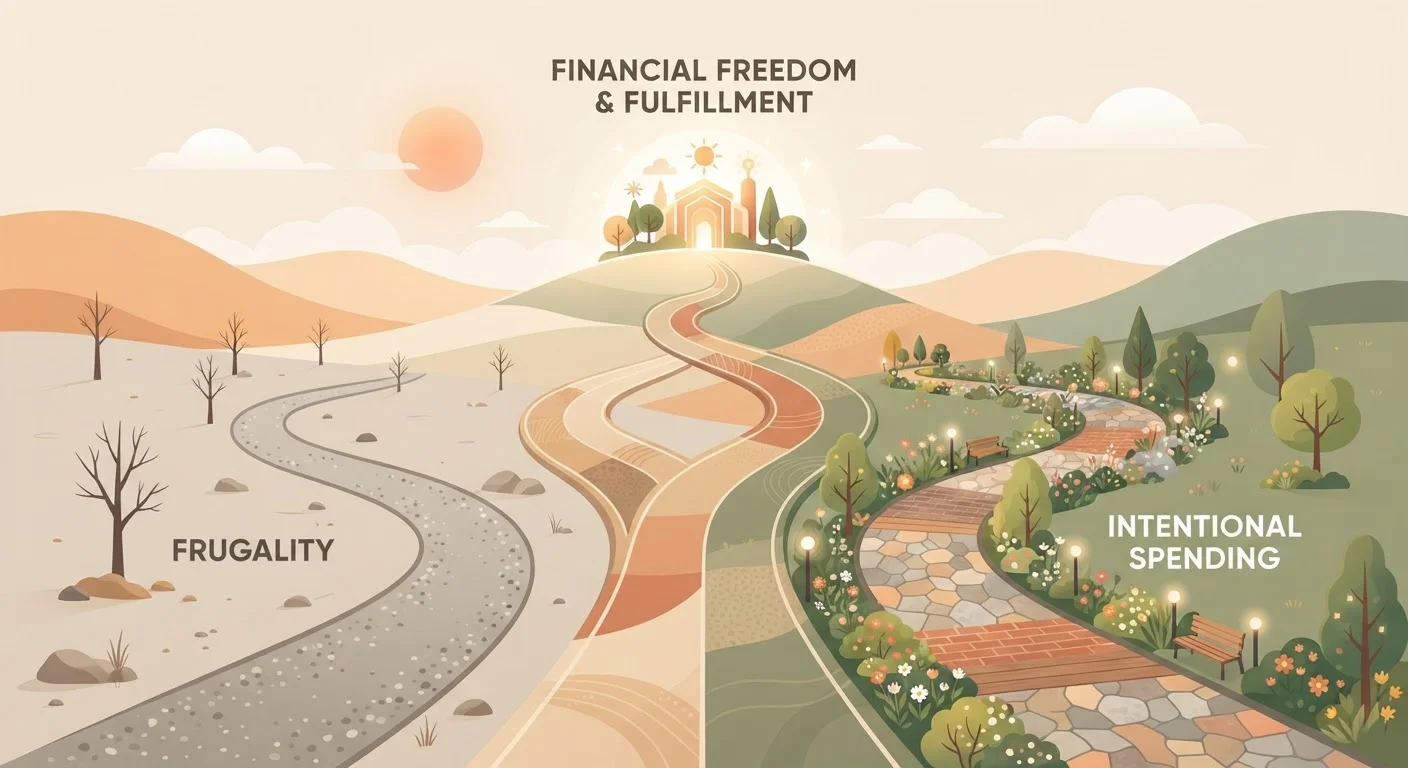
Frugality and intentional spending are not opposites - they're two different tools aimed at the same outcome: making your money work harder for you. Frugality excels when resources are severely constrained and every dollar must stretch as far as possible. Intentional spending shines when you have some financial flexibility and want to align your purchases with what genuinely matters to you. For most people, blending elements of both produces the most durable results.
| Best for | Recommended |
|---|---|
| Those working within strict time or cost constraints | Frugality |
| Those seeking a personalized, values-driven spending plan | Intentional Spending |
| Those with competing financial priorities who want balance | A hybrid of both approaches |
What Each Philosophy Actually Means
Frugality is the practice of minimizing expenditure as a general rule. The core belief is simple: spend less wherever you can, and the savings will accumulate into financial strength over time. Frugal households typically compare prices across options, avoid non-essential purchases, and default to the lowest-cost alternative as a starting point.
Intentional spending - sometimes called conscious or value-based spending - operates on a different premise. Instead of minimizing all spending, it asks you to be deliberate about where your money goes. The goal is to spend generously on things that genuinely matter to you and cut ruthlessly on things that don't. Cost is just one factor; alignment with your values is equally weighted.
Both approaches reject mindless or impulsive spending. The real difference lies in the default question each asks: frugality asks, "Can I spend less?" Intentional spending asks, "Does this purchase reflect what I care about?"
How They Compare Across Key Dimensions
To see the practical difference between these philosophies, it helps to look at how each plays out across a set of real-world criteria. Neither comes out ahead on every dimension - each has genuine strengths and real limitations.
| Frugality | Intentional Spending | |
|---|---|---|
| Core question | Can I spend less here? | Does this align with my values? |
| Default stance on spending | Minimize by default | Evaluate case by case |
| Best suited for | Tight budgets, debt payoff | Flexible budgets, values alignment |
| Risk of burnout | Higher - can feel restrictive | Lower - feels personally meaningful |
| Upfront effort required | Low - rules are simple | Higher - requires self-reflection |
| Adaptability as income changes | Less flexible | Scales well with income growth |
| Handles lifestyle priorities | Treats all spending equally | Prioritizes high-value categories |
As the table shows, the approaches diverge most sharply on flexibility and emotional sustainability. Strict frugality can feel restrictive over time, which is one reason people abandon it. Intentional spending requires more upfront reflection but tends to produce a plan that feels personally meaningful - and is therefore easier to maintain. For a deeper look at how to build an intentional spending practice from scratch, our step-by-step guide walks through the core principles.
Where Frugality Has a Clear Edge
Frugality is most powerful when your financial margin is thin. If you're working to pay down high-interest debt, build an emergency fund, or simply make ends meet each month, a frugal mindset gives you a decisive framework: spend less, period. It removes decision fatigue by making the low-cost option the default.
Frugality also scales well for household basics - groceries, utilities, subscriptions - where personal preference plays a smaller role. Switching to a store brand of dish soap or reducing energy usage doesn't require a values audit; it just requires discipline.
Try a Hybrid Approach First
You don't have to choose one philosophy exclusively. Start by applying frugal defaults to categories you care less about - like generic household supplies or unused subscriptions - while giving yourself intentional spending freedom in one or two areas that genuinely enrich your life. This hybrid method captures the savings power of frugality without the rigidity that causes many people to abandon their budget entirely.
Research in behavioral economics consistently shows that small, consistent savings - even a few dollars daily - compound meaningfully over years. Frugality, applied steadily, is a proven path to accumulating savings without a dramatic income increase.
Where Intentional Spending Pulls Ahead
The limitation of pure frugality becomes visible when cost-cutting starts eroding quality of life in ways that matter. Someone who loves cooking but buys cheap ingredients to save money may be cutting in an area that actually brings them satisfaction - and the savings come at a real personal cost.
Intentional spending solves this by personalizing the framework. You might spend more on food and less on clothing, or invest in a gym membership while skipping streaming services. The distinction between needs and wants becomes more nuanced - a "want" that aligns with your deepest priorities deserves a place in your budget just as much as a "need."
This philosophy also adapts as your income grows. Rather than defaulting to lifestyle inflation - spending more simply because you earn more - intentional spending gives you a filter: does this new expense reflect my values, or is it just habit?
For a comprehensive framework on spending smarter across all categories, see the complete guide to smart spending.
This article is for general informational and educational purposes only and does not constitute personalized financial advice. Consult a qualified financial professional for guidance tailored to your individual circumstances.