

Key Takeaways
Why Subscription Creep Happens
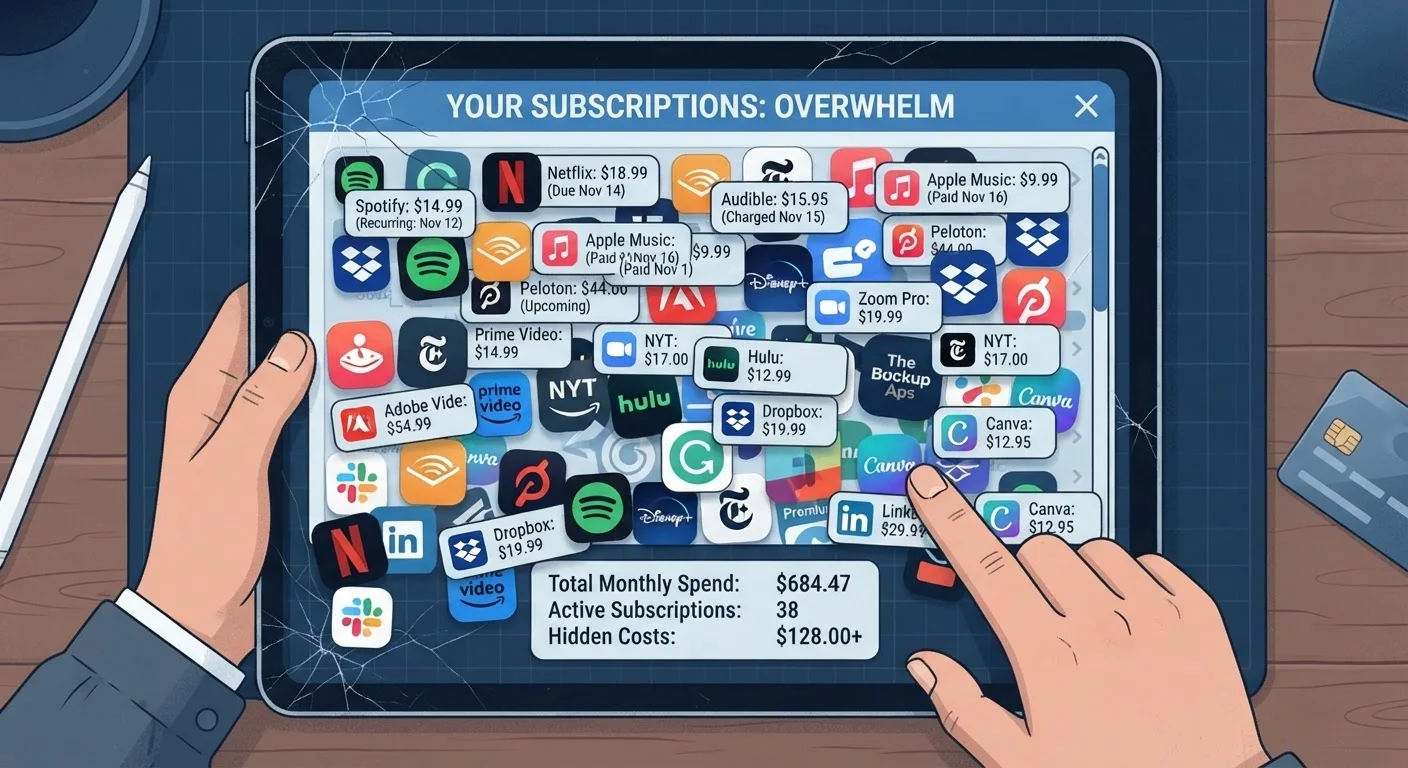
Subscription creep is the gradual accumulation of recurring charges - streaming services, fitness apps, cloud storage plans, news paywalls - that individually seem minor but collectively drain your budget. A $9.99 charge here, a $4.99 charge there, and suddenly you're spending $80 or more per month on services you barely use.
Several psychological factors drive this. Free trials convert to paid plans automatically. Cancellation is often deliberately inconvenient. And because charges are small and automatic, they fly under the radar in a way that a single large purchase never would. This is exactly the kind of spending category that most budgets undercount - irregular or automatic costs that don't feel like active choices.
Left unchecked, subscription creep can quietly undermine debt repayment or savings goals. If your monthly budget always feels tight despite reasonable income, recurring charges may be part of the story. The fix isn't complicated - it just requires a deliberate audit and a simple decision-making framework.
The True Cost of "Just" $10 a Month
Ten dollars a month sounds trivial, but five such subscriptions equal $600 per year - enough to fully fund a modest emergency starter fund or make a meaningful dent in credit card debt. Framing costs in annual terms makes it easier to decide what genuinely deserves a place in your budget.
How to Audit and Trim Your Subscriptions
Follow the steps below to surface every recurring charge, assess its value, and decide what stays. You'll need about 30 to 60 minutes and access to your bank and credit card statements.
What you will need
Pull your last 90 days of statements
Download or review three months of transactions from every bank account and credit card you use. Ninety days is enough to catch monthly charges and most quarterly or annual renewals. Look for any charge that repeats - even if the amount varies slightly.
List every recurring charge
Create a simple list with four columns: service name, monthly cost, last used (approximate), and category (entertainment, productivity, health, etc.). Include everything - even charges as small as $1.99. Don't filter yet; the goal at this stage is complete visibility.
Annualize every cost
Multiply each monthly charge by 12 to see what you're paying annually. A $14.99/month streaming service costs roughly $180 per year. This reframe often shifts how a charge feels - small monthly amounts look more significant as annual figures, which helps you make clearer trade-offs.
Rate each subscription honestly
For each service, ask two questions: How often do I actually use this? and Would I miss it if it disappeared tomorrow? Assign a simple rating - Keep, Cancel, or Pause/Investigate. Be honest; sunk-cost thinking ("I've already paid for it") isn't a reason to keep something you don't use.
Check for overlap and cheaper alternatives
Look for services that do the same thing. You might have two cloud storage plans, two music services, or both a general streaming platform and a niche one that overlaps significantly. Consolidating duplicates often cuts costs without reducing the value you actually use. Also check whether a family or shared plan would be cheaper than individual accounts.
Cancel or pause what you're not keeping
Act immediately on your Cancel list - don't schedule it for later. Many services make cancellation available through account settings online, but some require a phone call or chat. Note cancellation confirmation numbers or take a screenshot. For items marked Pause/Investigate, set a specific deadline - no more than one week - to make a final decision.
Set a quarterly calendar reminder
Add a recurring event to your calendar every three months labeled "Subscription Review." Repeat this audit process each time. New services accumulate quickly - especially when trials, holiday promotions, or app purchases are in the mix. A regular review keeps the list manageable and your budget accurate. This practice fits naturally alongside a broader savings and debt review.
Once you've completed the audit, schedule it to repeat. Subscription services change prices, add tiers, and auto-renew annually - a one-time review is a starting point, not a permanent fix. Consider linking this habit to your broader budgeting routine so recurring costs stay visible.
Subscription creep isn't unique to streaming or entertainment. Similar patterns show up in auto budgets - registration fees, roadside coverage, and maintenance plans that auto-renew without much scrutiny. See ongoing car expenses most owners underestimate for a parallel look at recurring vehicle costs that tend to get overlooked.
This article is for general informational and educational purposes only and does not constitute personalized financial advice. For guidance specific to your financial situation, consider consulting a licensed financial professional.