

Key Takeaways
Separation Anxiety in Dogs
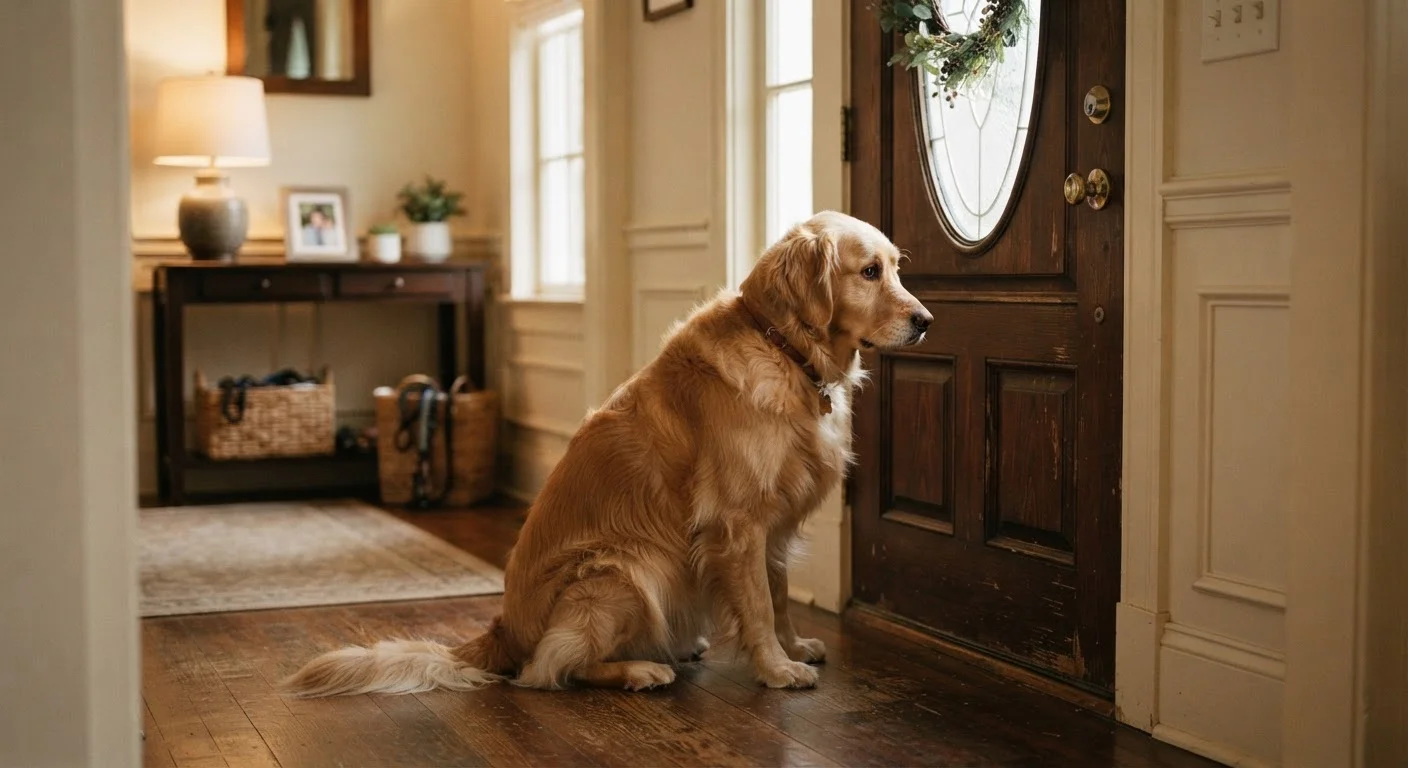
Separation anxiety is a stress response that occurs when a dog becomes distressed after being left alone or separated from a person they're closely bonded to. It's not defiance or bad behavior - it's a genuine emotional state that drives dogs to bark, destroy, or attempt to escape as a coping mechanism. The behaviors typically start within minutes of the owner's departure and stop when the person returns.
Behaviorists distinguish between true separation anxiety (triggered by the absence of a specific attachment figure) and isolation distress (general discomfort with being alone), as each may require a different training approach.
What the Behavior Is Really Communicating
A dog that chews through drywall, barks for hours, or eliminates in the house exclusively when left alone isn't acting out - they're in a state of genuine panic. Separation anxiety is best understood as a fear response. The dog has learned that being alone is unsafe or intolerable, and the behaviors owners find most frustrating are actually attempts to cope with overwhelming stress.
This distinction matters because it changes how you respond. Scolding a dog after the fact - when they can't connect the correction to the earlier behavior - doesn't reduce anxiety. It often makes it worse by adding unpredictability to an already stressful situation. Understanding the emotional driver behind the behavior is the first step toward addressing it effectively.
It's also worth noting that separation distress can sometimes look like other problems. A dog who is soiling indoors may have a medical issue; one who is destructive may simply be under-stimulated. See our guide to signs your pet may be in pain for help distinguishing behavioral anxiety from physical discomfort.
Recognizing the Signs: More Than Just Howling
The hallmark of separation anxiety is that the troubling behaviors occur specifically in the owner's absence. Common signs include:
- Vocalization - sustained barking, howling, or whining that begins shortly after departure
- Destructive behavior - chewing door frames, window sills, or furniture near exits, which reflects escape attempts rather than boredom
- House soiling - accidents from a housetrained dog that only happen when alone
- Excessive drooling or panting - physiological signs of stress visible on return
- Attempts to escape - scratching at doors, windows, or crates, sometimes resulting in self-injury
Pre-departure anxiety is also common: some dogs begin pacing, panting, or shadowing the owner as soon as they detect departure cues - picking up keys, putting on shoes, or grabbing a bag. This anticipatory stress is a reliable indicator that true anxiety, not simple boredom, is involved.
~17%
Dogs affected by separation anxiety
Behavioral research estimates roughly 14-20% of dogs seen in veterinary practice show signs of separation-related distress.
Within 30 min
When most anxiety behaviors begin
Studies using video monitoring consistently show that peak distress behaviors typically occur within the first 30 minutes after the owner's departure.
Top 3
Reason dogs are surrendered to shelters
Separation anxiety and related destructive behaviors are among the most commonly cited reasons owners rehome dogs, according to shelter intake data.
The Science Behind Why It Happens
Dogs are highly social animals with strong attachment systems. Research in canine cognition confirms that dogs form genuine emotional bonds with their human caregivers, similar in some ways to the attachment patterns studied in human infants. When that attachment figure disappears, some dogs - particularly those who haven't learned that departures reliably lead to returns - experience it as a genuine threat.
Risk factors include a history of rehoming, inconsistent early care, extended periods of constant owner presence followed by sudden changes in schedule, and certain temperament traits. The pandemic-era pattern of dogs bonding intensely to homebound owners, then struggling when owners returned to office work, illustrated this dynamic clearly for many families.
It's also worth considering whether anxiety has a medical component. Anxiety in pets sometimes has physical roots - thyroid imbalances, pain, and neurological changes can all amplify stress responses. If behavioral training doesn't produce results, a veterinary evaluation is a reasonable next step.
Gradual Desensitization: The Evidence-Based Path Forward
The most well-supported approach to treating separation anxiety is systematic desensitization - a process of gradually exposing the dog to increasing durations of alone time, always staying below the threshold that triggers distress. The goal is to teach the dog, through repeated experience, that departures are safe and temporary.
Here's how to begin:
- Start before you leave. Practice picking up your keys, putting on your coat, and sitting back down - repeatedly - until the dog stops reacting. This decouples departure cues from actual leaving.
- Begin with very short absences. Step outside for 5-10 seconds, return calmly, and repeat. Gradually increase duration only when the dog stays relaxed at the current level.
- Avoid emotional departures and returns. Low-key hellos and goodbyes reduce the contrast between your presence and absence.
- Provide enrichment before leaving. A food puzzle or long-lasting chew can create a positive association with alone time, though this alone won't resolve true anxiety.
Progress is rarely linear. Setbacks - a particularly long absence or a stressful event - can temporarily reverse gains. Consistency and patience matter more than speed. For dogs being introduced to a new home, our article on setting the stage for good behavior from day one offers practical guidance on building routines that support emotional security from the start.
Use a Pet Camera to Identify Triggers
Recording your dog's first 30-60 minutes alone is one of the most useful diagnostic tools available to owners. Many dogs look fine at the door but begin showing distress behaviors within minutes of departure. Video evidence helps you identify exactly when anxiety peaks, which shapes how you structure your desensitization sessions.
When Professional Support Makes Sense
Mild separation anxiety often responds well to owner-led desensitization practiced consistently over weeks to months. But moderate to severe cases - where dogs are injuring themselves, cannot settle for even brief absences, or show extreme physiological distress - typically benefit from professional guidance.
A certified applied animal behaviorist (CAAB) or veterinary behaviorist (Dip. ACVB) can design a structured behavior modification plan tailored to your dog's specific triggers and thresholds. In some cases, veterinary-prescribed anti-anxiety medication is used alongside behavioral training, not as a standalone solution. Medication can lower the dog's overall arousal level enough for learning to occur - something that's difficult when a dog is in full panic mode.
Whatever path you pursue, the framing matters: this is not a discipline problem. A dog with separation anxiety needs a patient teacher, not a stricter authority figure. Building duration and distance gradually - the same principles underlying a solid 'stay' cue - is exactly the kind of foundational skill that supports a calmer, more independent dog over time.
This article is for general informational and educational purposes only and does not constitute veterinary or medical advice. If your dog is showing signs of severe anxiety or self-injury, consult a licensed veterinarian or certified animal behaviorist.