

Key Takeaways
Why Small Pets Aren't 'Low Maintenance'
Small mammals are frequently marketed as starter pets or children's pets, with the assumption that their size makes them simple. In reality, hamsters, guinea pigs, and rabbits each have specific environmental, nutritional, and social needs that, when overlooked, lead to health problems and shortened lifespans.
Before bringing any of these animals home, it helps to read our guide to the first week with a new pet - it covers how to create a calm settling-in period regardless of species. A consistent daily routine matters for these animals just as much as it does for dogs and cats.
When introducing yourself to a new hamster, place your unwashed hand flat in the enclosure for a few minutes daily before attempting to pick them up - your scent becomes familiar before contact does.
Trust-building through scent recognition dramatically reduces biting and stress, and is a technique consistently recommended by small animal behavior specialists.
Weigh your guinea pig or rabbit once a week on a kitchen scale and log the number - a loss of even a few ounces over a short period often signals an underlying health issue before any other symptoms appear.
Because small mammals mask illness so effectively, weight tracking is one of the most reliable early-warning tools available to home owners and is endorsed by exotic veterinarians.
Offer hay in a rack or feeder rather than on the enclosure floor to keep it cleaner longer and encourage more consistent consumption throughout the day.
Hay is the cornerstone of rabbit and guinea pig health; removing barriers to access - like soiled floor hay - meaningfully increases intake.
Housing Requirements by Species
Cage size is the single most common area where new owners underestimate their pet's needs.
Hamsters
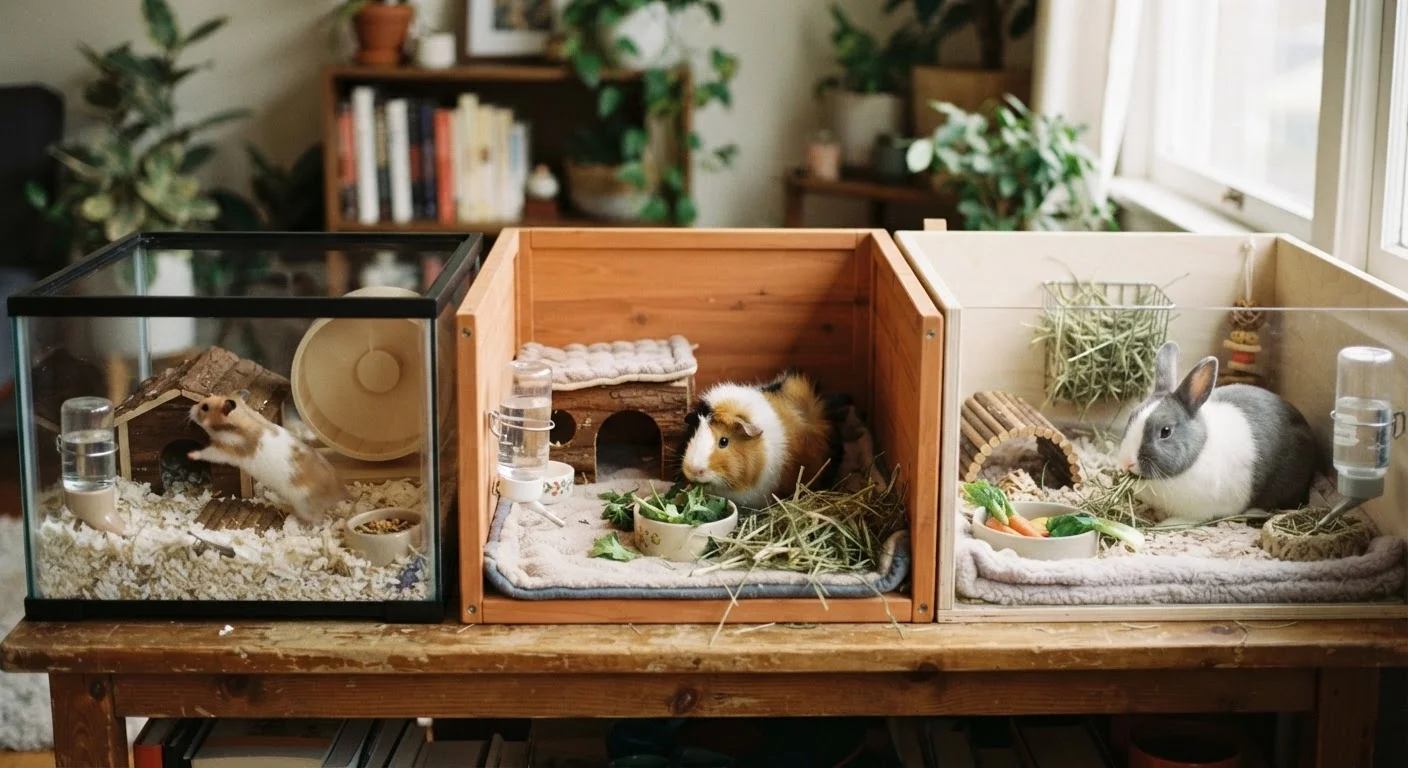
Syrian hamsters (the large, solitary type) need a minimum of 450 square inches of unbroken floor space - more is always better. Bar spacing should be no wider than half an inch to prevent escape or injury. Bedding depth matters: hamsters burrow instinctively and need at least 6 inches of substrate, such as paper-based or aspen shavings. Cedar and pine shavings are not appropriate due to aromatic oils that can irritate the respiratory tract.
Guinea Pigs
A pair of guinea pigs - and they really do best in pairs or small groups - needs a minimum of 7.5 square feet of floor space, though 10+ square feet is recommended. C&C (cube and coroplast) style enclosures are popular among experienced owners for their flexibility. Guinea pigs are not climbers, so horizontal space is the priority over vertical height.
Rabbits
Rabbits are frequently the most underhoused small pet. A rabbit needs a space large enough to perform at least three full hops and stand upright on its hind legs without its ears touching the ceiling. Many veterinary organizations recommend a minimum 8 square feet of enclosure space, plus daily access to a larger exercise area. Outdoor hutch-only housing raises safety and temperature regulation concerns and is generally not recommended as a sole living arrangement.
Diet and Nutrition Fundamentals
Each species has a digestive system adapted to specific foods, and feeding the wrong diet is a leading cause of preventable illness.
Hamsters
A quality commercial hamster mix - one that includes seeds, grains, and pellets without excessive dried fruit or sugary additions - forms the dietary base. Small amounts of fresh vegetables like broccoli, cucumber, or carrot can be offered a few times per week. Fresh water should always be available via a sipper bottle or heavy bowl.
Guinea Pigs
Guinea pigs, like humans, cannot synthesize their own vitamin C and must obtain it through diet. Fresh leafy greens such as romaine lettuce, bell peppers (especially red), and parsley are excellent daily sources. A small amount of plain pellets formulated for guinea pigs rounds out the diet. Avoid iceberg lettuce, which has minimal nutritional value, and foods high in calcium for adult pigs.
Rabbits
Unlimited grass hay - timothy hay for adults, alfalfa only for young rabbits - should make up approximately 80% of a rabbit's diet. This supports digestive motility and dental wear. A measured portion of leafy greens and a small amount of high-fiber pellets complete the daily menu. Sugary treats, including many commercial rabbit treats, should be offered rarely if at all.
Handling, Socialization, and Enrichment
Small mammals communicate stress through subtle body language, and mishandled animals can become defensive or develop chronic anxiety.
Hamsters are crepuscular (most active at dawn and dusk) and should not be woken from daytime sleep for handling - this is a common source of bites. Allow the hamster to come to your hand voluntarily at first, using treats to build trust. Once comfortable, support the full body during holds.
Guinea pigs are social and generally enjoy gentle, regular handling once trust is established. They vocalize extensively - learning what different sounds (purring, wheeking, chattering) mean helps you gauge their comfort. Pair housing is strongly recommended, as single guinea pigs can experience social deprivation.
Rabbits are prey animals who feel safest with four paws on the ground. Improper lifting - especially by children - can cause a rabbit to kick powerfully and fracture its own spine. Always support the hindquarters fully when lifting, and work toward floor-level interaction as much as possible. Enrichment for rabbits should include tunnels, cardboard boxes to chew, and supervised free-roam time.
A new pet owner checklist can help you plan enrichment supplies before bringing your pet home.
Grooming and Routine Health Monitoring
Small mammals groom themselves, but owners still play an important role in keeping conditions from deteriorating unnoticed.
- Nails: All three species require periodic nail trims. Overgrown nails can curl and cause pain or injury. Ask your vet to demonstrate proper technique before attempting at home.
- Teeth: Rabbit and guinea pig teeth grow continuously and must wear down through hay consumption. Malocclusion (misaligned teeth) is a serious, common condition - check weekly that the front teeth are aligned and that the animal is eating normally.
- Coat: Long-haired breeds of guinea pigs and rabbits need regular brushing to prevent mats. Short-haired hamsters generally self-maintain, but check for skin irritation or patchy fur.
- Weight: Handle animals regularly so you can detect unexplained weight loss, which is often an early sign of illness in small mammals.
- Enclosure cleanliness: Spot-clean daily and do full enclosure cleans weekly or bi-weekly depending on species and setup. Ammonia buildup from urine causes respiratory stress.
For owners managing an animal with a known health condition, our article on caring for a pet with a chronic condition provides grounded expectations for ongoing care.
When to See a Vet
Small mammals are prey animals that instinctively mask illness, which means symptoms often appear only when a problem has progressed. Establish a relationship with an exotic animal veterinarian - not all general practice vets have training in small mammal care - before an emergency arises.
Seek veterinary attention promptly for:
- Labored or rapid breathing
- Loss of appetite lasting more than 12-24 hours (especially critical in rabbits, where gut stasis is a medical emergency)
- Discharge from eyes, nose, or ears
- Diarrhea, particularly wet tail in hamsters, which requires immediate care
- Sudden lethargy or inability to move normally
- Visible lumps, wounds, or swelling
The Pet Health & Wellness hub has additional guidance on recognizing signs of illness and building a preventive care routine for small animals.
This article provides general educational information about small pet care and is not a substitute for professional veterinary advice. Always consult a qualified exotic animal veterinarian for guidance specific to your pet's health and needs.