

Key Takeaways
Why Dental Disease Flies Under the Radar
Dental disease is among the most commonly diagnosed conditions in companion animals, yet it remains one of the most frequently overlooked by owners. Veterinary organizations generally estimate that by age three, the majority of dogs and cats have some measurable form of periodontal disease - the inflammation and infection affecting the gums and structures supporting the teeth.
The core reason it goes unnoticed is that pets instinctively mask pain. Dogs and cats rarely stop eating or show obvious distress even when living with significant oral discomfort. Owners interpret continued appetite as a sign that everything is fine, when in reality the pet has simply adapted. Understanding this gap between how disease presents in animals and what owners expect to see is critical. See our guide to what gets overlooked in pet dental care for a broader look at building an oral hygiene routine.
Myth
If my pet is still eating normally, their teeth must be fine.
Fact
Pets frequently continue eating even with significant dental pain because their survival instincts override discomfort signals.
Animals evolved to hide vulnerability, and oral pain is no exception. A dog or cat with severe periodontal disease, tooth root abscesses, or fractured teeth may still approach the food bowl enthusiastically - often chewing on one side, swallowing pieces whole, or showing only subtle behavior changes that owners don't connect to dental discomfort. Maintained appetite is not a reliable indicator of dental health. A veterinary oral exam is the only way to accurately assess what's happening beneath the gumline and on tooth surfaces that are difficult to see without proper lighting and positioning.
Myth
Bad breath is just a normal part of owning a dog or cat.
Fact
Persistent bad breath (halitosis) in pets is almost always a sign of bacterial activity, most commonly from plaque and tartar buildup or active infection.
While a pet's breath will never smell minty fresh, a strong, foul, or consistently unpleasant odor is not something to normalize. It typically signals that bacteria are proliferating in the mouth - often in the pocket between the gum and tooth root where cleaning is impossible without professional intervention. In some cases, significant halitosis may also point to systemic issues such as kidney disease or diabetes, which can produce distinctive odors. If your pet's breath has noticeably worsened or smells particularly unpleasant, that's a reason to schedule a veterinary visit rather than reach for a dental chew.
Myth
Dental disease only affects the mouth - it's not a serious health concern.
Fact
Oral bacteria can enter the bloodstream and have been associated with changes in kidney, liver, and heart tissue in companion animals.
The mouth is not an isolated system. When periodontal disease progresses and gum tissue becomes inflamed or ulcerated, bacteria can more easily cross into the bloodstream - a process sometimes called bacteremia. Research in veterinary medicine has identified associations between chronic dental disease and changes in heart valve tissue, kidney function, and liver health in dogs and cats. While causality is still being studied, these associations are well enough established that many veterinarians consider untreated dental disease a systemic health risk, not just a cosmetic concern. Pets with chronic conditions like kidney disease may face compounded risk if dental disease is also present.
Myth
Anesthesia-free dental cleanings are a safe, effective alternative to professional cleanings.
Fact
Anesthesia-free cleanings can only address visible surface buildup and cannot safely examine or treat the subgingival areas where most serious disease occurs.
The appeal of skipping anesthesia is understandable - it feels lower-risk and lower-cost. But the tradeoff is significant. Without anesthesia, a practitioner cannot safely probe gum pockets, take dental X-rays, or instrument below the gumline. These are the very steps needed to identify and treat the most clinically significant disease. A superficially cleaned tooth can look better while still harboring progressive infection at the root. Additionally, scaling an awake, stressed animal risks injury to both the pet and the handler, and the procedure itself is frightening for many animals. Professional veterinary organizations consistently recommend that complete dental assessment and treatment be performed under general anesthesia by a licensed veterinarian.
Myth
Pets don't need their teeth brushed - chewing on kibble or toys keeps them clean.
Fact
Dry food and chew toys reduce plaque to some degree but cannot substitute for mechanical brushing, which is the most effective at-home prevention method.
The idea that kibble acts like a toothbrush has been largely overstated. Most dogs and cats do not chew their food in a way that creates meaningful contact with the gum margin, where plaque accumulation matters most. Some dental-specific diets are designed with larger kibble size or special fiber matrices that may provide more contact - but standard dry food offers minimal dental benefit. Similarly, appropriate chew toys can reduce surface tartar, but brushing with a pet-specific enzymatic toothpaste is the only at-home method consistently supported by veterinary dental research. Even brushing a few times per week is better than none, and most pets can be gradually acclimated to the process starting with finger brushes or flavored toothpastes.
What Proper Veterinary Dental Care Actually Involves
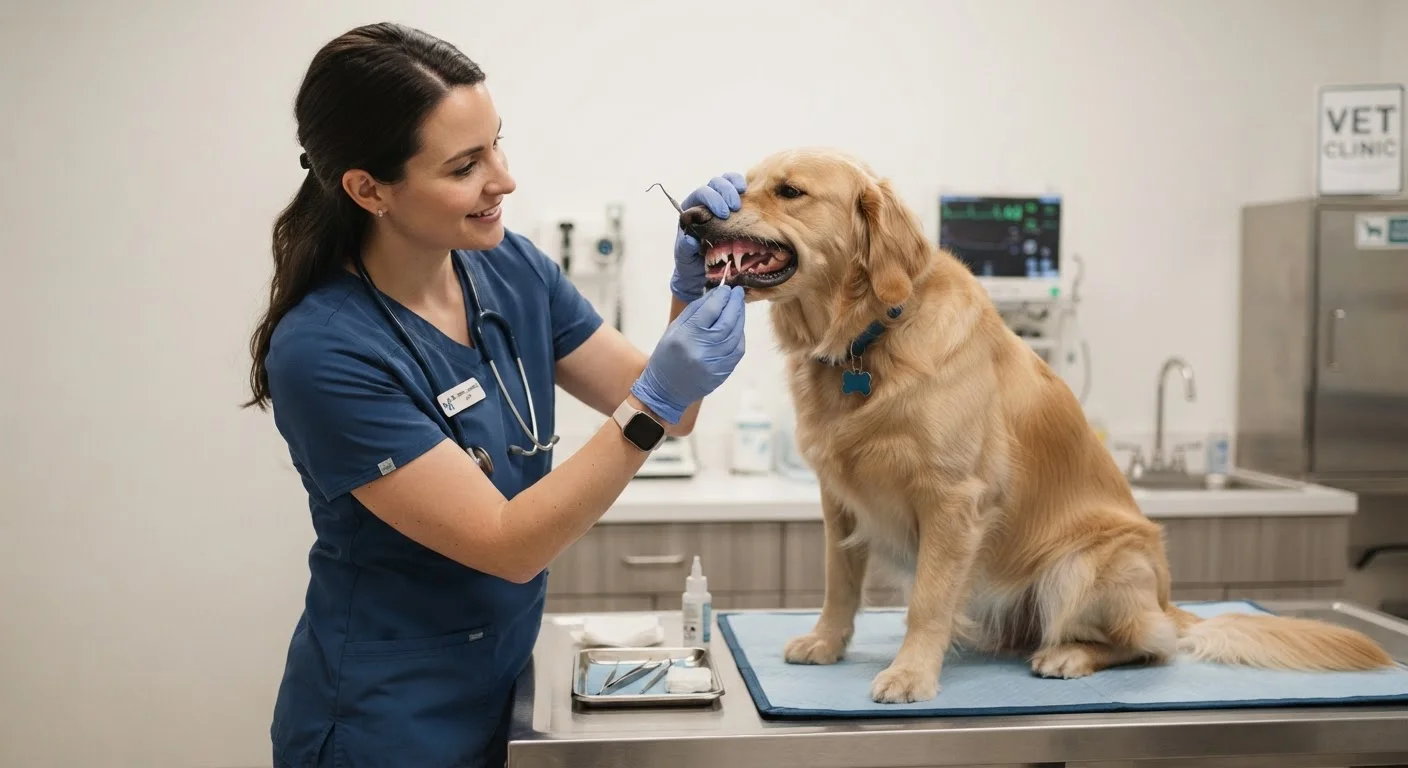
A professional veterinary dental cleaning is substantially more involved than a simple tooth polish. The procedure includes a complete oral exam, dental X-rays to assess below the gumline, scaling to remove tartar and plaque both above and below the gumline, and polishing to slow future buildup. Because a thorough exam and safe instrumentation require a completely still patient, general anesthesia is necessary.
Anesthesia-free dental cleanings - sometimes offered at grooming salons or non-veterinary settings - only address visible surface buildup and cannot safely assess or treat subgingival disease, which is where most serious pathology develops. The American Veterinary Dental College and similar professional bodies do not consider anesthesia-free procedures an adequate substitute for a full dental cleaning.
Anesthesia-Free Cleanings Are Not a Safe Substitute
Dental cleanings performed without anesthesia - often offered at grooming facilities or non-veterinary wellness events - cannot safely assess or treat disease below the gumline. They may make teeth look cleaner while leaving active infection untreated. If you have concerns about anesthetic risk for your pet, discuss them directly with your veterinarian, who can run pre-anesthetic bloodwork and tailor the protocol to your pet's individual health status.
Between professional cleanings, at-home care makes a real difference. Daily tooth brushing using a pet-safe enzymatic toothpaste is the most evidence-supported method for slowing plaque accumulation. Dental chews, rinses, and water additives may offer supplemental benefit but generally cannot replace brushing. Your veterinarian can help you build a realistic routine based on your pet's individual tolerance and risk level.
Dental health connects to your pet's broader wellness picture. Conditions like obesity can complicate anesthetic procedures, and systemic disease may affect healing. For context on how oral care fits into a complete preventive approach, the Preventive Health Calendar for Dog Owners outlines the full range of wellness milestones worth tracking.
This article provides general information for educational purposes and is not a substitute for veterinary advice. Always consult a licensed veterinarian for guidance specific to your pet's health needs.