

Key Takeaways
Start here
How Japan's Rail System Is Structured
Next
The Shinkansen: Japan's Bullet Train Network
Then
Local, Rapid, and Express Trains: Understanding the Tiers
Before you arrive
IC Cards: The Easiest Way to Pay for Trains
Plan ahead
The Japan Rail Pass: Who It Actually Makes Sense For
Ready to ride
Practical Tips for First-Time Riders
How Japan's Rail System Is Structured
Japan's rail network is one of the most extensive in the world, carrying hundreds of millions of passengers annually across a web of national, regional, and urban lines. Understanding its basic architecture is the first step to riding it confidently.
At the national level, Japan Railways (JR) operates a group of regional companies that together cover most of the country, including the famous shinkansen high-speed lines. Alongside JR, dozens of private railways serve specific regions and corridors - companies like Hankyu, Kintetsu, and Tobu connect cities, suburbs, and tourist destinations that JR doesn't always reach directly. Major cities also have municipal subway systems operating independently under their own fare structures.
These networks overlap and interconnect at large stations, which means a single journey might combine a JR commuter line, a subway segment, and a private railway - each with its own ticketing rules. That sounds complicated, but in practice an IC card (described below) handles most urban travel seamlessly. For trip planning context, see how to research a destination before you go to build a fuller picture of Japan's regions before booking anything.
The Shinkansen: Japan's Bullet Train Network
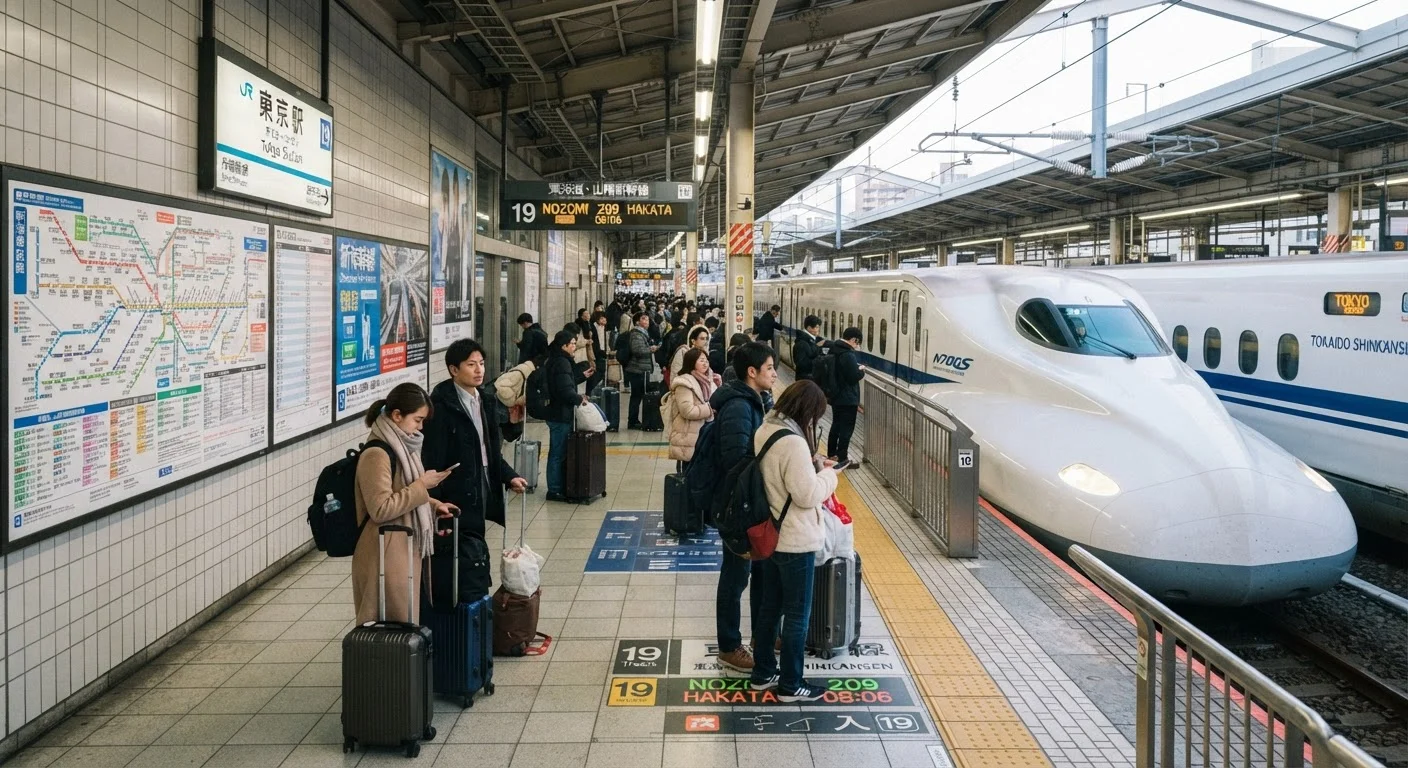
The shinkansen - popularly called the bullet train - is Japan's flagship intercity rail service. Lines connect major cities including Tokyo, Osaka, Kyoto, Hiroshima, Nagoya, Sendai, and Sapporo (via the Hokkaido Shinkansen), reaching speeds that make journeys once measured in hours feel refreshingly short.
Several distinct shinkansen lines branch across the country, each operated by a regional JR company. Within each line, trains run at different service levels: Nozomi and Mizuho are the fastest, stopping only at major cities; Hikari and Sakura stop at more stations; Kodama and Tsubame are the slowest, making all stops. The faster services typically cost the same base fare as slower ones but require a seat reservation.
Tickets can be purchased at station counters, ticket machines, or through certain apps. Seats are split into reserved and unreserved cars - reserved seats are worth booking during busy periods like Golden Week, Obon, and New Year's holidays.
Local, Rapid, and Express Trains: Understanding the Tiers
Beyond the shinkansen, Japan's rail system uses a tiered service structure that determines how many stops a train makes - and sometimes whether you need to pay an additional surcharge.
- Local (各駅停車, kakueki teisha): Stops at every station. Ideal for short hops or when your destination isn't served by faster services.
- Rapid (快速, kaisoku): Skips some stations, faster for medium-distance journeys. Usually no extra charge on JR lines.
- Express (急行, kyūkō): Fewer stops than rapid. Some services require an express surcharge on certain private railways.
- Limited Express (特急, tokkyū): The fastest non-shinkansen service; usually requires a reserved seat and a limited express surcharge on top of the base fare.
When reading a route on a station board or app, look for the service type alongside the departure time - boarding the wrong service level won't strand you, but it may take longer or carry an unexpected fare.
IC Cards: The Easiest Way to Pay for Trains
An IC card (short for Integrated Circuit card) is a rechargeable prepaid card you tap at fare gates to pay for trains, subways, and many buses. Cards such as Suica (issued by JR East) and Pasmo (Tokyo-area private railways and subways) are among the most widely recognized, but equivalent cards exist in other regions - ICOCA in the Osaka-Kansai area, for instance.
The major cards are interoperable across most of Japan's urban rail and subway networks, meaning a Suica loaded in Tokyo works fine on Kyoto city buses and Osaka's subway. You can also use IC cards at many convenience stores and vending machines, which adds practical value throughout your trip.
Cards are available at major JR station ticket machines and some airport counters. A refundable deposit is typically required when you first obtain a physical card. Alternatively, some visitors add a Suica card to a compatible mobile wallet - verify current availability and device compatibility through official sources, as these arrangements can change.
Reload Your IC Card at Any Ticket Machine
You don't need to find the machine for your specific card brand - most station ticket machines across Japan accept all major IC cards for top-ups. Keep at least ¥1,000-¥2,000 loaded so you're never caught short at a fare gate. Machines at major stations typically accept credit cards as well as cash.
The Japan Rail Pass: Who It Actually Makes Sense For
The Japan Rail Pass (JR Pass) is a flat-rate unlimited travel pass covering most JR lines - including many shinkansen services - available exclusively to visitors on tourist visas. It is purchased before arrival through designated sales channels.
The pass makes financial sense when your itinerary includes multiple long-distance journeys. A round-trip on the shinkansen between Tokyo and Kyoto alone approaches the cost of a 7-day pass at standard rates, so travelers adding Hiroshima, Kyushu, or Tohoku to their route often find clear value. Travelers spending most of their trip in a single city or region, however, may find that individual tickets or an IC card cost considerably less.
Note that Nozomi and Mizuho shinkansen services - the fastest ones on the Tokaido/Sanyo/Kyushu lines - are not covered by the standard JR Pass. Pass holders ride the slightly slower Hikari and Sakura services on those corridors instead. Always calculate your planned routes against current pass prices before deciding; consult official JR Pass documentation for up-to-date pricing and terms. For broader trip planning fundamentals, what first-time trip planners should understand before booking is a solid starting point.
Practical Tips for First-Time Riders
A few habits will make your experience noticeably smoother from day one:
- Use a route-planning app. Apps that offer English-language support and real-time schedules are invaluable for navigating multi-operator journeys. They calculate fares, show transfer points, and flag service disruptions.
- Follow platform etiquette. Queue behind the marked lines on platforms, board in an orderly fashion, and keep voice calls and conversations quiet in train cars.
- Validate IC card balance before boarding. Fare gates will reject a card with insufficient funds. Top up at any ticket machine - they accept cash and often credit cards.
- Check the last train time. Late-night service ends earlier than many visitors expect. Missing the last train in a city you don't know well is an avoidable inconvenience.
- Verify entry and travel requirements officially. Visa status, IC card availability, and JR Pass purchase rules are subject to change - confirm details with Japanese government sources and official rail operators before your trip.
Japan's trains reward a small investment of preparation with genuinely stress-free travel. Explore the Travel Tips & Hacks hub for more strategies on traveling efficiently once you arrive.