

Key Takeaways
Lower per-change cost once tools are purchased
Buying oil and a filter directly skips the shop's labor and markup, which can mean meaningful savings over time - particularly with full-synthetic oil.
Full control over oil type and brand
You choose exactly which oil specification goes into your engine, removing any uncertainty about whether the shop used the grade your manufacturer recommends.
Builds mechanical familiarity with your vehicle
Regular hands-on access to your engine bay makes it easier to notice anomalies - unusual leaks, worn hoses, or loose connections - before they become costly problems.
No appointment or waiting room required
You work on your own schedule, which can be especially convenient for drivers in areas without nearby service centers or with irregular working hours.
Upfront tool costs reduce early savings
A quality floor jack, jack stands, drain pan, and filter wrench can cost $100-$200 or more, erasing most of the savings on your first several DIY changes.
Used oil disposal adds time and logistics
Motor oil is hazardous waste - it must be collected, stored, and dropped off at a recycling point, which is an extra errand most people don't factor into their planning.
No multi-point inspection included
Professional shops typically check tires, fluids, belts, and filters during a service visit; doing it yourself means those checks only happen if you specifically look for them.
Safety risks if lifting equipment is improper
Working under an inadequately supported vehicle is genuinely dangerous. Using the wrong jack points or skipping jack stands entirely is among the most common - and serious - DIY mistakes.
Messier and more time-consuming than it looks
Oil spills, cross-threaded drain plugs, and over-tightened filters are common beginner errors that can make a simple job take far longer and potentially damage components.
Our Verdict
DIY oil changes make sense for mechanically comfortable drivers with proper equipment, storage space, and time to spare - particularly those who change oil frequently or use pricier synthetic blends. For drivers without reliable lifting equipment, limited time, or vehicles still under service agreements, a professional shop often delivers better value when convenience and inspection coverage are factored in.
Drivers with basic mechanical confidence, a safe workspace, and the right tools who want hands-on control over their vehicle's maintenance.
Why This Decision Matters More Than It Seems
An oil change sounds like the simplest task in car ownership. Yet the choice between doing it yourself and paying a shop has real implications for your wallet, your schedule, and your vehicle's long-term health. Neither option is categorically right - the better path depends on your circumstances, your comfort level, and what you actually value out of the process.
Before deciding, it helps to understand what each route really involves. See our guide to reading your owner's manual to understand what your manufacturer actually recommends - that's the foundation for any oil change decision.
The Case for Doing It Yourself
The most cited reason for DIY oil changes is cost savings. Buying oil and a filter directly typically runs less than a full-service shop visit, especially if you're using a synthetic blend. Over several changes a year, that gap adds up.
Lower per-change cost once tools are purchased
Buying oil and a filter directly skips the shop's labor and markup, which can mean meaningful savings over time - particularly with full-synthetic oil.
Full control over oil type and brand
You choose exactly which oil specification goes into your engine, removing any uncertainty about whether the shop used the grade your manufacturer recommends.
Builds mechanical familiarity with your vehicle
Regular hands-on access to your engine bay makes it easier to notice anomalies - unusual leaks, worn hoses, or loose connections - before they become costly problems.
No appointment or waiting room required
You work on your own schedule, which can be especially convenient for drivers in areas without nearby service centers or with irregular working hours.
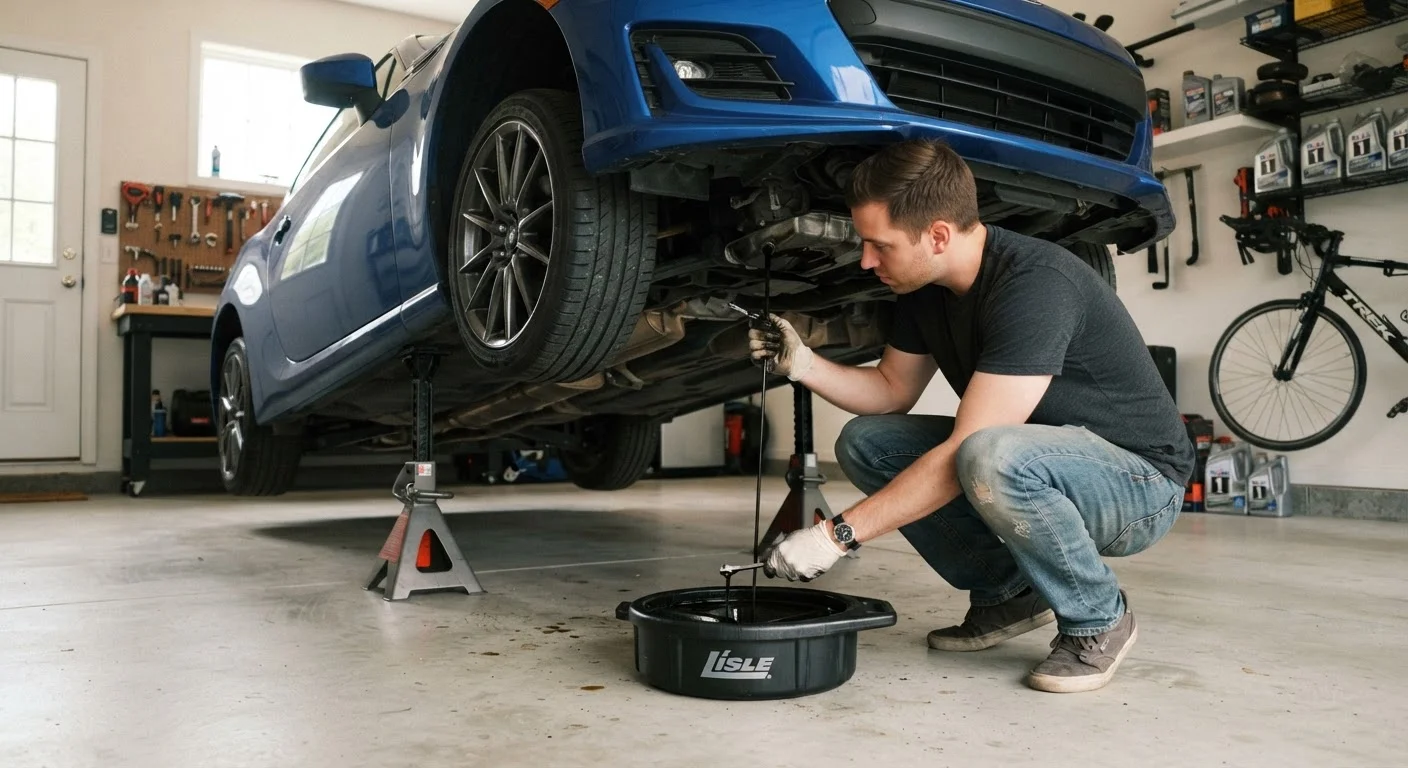
That said, the savings aren't as straightforward as they appear. You'll need a drain pan, an oil filter wrench, a funnel, a floor jack rated for your vehicle's weight, and jack stands - never rely on a floor jack alone to support a car you're working under. If you don't already own these tools, the upfront investment narrows your savings margin considerably, at least for the first year or two.
For drivers who change their oil every 5,000-7,500 miles (or more often with older vehicles), the per-change savings eventually outweigh the tool cost. Those using full synthetic oil - which often commands a significant markup at quick-lube shops - tend to see the clearest financial benefit from going DIY. Our overview of synthetic vs. conventional motor oil breaks down the cost and performance differences worth knowing before you buy.
What You Give Up When You Skip the Shop
Professional oil change shops aren't just swapping your fluid. Most include a multi-point inspection - checking tire pressure, air filters, wiper blades, fluid levels, and belts. A technician who spots a cracked serpentine belt or low brake fluid while you're in for an oil change can save you from a breakdown. That kind of catch has real value.
Upfront tool costs reduce early savings
A quality floor jack, jack stands, drain pan, and filter wrench can cost $100-$200 or more, erasing most of the savings on your first several DIY changes.
Used oil disposal adds time and logistics
Motor oil is hazardous waste - it must be collected, stored, and dropped off at a recycling point, which is an extra errand most people don't factor into their planning.
No multi-point inspection included
Professional shops typically check tires, fluids, belts, and filters during a service visit; doing it yourself means those checks only happen if you specifically look for them.
Safety risks if lifting equipment is improper
Working under an inadequately supported vehicle is genuinely dangerous. Using the wrong jack points or skipping jack stands entirely is among the most common - and serious - DIY mistakes.
Messier and more time-consuming than it looks
Oil spills, cross-threaded drain plugs, and over-tightened filters are common beginner errors that can make a simple job take far longer and potentially damage components.
There's also the disposal question. Used motor oil is classified as hazardous waste and cannot be poured down a drain, dumped in the trash, or left in the yard. Most auto parts retailers accept used oil for recycling at no charge, but it adds a step that many DIYers underestimate until they're standing in their driveway with a full drain pan.
The Hidden Costs on Both Sides
~50%
Potential savings per DIY oil change vs. shop
Cost comparisons by consumer auto sites suggest DIY synthetic oil changes can cost roughly half the price of the same service at a quick-lube center, though this varies by region and vehicle.
5,000-10,000 mi
Typical modern oil change interval
Most current vehicle manufacturers recommend oil change intervals between 5,000 and 10,000 miles depending on oil type and driving conditions, per owner's manual guidelines.
Shop markups on oil and filters are real - a quick-lube center may charge two to three times what you'd pay for the same synthetic oil at a parts store. However, shops benefit from bulk purchasing and efficiency; a trained technician can complete the job in under 20 minutes. At home, especially if you're still learning, that same job can take an hour or more once you factor in setup and cleanup.
Time has a dollar value. If DIY takes 90 minutes including a trip to dispose of used oil, and a shop appointment takes 30 minutes during your lunch break, the financial savings shrink against the opportunity cost. This calculation is personal - only you know how you value your time. For a broader look at where oil change habits fit into overall vehicle costs, see our piece on keeping vehicle ownership costs under control.
Check Your Warranty or Service Plan First
Some new vehicles come with complimentary maintenance packages that cover oil changes for a set number of years or miles. If your car qualifies, DIY changes during that window won't save you money - and skipping the included service could mean losing the added inspection coverage. Check your purchase agreement or contact your dealer to confirm what's included before deciding.
One underappreciated factor: some new vehicle warranties or dealer service agreements may include complimentary oil changes for a set period. If that applies to your car, DIY may not save you anything at all during that window.
Making the Right Call for Your Situation
The honest answer is that both approaches work - when done correctly. A DIY oil change performed properly with the right oil and a fresh filter is just as effective as a shop service. A shop oil change performed by a trained tech and paired with a thorough inspection can catch problems you'd never notice yourself.
Ask yourself a few practical questions: Do you have a flat, stable surface and proper jack stands? Do you know your vehicle's oil specification and capacity? Are you comfortable working under a raised vehicle safely? If you answered yes to all three, DIY is a reasonable choice. If any answer is no, a shop is the safer and more practical option - there's no shame in that.
It's also worth examining common assumptions about maintenance timing. Our article on maintenance myths that could hurt your car addresses the persistent belief that oil must be changed every 3,000 miles - a figure that most modern vehicles simply don't require.
This article is for general informational purposes. Always follow your vehicle manufacturer's specifications and consult a qualified mechanic if you are unsure about any maintenance procedure.