

Key Takeaways
Why the Owner's Manual Is Your Best Maintenance Reference
Generic service recommendations - like the old rule of changing oil every 3,000 miles - were never universal, and they matter even less today. Modern engines, synthetic oils, and tighter manufacturing tolerances mean that your vehicle's specific requirements may look quite different from a neighbor's car of the same year. The manufacturer's maintenance schedule, developed through engineering testing for that exact model, is the most accurate baseline you have. Yet surveys consistently find that most drivers either don't know the schedule exists or rely entirely on a shop's judgment about what's due.
That's not necessarily wrong - a trusted mechanic is a valuable resource - but understanding the schedule yourself gives you context for every service recommendation you receive. You'll know whether a suggested service is actually due or whether it's being offered ahead of schedule. This knowledge also helps when talking to a mechanic about upcoming maintenance needs. And if you're curious how deferred services compound into bigger costs, our article on why skipping routine maintenance costs more explains the financial picture clearly.
What you will need
What the Schedule Covers - and What It Doesn't
A manufacturer's maintenance schedule covers scheduled preventive services: replacing consumable components and fluids at defined intervals before they degrade to the point of causing damage. It typically does not cover reactive repairs - things that break unexpectedly due to road conditions, age, or manufacturing variability. Think of the schedule as the foundation, not the ceiling.
Common items you'll find in most schedules include engine oil and filter changes, tire rotations, air and cabin filter replacements, spark plug replacements, brake fluid exchanges, transmission and differential fluid changes, and coolant flushes. For more detail on fluid types and what each reservoir does, see our guide on understanding your car's fluid levels. Tire-related intervals, including rotation, are also built into most schedules - and our overview of tire pressure, tread, and rotation covers what those services actually involve.
One common point of confusion: the manual may not address every maintenance myth you've heard. For a clear breakdown of what's fact versus outdated advice, maintenance myths that could actually hurt your car is worth reading alongside the manual itself.
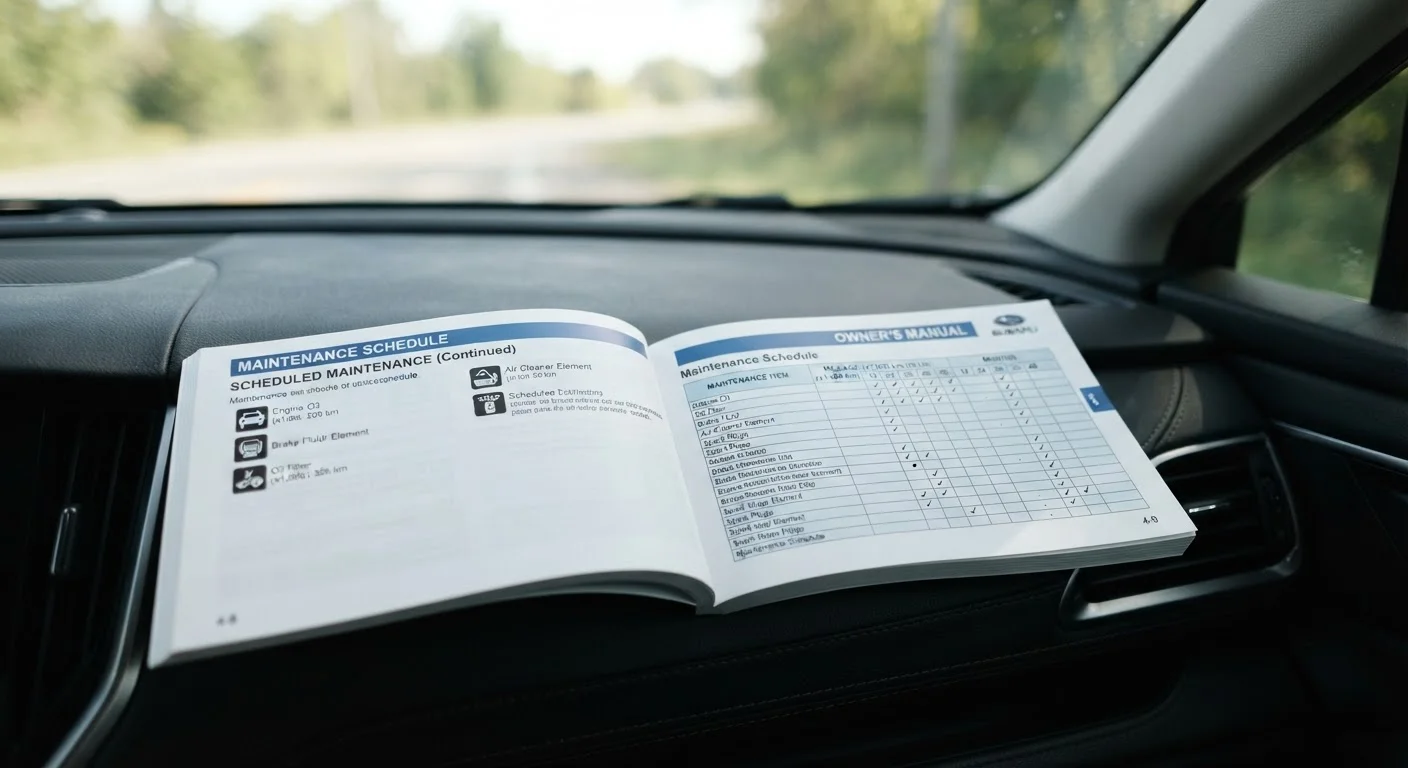
Owner's Manual
Contains the manufacturer's official maintenance schedule and fluid specifications for your specific vehicle.
Maintenance Log or Notebook
Used to record service dates, mileage, and completed tasks so you can track intervals accurately.
Smartphone or Calendar App
Set reminders for upcoming service intervals based on mileage or time thresholds.
Turning the Schedule Into a Long-Term Habit
Following the steps above once is useful. Treating the maintenance schedule as a living reference - updated with each service - is what actually protects your vehicle over time. Consistent, documented maintenance keeps your powertrain warranty intact, makes it easier to diagnose problems when they arise, and gives future buyers confidence in the vehicle's history.
If your driving patterns shift - say you start towing a trailer, move to a region with extreme weather, or dramatically change how much you drive - revisit the manual's driving-condition definitions and adjust accordingly. Low-mileage drivers in particular should note that time-based intervals still apply even when the odometer barely moves. Our article on keeping a car in good shape when you rarely drive it addresses the specific challenges that come with infrequent use.
For a broader view of how smart maintenance habits fit into overall ownership economics, keeping vehicle ownership costs under control over time offers practical context. And pairing your manual-based schedule with a seasonal maintenance checklist ensures nothing slips between scheduled intervals.