

Key Takeaways
Summary
22 items · 30-60 minutes to audit and shop
Why Your Pantry Is a Decision-Making Environment
What you reach for when you're tired, rushed, or distracted is largely determined by what's already in your kitchen. Nutrition researchers call this the principle of food environment design - the idea that availability shapes behavior far more reliably than willpower does. A pantry stocked with versatile whole foods makes nutritious meals the path of least resistance, not a conscious act of discipline.
This checklist is built around that logic. Rather than overhauling your eating habits all at once, stocking the right staples creates the conditions for better choices by default. You'll spend less time improvising unhealthy meals in a bare kitchen and more time assembling quick, satisfying ones from ingredients that are already there.
If budget is a consideration - and for most households it is - know that the items on this list are among the most cost-effective foods you can buy per serving. For more on eating well without spending a premium, see our guide on affordable nutrition principles. And if you're looking to align your grocery spending with a broader financial plan, the Smart Spending guide offers practical budgeting strategies worth reading alongside this checklist.
Watch Sodium in Canned and Jarred Goods
Many canned beans, tomatoes, and broths contain significant added sodium. Look for low-sodium or no-salt-added versions when available, or rinse canned beans before use - this can reduce sodium content meaningfully. People managing blood pressure or kidney conditions should discuss dietary sodium with their healthcare provider.
Shelf Life Isn't Infinite
Even shelf-stable staples degrade in quality over time. Oils can go rancid, spices lose potency, and whole grains develop off flavors after many months. Do a quick pantry audit every three to four months and rotate older items to the front.
How to Use This Checklist
Before shopping, do a quick scan of your current pantry. The goal isn't to buy everything at once - it's to identify gaps and fill them gradually over a few grocery trips. Group similar categories together on your shelves so that grains are with grains, proteins with proteins, and so on. This small organizational step, explored in depth in discussions of pantry storage approaches, measurably reduces the mental friction of cooking.
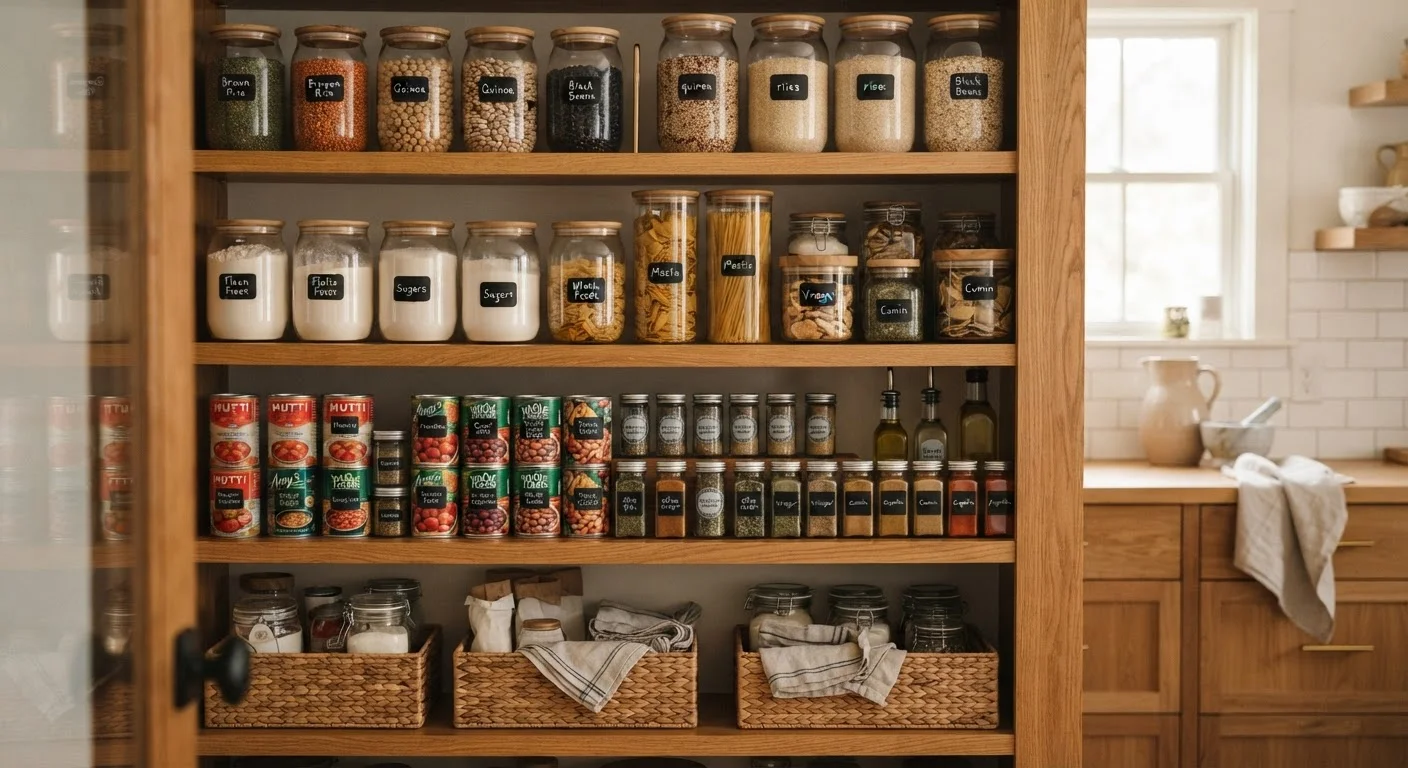
Use airtight containers where possible for items bought in bulk - grains, nuts, and legumes stay fresher longer and are easier to see at a glance. Work through the checklist category by category below.
Clear Airtight Containers
Store grains, legumes, and nuts to extend shelf life and make inventory easy to see at a glance.
Pantry Inventory List
A written or digital list of current stock helps you shop efficiently and avoid over-buying.
Label Maker or Masking Tape
Label containers with contents and purchase dates to reduce waste and keep things organized.
Shelf Risers or Organizers
Improve visibility of items at the back of shelves so nothing gets forgotten and unused.
Putting It Together: From Pantry to Plate
The real payoff from a well-stocked pantry is the meals that come together without planning. A can of chickpeas, a jar of crushed tomatoes, olive oil, and a few spices becomes a satisfying weeknight dinner in under 20 minutes. Oats, nut butter, and dried fruit make a breakfast that requires no cooking at all. These aren't recipes that demand effort - they're combinations that your pantry makes almost inevitable.
Consistency matters more than perfection. Research into dietary patterns linked to long-term health consistently finds that overall food environment and eating patterns - not single superfoods - predict outcomes over time. A pantry stocked with a range of whole grains, legumes, healthy fats, and flavorful basics gives you the raw material for that kind of pattern. It's also worth reviewing the habits that can quietly offset good food choices, since even a well-stocked kitchen can be undercut by how and when you eat.
Whole Grains & Starches
Proteins & Legumes
Healthy Fats & Oils
Canned & Jarred Vegetables
Flavor Foundations
Long-Shelf-Life Extras
This Is General Nutrition Information
The guidance in this article is educational and applies to a general adult audience. It is not personalized medical or dietary advice. If you have a health condition, food allergy, or specific nutritional need, consult a registered dietitian or your healthcare provider before making significant changes to your diet.
This article is for general informational and educational purposes only and does not constitute medical or dietary advice. Consult a qualified healthcare professional for guidance specific to your health needs.