

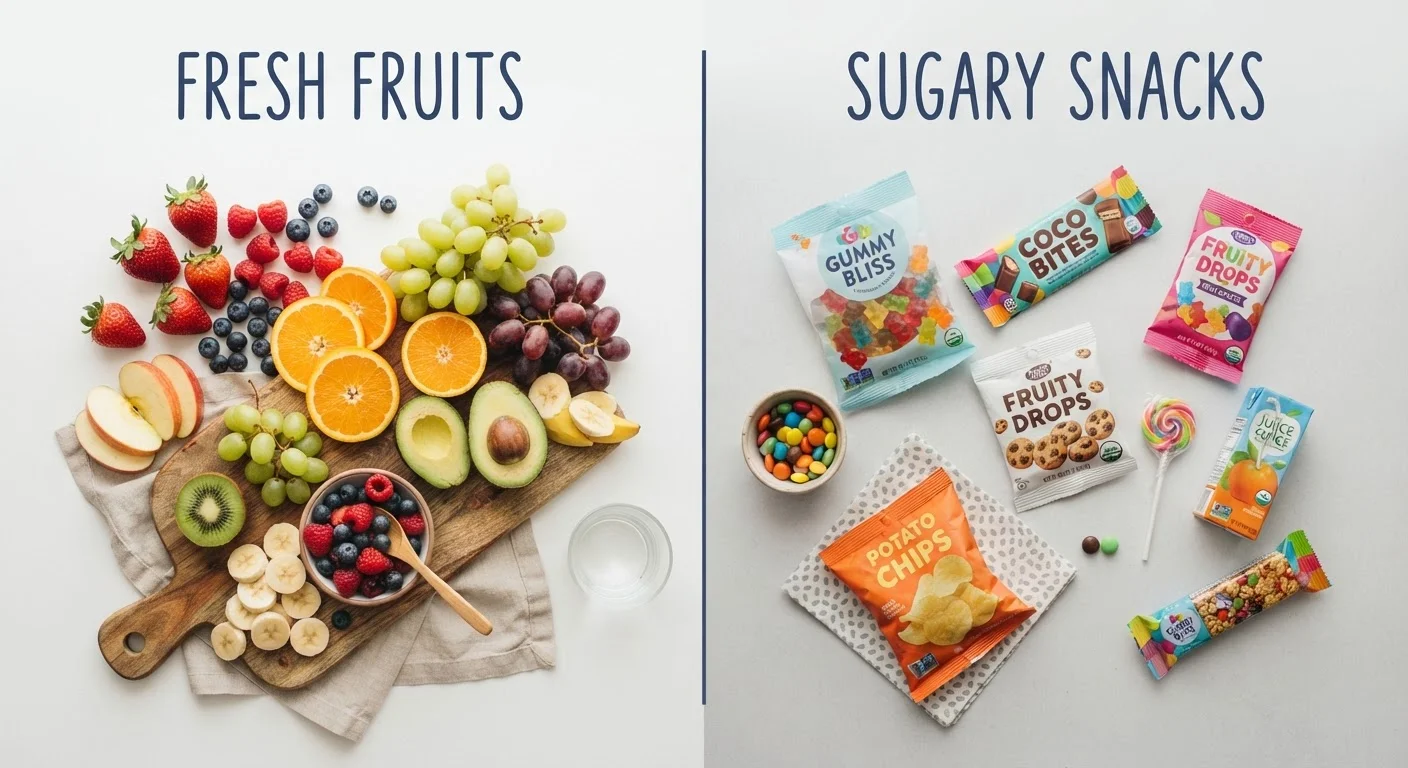
Key Takeaways
Option A
Natural Sugar
The sugar your body was built to handle.
Best for: People eating whole fruits, vegetables, dairy, and other minimally processed foods as part of a balanced diet.
Option B
Added Sugar
The sugar that sneaks into nearly everything processed.
Best for: Understanding what to limit - the sugars manufacturers stir into foods during production, offering calories with little nutritional payoff.
If you're trying to reduce overall sugar intake
Natural Sugar
Swapping added-sugar sources for whole fruits and dairy keeps sweetness in your diet while delivering fiber and micronutrients your body uses.
If you're reading a nutrition label to make a smarter choice
Natural Sugar
Look specifically at the 'Added Sugars' line - minimizing that number matters more than the total sugar count for most healthy adults.
If you want a satisfying sweet treat with minimal dietary downside
Natural Sugar
Whole fruits deliver sweetness alongside water, fiber, and antioxidants, making them a nutritionally complete option compared to sugar-sweetened alternatives.
If you're managing blood sugar or metabolic health
Natural Sugar
The fiber matrix in whole foods slows glucose absorption, though anyone managing a metabolic condition should discuss dietary choices with their healthcare provider.
What Makes a Sugar 'Natural' or 'Added'?
Sugar is sugar at the molecular level - fructose, glucose, and sucrose appear in both an apple and a can of soda. What differs is the context in which that sugar arrives in your body.
Natural sugars are those inherently present in whole foods. The fructose in a peach, the lactose in milk, and the glucose in a carrot all qualify. These sugars come bundled with fiber, water, vitamins, minerals, and other compounds that influence how quickly the sugar enters your bloodstream and what your body does with it.
Added sugars, by contrast, are any sugars or caloric sweeteners incorporated into foods or beverages during processing or preparation. This includes white table sugar, high-fructose corn syrup, honey stirred into a granola bar, and maple syrup poured into a salad dressing during manufacturing. The U.S. Food and Drug Administration now requires food labels to list added sugars separately, making it easier to spot them.
The distinction is partly about chemistry and partly about what accompanies the sugar - and that accompaniment changes everything nutritionally. For a broader look at how processing shapes nutritional value, see our guide to whole foods vs. processed foods.
How Your Body Responds Differently
When you eat a whole orange, the fiber in its cell walls slows the digestion and absorption of fructose. Your blood glucose rises gradually, insulin responds proportionately, and you feel full before you've consumed excess calories. The vitamins C, folate, and potassium in that orange are absorbed alongside the sugar, adding real nutritional return.
Drink an equal amount of fructose in a sweetened beverage and the picture changes. With no fiber to slow absorption, sugar enters the bloodstream rapidly. Repeated spikes in blood glucose and insulin over time are associated - in large, well-designed studies - with increased risk of type 2 diabetes, cardiovascular disease, and weight gain. The beverage delivers energy but little else your body needs.
| Criterion | Natural Sugar | Added Sugar |
|---|---|---|
| Source | Inherent in whole foods | Added during manufacturing or cooking |
| Comes with fiber? | Yes (in most whole foods) | Rarely |
| Micronutrient package | Vitamins, minerals, antioxidants | Minimal to none |
| Rate of blood glucose rise | Slower (buffered by fiber) | Faster (little to no buffer) |
| Dietary guideline limit | No specific limit for whole foods | Below 10% of daily calories (U.S. guidelines) |
| Common examples | Fructose in fruit, lactose in milk | Corn syrup, cane sugar, agave nectar |
| Label visibility | Listed under Total Sugars only | Listed separately as Added Sugars |
Research consistently distinguishes between whole fruit consumption, which is associated with favorable health outcomes, and high added-sugar intake, which is linked to metabolic harm. This isn't a contradiction - it's evidence that the fiber matrix and micronutrient package matter enormously.
Where Added Sugars Hide - and How to Find Them
The obvious sources - candy, cookies, soda - account for only part of American added-sugar consumption. Significant amounts come from foods that don't taste overtly sweet: bread, pasta sauce, flavored yogurt, salad dressing, protein bars, and condiments.
Decoding the Updated Nutrition Facts Label
Since 2020, the FDA has required most packaged food manufacturers to list 'Added Sugars' as a distinct line item on the Nutrition Facts panel, along with a % Daily Value. A product showing 15g Total Sugars but only 5g Added Sugars (for example, in a flavored dairy product) tells a meaningfully different story than one where all 15g are added. This transparency makes it easier to compare products and make informed choices without having to decode every ingredient name.
On any U.S. nutrition facts label, look for two lines under Total Carbohydrates: Total Sugars and, indented below it, Added Sugars. The added sugars figure is what to pay closest attention to. Also scan the ingredient list - added sugars travel under more than 60 names, including cane juice, dextrose, maltose, agave nectar, fruit juice concentrate, and brown rice syrup.
The U.S. Dietary Guidelines for Americans recommend that added sugars make up less than 10% of total daily calories. For a 2,000-calorie diet, that works out to roughly 50 grams - an amount many Americans exceed before lunchtime on a typical day, according to CDC dietary intake data.
Practical steps are straightforward: choose plain yogurt over flavored, opt for water or unsweetened beverages, cook sauces from scratch when practical, and treat sweetened items as occasional rather than everyday choices. Small, consistent shifts tend to be more sustainable than dramatic overhauls.
This article is for general informational and educational purposes only and is not a substitute for professional medical or dietary advice. Consult a qualified healthcare provider for guidance tailored to your individual health needs.