

Key Takeaways
Option A
Whole Foods
The minimally altered, nutrient-dense foundation of a healthy diet.
Best for: People looking to maximize nutrient density, fiber intake, and overall diet quality with foods close to their natural state.
Option B
Processed Foods
A broad spectrum - from lightly modified staples to heavily engineered ultra-processed products.
Best for: Understanding which processed options fit into a balanced diet and which are best limited based on ingredient and nutrient profiles.
If you want to improve overall diet quality and nutrient intake
Whole Foods
Whole foods deliver more fiber, micronutrients, and beneficial plant compounds with fewer additives, making them the most reliable base for a health-supportive diet.
If convenience is a priority and you need quick, shelf-stable options
Processed Foods
Minimally processed options like canned beans, frozen vegetables, and plain yogurt offer genuine convenience without sacrificing significant nutritional value.
If you're managing chronic health conditions through diet
Whole Foods
Health professionals generally recommend emphasizing whole foods for managing conditions like type 2 diabetes or cardiovascular disease - always consult your doctor for personalized guidance.
If you're on a tight budget and need affordable nutrition
Processed Foods
Minimally processed staples such as dried lentils, canned tomatoes, and rolled oats are among the most affordable and nutritious options available.
What 'Processing' Actually Means
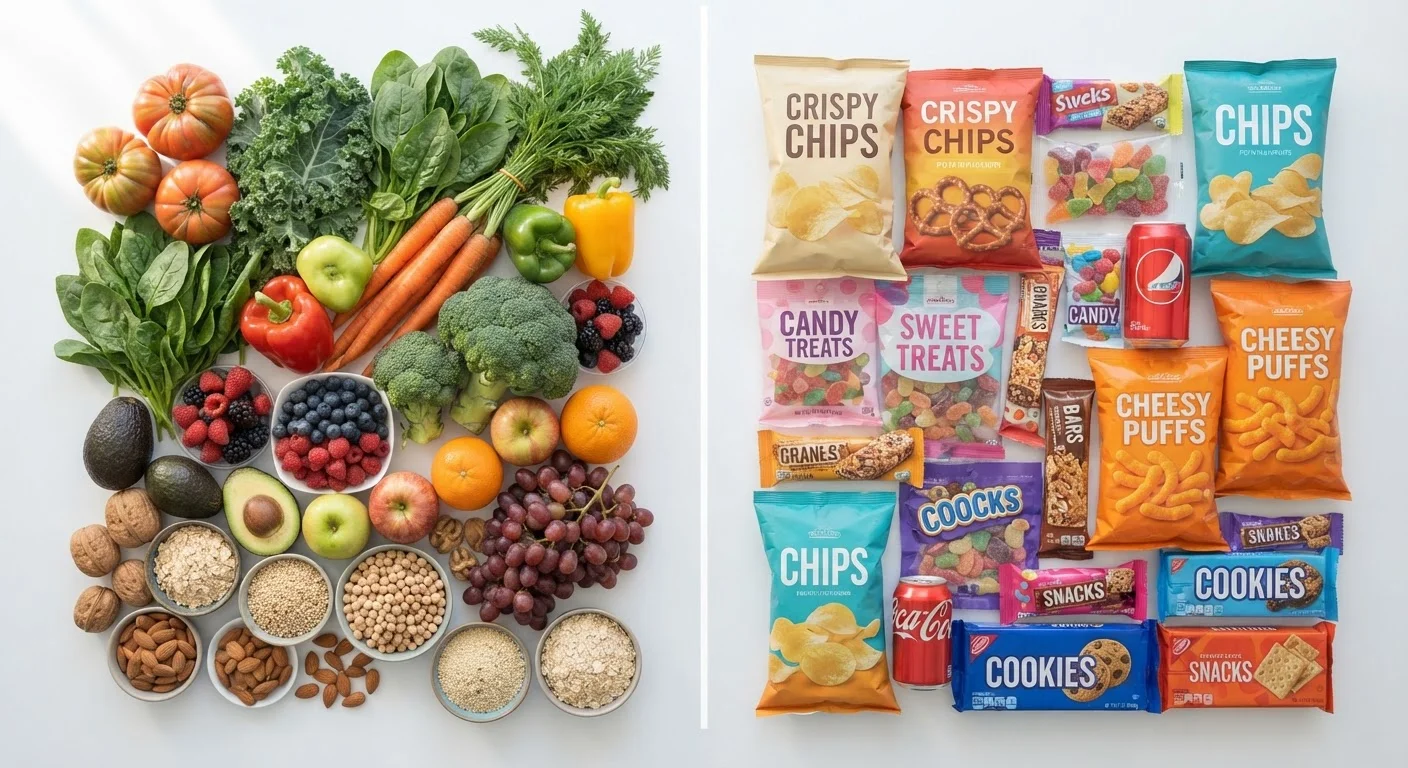
The word processed gets applied to everything from frozen peas to neon-orange cheese puffs - and that range is exactly why the term creates so much confusion. In nutritional science, food processing simply refers to any deliberate change made to a food before you eat it. That includes washing, cutting, cooking, fermenting, freezing, and adding ingredients.
To make the spectrum more useful, nutrition researchers often use the NOVA classification system, developed by Brazilian researchers at the University of São Paulo. NOVA groups foods into four categories based on the extent and purpose of their processing - not just whether they were touched before reaching your plate.
- Group 1 - Unprocessed or minimally processed: Foods in their natural state or with minor alterations (e.g., cleaning, chilling, plain freezing). Think fresh fruit, plain oats, unsalted nuts, and fresh meat.
- Group 2 - Processed culinary ingredients: Substances extracted from natural foods, like olive oil, flour, butter, or salt - used to prepare meals, not eaten alone.
- Group 3 - Processed foods: Group 1 foods with added Group 2 ingredients to preserve or enhance flavor. Canned tomatoes, cheese, cured meats, and bread fall here.
- Group 4 - Ultra-processed foods: Industrial formulations with little or no whole food content, often containing additives like emulsifiers, colorants, flavor enhancers, and preservatives not found in home kitchens. Examples include packaged snack cakes, instant noodles, and many soft drinks.
This framework makes it clear that the issue is not processing itself - it's the degree and purpose of processing that matters nutritionally.
How Whole Foods and Ultra-Processed Foods Compare Nutritionally
When researchers compare whole foods with ultra-processed products, several consistent patterns emerge across large population studies. Whole foods tend to offer more fiber, more vitamins and minerals per calorie, and beneficial plant compounds called phytonutrients. Ultra-processed foods, by contrast, are frequently higher in added sugars, refined starches, sodium, and saturated fat - while delivering fewer micronutrients relative to their caloric content.
| Criterion | Whole Foods | Ultra-Processed Foods |
|---|---|---|
| Fiber content | Naturally high | Often very low |
| Added sugars | None | Frequently high |
| Sodium | Naturally low | Often high |
| Micronutrients | Naturally rich | Often depleted or synthetic |
| Ingredient list length | Very short or none | Long, with additives |
| Satiety per calorie | Generally higher | Generally lower |
| Shelf stability | Often limited | Extended |
| Food additives | Absent | Commonly present |
One important reason is fiber. Whole foods - particularly vegetables, legumes, fruits, and whole grains - deliver dietary fiber that supports gut health, helps regulate blood sugar, and contributes to satiety. Much of that fiber is stripped away during heavy processing. For more on how different nutrients are delivered by common food choices, see our guide to protein sources compared.
Added sugar is another key differentiator. A piece of fruit contains natural sugars packaged with fiber, water, and micronutrients - your body processes it differently than an equivalent amount of sugar in a sweetened beverage or snack cake. Our companion article on natural vs. added sugar explores this distinction in depth.
Reading Labels to Place Foods on the Spectrum
Knowing the theory is useful; applying it at the grocery store is practical. Two tools make this easier: the ingredient list and the Nutrition Facts panel.
The ingredient list is your clearest signal. Whole and minimally processed foods have short, recognizable ingredient lists - or no label at all. As you move toward ultra-processed territory, lists lengthen and fill with substances like high-fructose corn syrup, partially hydrogenated oils, carrageenan, artificial colorings, and flavor enhancers. A general heuristic: if the ingredient list reads more like a chemistry textbook than a recipe, the product leans ultra-processed.
The Nutrition Facts panel tells you what you're actually getting per serving: calories, fiber, protein, and key vitamins and minerals. A high-fiber, lower-sodium product with meaningful micronutrients signals better nutritional value than one heavy on added sugars with minimal fiber. Reading a nutrition facts label without the confusion offers a plain-language breakdown of every line on the panel.
Minimally Processed Can Still Be Nutritious
Frozen vegetables, canned beans (rinsed to reduce sodium), plain yogurt, and rolled oats are all technically processed - but they retain most of their original nutritional value. These foods often represent an affordable, convenient middle ground. Choosing minimally processed options when whole foods aren't practical is a reasonable, evidence-supported approach to everyday eating.
This article is for general informational and educational purposes only and is not a substitute for personalized medical or dietary advice. Consult a registered dietitian or qualified healthcare professional for guidance tailored to your individual health needs.