

Key Takeaways
Creates a hard spending limit that's impossible to ignore
When the grocery envelope is empty, spending stops - there's no credit line to fall back on. This enforced ceiling is one of the most effective ways to prevent category overspending.
Spending feels more real and deliberate
Paying with physical cash triggers a stronger emotional response than tapping a card, which research in consumer psychology consistently links to reduced impulse purchases and more thoughtful decisions at the point of sale.
No account access required - simple and transparent
The cash envelope system requires no app, no bank integration, and no technology. Anyone can use it, making it especially accessible for people new to budgeting or recovering from financial stress.
Eliminates the risk of overdraft fees
Because you're spending money you physically hold, there's no mechanism for accidentally overdrawing an account or triggering bank penalty fees - a real cost for millions of Americans each year.
Encourages category-level awareness
Dividing cash into labeled envelopes forces you to make explicit decisions about how much each area of life is worth, which is itself a valuable budgeting exercise independent of the cash method.
No fraud protection if cash is lost or stolen
Unlike credit or debit cards, lost cash is gone permanently. There's no dispute process, no chargeback, and no insurance - a meaningful risk, especially for larger envelope amounts.
Incompatible with online shopping and bill pay
A growing share of everyday spending - utilities, subscriptions, e-commerce - simply cannot be paid in cash, forcing most households to maintain a partial card system regardless.
You forfeit card rewards and purchase protections
Many credit cards offer cash back, travel points, or extended warranties on purchases. Switching to cash means giving up benefits that, for disciplined cardholders, can amount to hundreds of dollars per year.
No automatic spending record for review
Card statements and bank apps create an automatic audit trail. With cash, tracking requires manual logging - and if you skip that step, you lose the data needed to refine your budget over time.
Carrying cash can feel unsafe or inconvenient
Many people feel less secure carrying significant amounts of cash daily, and frequent ATM trips add logistical friction that can make the system harder to sustain long-term.
Our Verdict
Cash-only spending is a genuinely effective tool for people who consistently overspend when using cards, particularly in discretionary categories. It imposes a hard limit that no app or spreadsheet can fully replicate. That said, it's not a one-size-fits-all solution - the loss of fraud protection, digital records, and card rewards is a real trade-off that many households can't easily absorb.
Best suited for budget-conscious individuals who struggle with impulse spending or have difficulty tracking digital transactions, and who are willing to accept the logistical trade-offs of carrying physical currency.
What Cash-Only Spending Actually Means
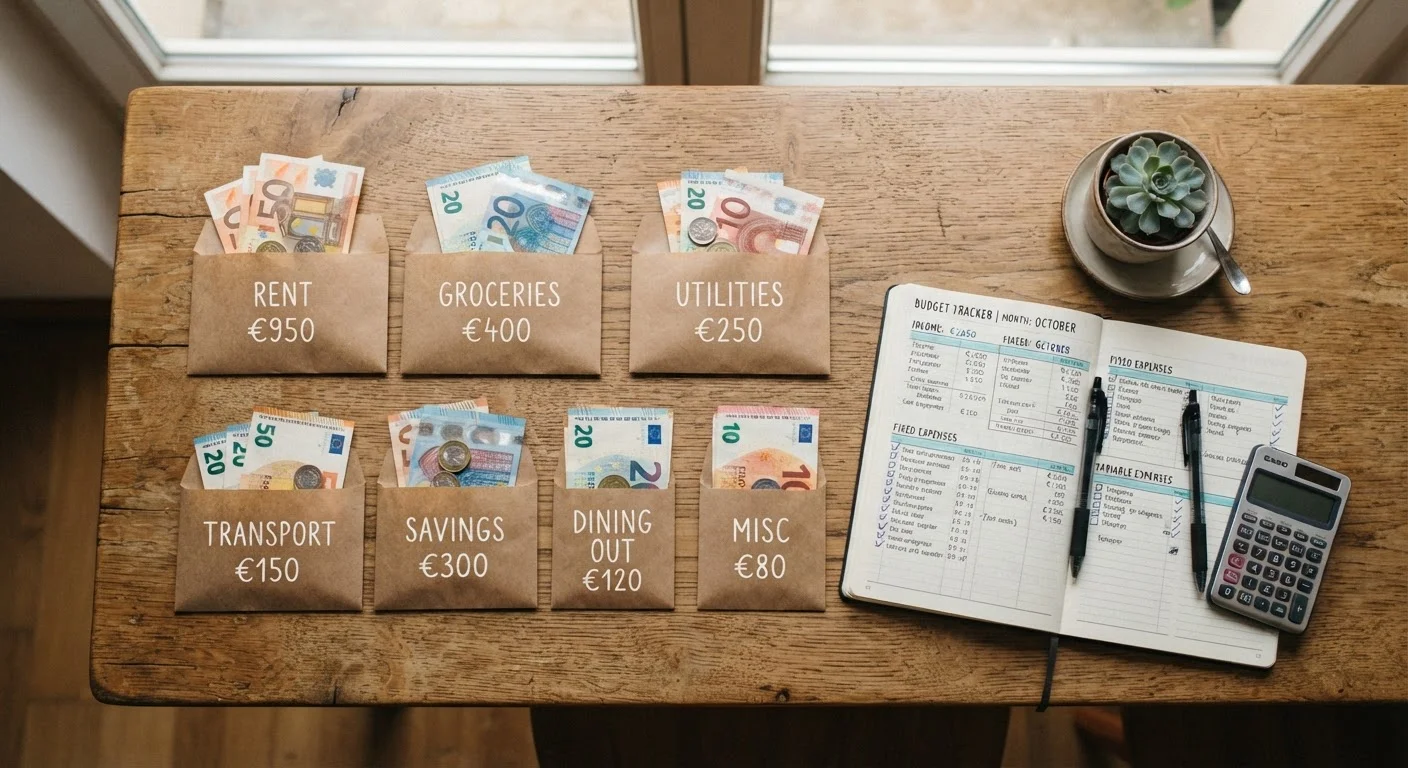
Cash-only spending - sometimes called the envelope method or cash budgeting - means allocating a set amount of physical currency to specific spending categories each pay period. When the envelope is empty, spending in that category stops until the next cycle. No overdraft, no card swipe, no digital workaround.
It's one of the oldest personal budgeting strategies around, and it remains popular precisely because it's simple. You don't need an app, a subscription, or a bank that supports open banking. You need envelopes and discipline.
This article examines both sides honestly - because the right budgeting method is the one that actually works for your life. For a broader look at how this fits alongside other approaches, see our overview of budget tracking methods.
The Case For Going Cash-Only
There's a reason this method has lasted decades: it works for a lot of people. Here are the core advantages.
Creates a hard spending limit that's impossible to ignore
When the grocery envelope is empty, spending stops - there's no credit line to fall back on. This enforced ceiling is one of the most effective ways to prevent category overspending.
Spending feels more real and deliberate
Paying with physical cash triggers a stronger emotional response than tapping a card, which research in consumer psychology consistently links to reduced impulse purchases and more thoughtful decisions at the point of sale.
No account access required - simple and transparent
The cash envelope system requires no app, no bank integration, and no technology. Anyone can use it, making it especially accessible for people new to budgeting or recovering from financial stress.
Eliminates the risk of overdraft fees
Because you're spending money you physically hold, there's no mechanism for accidentally overdrawing an account or triggering bank penalty fees - a real cost for millions of Americans each year.
Encourages category-level awareness
Dividing cash into labeled envelopes forces you to make explicit decisions about how much each area of life is worth, which is itself a valuable budgeting exercise independent of the cash method.
The psychological effect of handing over cash is well-documented in consumer behavior research - spending feels more real when you can physically see and feel money leaving your hands. This friction isn't a bug; it's the feature. If you're looking to build more intentional habits around money, the principles of intentional spending pair naturally with the cash approach.
The Case Against Going Cash-Only
For all its strengths, cash-only budgeting carries trade-offs that are worth taking seriously before you commit.
No fraud protection if cash is lost or stolen
Unlike credit or debit cards, lost cash is gone permanently. There's no dispute process, no chargeback, and no insurance - a meaningful risk, especially for larger envelope amounts.
Incompatible with online shopping and bill pay
A growing share of everyday spending - utilities, subscriptions, e-commerce - simply cannot be paid in cash, forcing most households to maintain a partial card system regardless.
You forfeit card rewards and purchase protections
Many credit cards offer cash back, travel points, or extended warranties on purchases. Switching to cash means giving up benefits that, for disciplined cardholders, can amount to hundreds of dollars per year.
No automatic spending record for review
Card statements and bank apps create an automatic audit trail. With cash, tracking requires manual logging - and if you skip that step, you lose the data needed to refine your budget over time.
Carrying cash can feel unsafe or inconvenient
Many people feel less secure carrying significant amounts of cash daily, and frequent ATM trips add logistical friction that can make the system harder to sustain long-term.
These aren't minor inconveniences for everyone. A household that does most of its shopping online, or that travels frequently, will find cash-only budgeting genuinely disruptive. For a deeper look at what payment method choices really cost you, our article on paying cash vs. using credit walks through the financial implications side by side.
Who Benefits Most - and Who Doesn't
~1 in 3
Americans report regularly overspending their budget
Consumer finance surveys consistently find that a significant share of U.S. adults spend more than they intend to in discretionary categories each month.
Less than 20%
Of U.S. transactions are now made in cash
Federal Reserve payment studies have tracked a long-term decline in cash use, reflecting the shift toward cards and digital wallets for everyday purchases.
Cash-only spending tends to deliver the biggest results for people who identify as overspenders in specific categories - dining out, clothing, entertainment - rather than people who already track every transaction closely. If you find yourself surprised at the end of the month by where money went, cash envelopes create a hard stop that digital tools often can't.
By contrast, if you already use a tracking app religiously, pay your credit card in full each month, and rely on card rewards meaningfully, switching to all-cash may actually cost you money without delivering meaningful behavioral change.
A hybrid approach often makes the most sense: use cash envelopes for your two or three most problematic spending categories, and keep cards for bills, subscriptions, and online purchases where cash is impractical. This is consistent with the broader idea of aligning spending with personal priorities - the goal is to put friction where it helps most.
This article is for general informational and educational purposes only. It does not constitute personalized financial advice. Consider consulting a qualified financial professional for guidance tailored to your specific situation.