

Key Takeaways
Lower cost per unit on everyday staples
Buying larger quantities typically reduces the price per ounce, sheet, or serving. For items used consistently every month, that difference compounds into real savings over time.
Fewer shopping trips and less decision fatigue
Stocking up on household staples reduces how often you need to restock, saving time and reducing the chance of impulse purchases made during frequent store visits.
Protection against price increases
Purchasing non-perishables in bulk when prices are favorable can serve as a hedge against future price increases, particularly on commodity goods subject to supply fluctuations.
Reduces per-use cost for high-frequency items
For products used multiple times per week - cleaning supplies, coffee, cooking oil - the savings on cost-per-use are most pronounced and most consistent over a year.
Ties up cash that could work harder elsewhere
A large upfront purchase locks money into inventory sitting on a shelf. That same cash could reduce a credit card balance, add to an emergency fund, or cover an unexpected expense.
Perishables often expire before you use them
Bulk quantities of food with limited shelf lives - produce, bread, dairy, deli meats - frequently go to waste. When you factor in spoilage, the effective cost per unit often exceeds buying smaller amounts.
Storage demands can be impractical or costly
Large quantities require dedicated space. Without adequate storage, bulk items end up in inconvenient or unsuitable conditions, and for some households, there simply isn't room.
Warehouse memberships add to the true cost
Membership-based bulk retailers charge annual fees that can range from $60 to over $120. These fees need to be factored into your actual savings calculation - they aren't free access to lower prices.
Encourages over-consumption of some products
Research in consumer behavior suggests that people tend to use products faster when they have more of them on hand, particularly for consumables like snack foods or cleaning wipes. Abundance can erode the savings.
Our Verdict
Bulk buying is a genuinely useful strategy for households that use high volumes of non-perishable goods and have the storage space and upfront cash to support it. For smaller households, those with limited budgets, or anyone buying items they don't consume quickly, the savings on the label rarely match the savings in practice.
Larger households with predictable consumption patterns, stable cash flow, and adequate storage who regularly use non-perishable staples.
What Bulk Buying Actually Means for Your Budget
Buying in bulk typically means purchasing larger quantities of a product - often at a warehouse store or through multi-pack deals - in exchange for a lower cost per unit. On the surface, that math is hard to argue with. But unit price is only one variable in the equation.
The real question is whether a lower unit cost translates to lower total spending. That depends on factors most shoppers don't pause to evaluate: how quickly they'll use the product, how much cash they're tying up at purchase, whether they have somewhere to store it, and whether they'd have spent that money on something more pressing otherwise. This is general financial information to help you think through the trade-offs - your specific situation will determine what's right for you.
For a broader look at how purchase decisions affect your financial picture, see principles for evaluating large purchases. And if you're weighing how you pay - not just what you buy - cash versus credit at checkout has its own set of trade-offs worth understanding.
The Real Advantages of Buying in Bulk
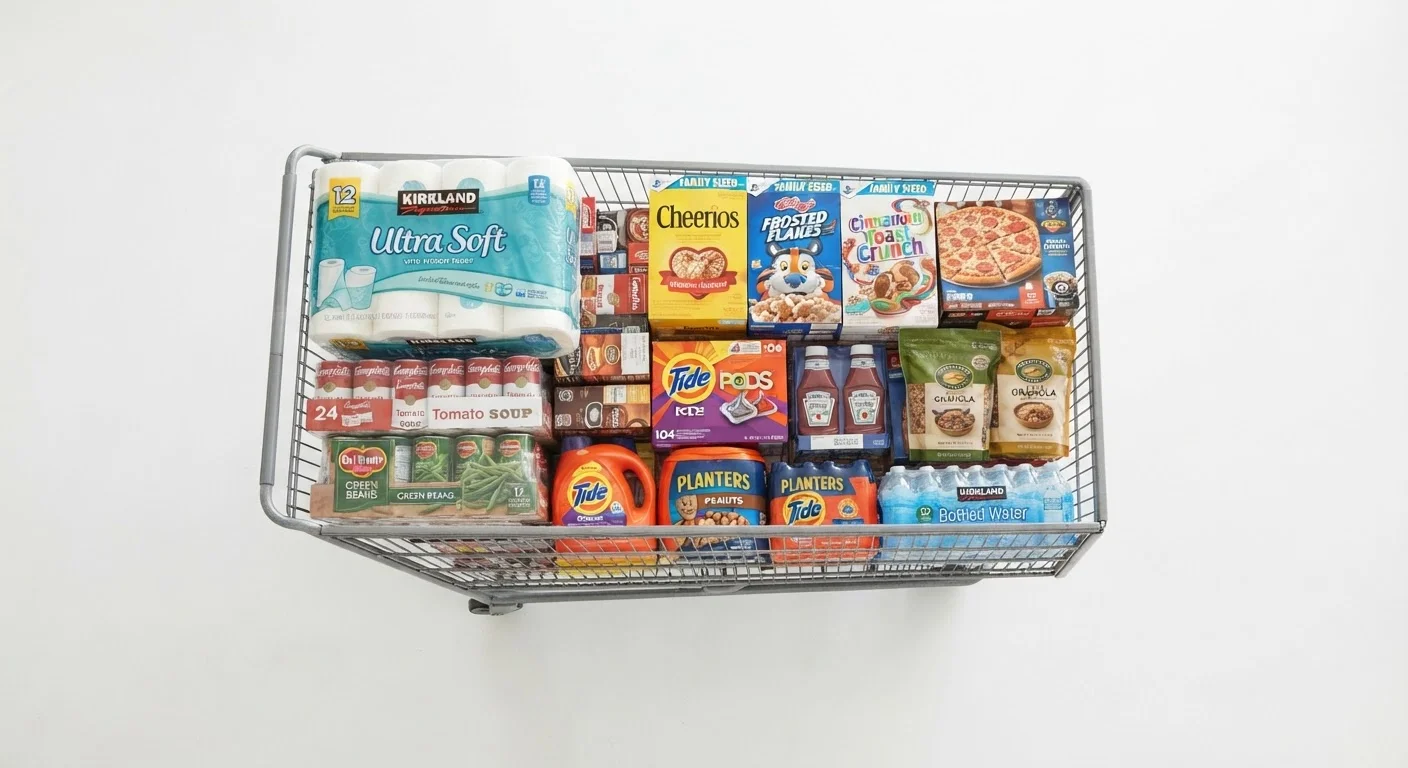
When conditions are right, bulk buying delivers genuine financial benefits that go beyond the sticker price.
Lower cost per unit on everyday staples
Buying larger quantities typically reduces the price per ounce, sheet, or serving. For items used consistently every month, that difference compounds into real savings over time.
Fewer shopping trips and less decision fatigue
Stocking up on household staples reduces how often you need to restock, saving time and reducing the chance of impulse purchases made during frequent store visits.
Protection against price increases
Purchasing non-perishables in bulk when prices are favorable can serve as a hedge against future price increases, particularly on commodity goods subject to supply fluctuations.
Reduces per-use cost for high-frequency items
For products used multiple times per week - cleaning supplies, coffee, cooking oil - the savings on cost-per-use are most pronounced and most consistent over a year.
These advantages are most reliable for non-perishables you use regularly - think dish soap, toilet paper, canned goods, or laundry detergent. These items don't expire quickly, don't require special storage, and have predictable usage rates in most households. Consistent bulk purchases of items like these can make a meaningful difference in a monthly budget over time, and they connect naturally to basic budgeting strategies that emphasize reducing recurring household costs.
The Disadvantages You Shouldn't Ignore
Bulk buying carries real risks that are easy to overlook when a per-unit price looks attractive.
Ties up cash that could work harder elsewhere
A large upfront purchase locks money into inventory sitting on a shelf. That same cash could reduce a credit card balance, add to an emergency fund, or cover an unexpected expense.
Perishables often expire before you use them
Bulk quantities of food with limited shelf lives - produce, bread, dairy, deli meats - frequently go to waste. When you factor in spoilage, the effective cost per unit often exceeds buying smaller amounts.
Storage demands can be impractical or costly
Large quantities require dedicated space. Without adequate storage, bulk items end up in inconvenient or unsuitable conditions, and for some households, there simply isn't room.
Warehouse memberships add to the true cost
Membership-based bulk retailers charge annual fees that can range from $60 to over $120. These fees need to be factored into your actual savings calculation - they aren't free access to lower prices.
Encourages over-consumption of some products
Research in consumer behavior suggests that people tend to use products faster when they have more of them on hand, particularly for consumables like snack foods or cleaning wipes. Abundance can erode the savings.
These downsides don't mean bulk buying is a bad idea - they mean it requires honest self-assessment. Many of the hidden costs buyers routinely overlook apply here: storage costs, spoilage, and the opportunity cost of money spent in advance rather than held in reserve.
How to Know If Bulk Buying Works for Your Situation
There's no universal rule. A few practical questions will cut through the guesswork:
- Do you actually use it? Track how long your current supply lasts before buying more. If a 48-pack of paper towels would sit in your closet for eight months, the unit savings may not be worth the space or upfront cost.
- Will it keep? Non-perishables are almost always safer bets than fresh food or items with short shelf lives. Bulk produce, dairy, or bakery items frequently go to waste.
- Can you afford the cash outlay? A $120 bulk purchase that stresses your monthly budget or pushes spending onto a high-interest credit card likely costs more in practice than buying smaller quantities as needed. Managing this kind of trade-off connects directly to building savings habits and reducing debt pressure.
- Do you have storage? Apartments, small kitchens, and homes without basements or garages make bulk storage impractical for many categories.
A Note on Household Size and Bulk Value
The financial case for bulk buying is significantly stronger for larger households. A family of four consuming a bulk supply of staples in a few weeks is in a very different position than a single-person household that might take months to work through the same quantity. Before buying in bulk, consider your realistic consumption rate - not your optimistic one. This is general guidance; a personal finance professional can help you evaluate spending strategies suited to your specific budget.
Bulk buying is a tool, not a default strategy. Applied thoughtfully, it can reduce costs meaningfully. Applied reflexively, it can create clutter, waste, and tighter cash flow - the opposite of its intended purpose.