

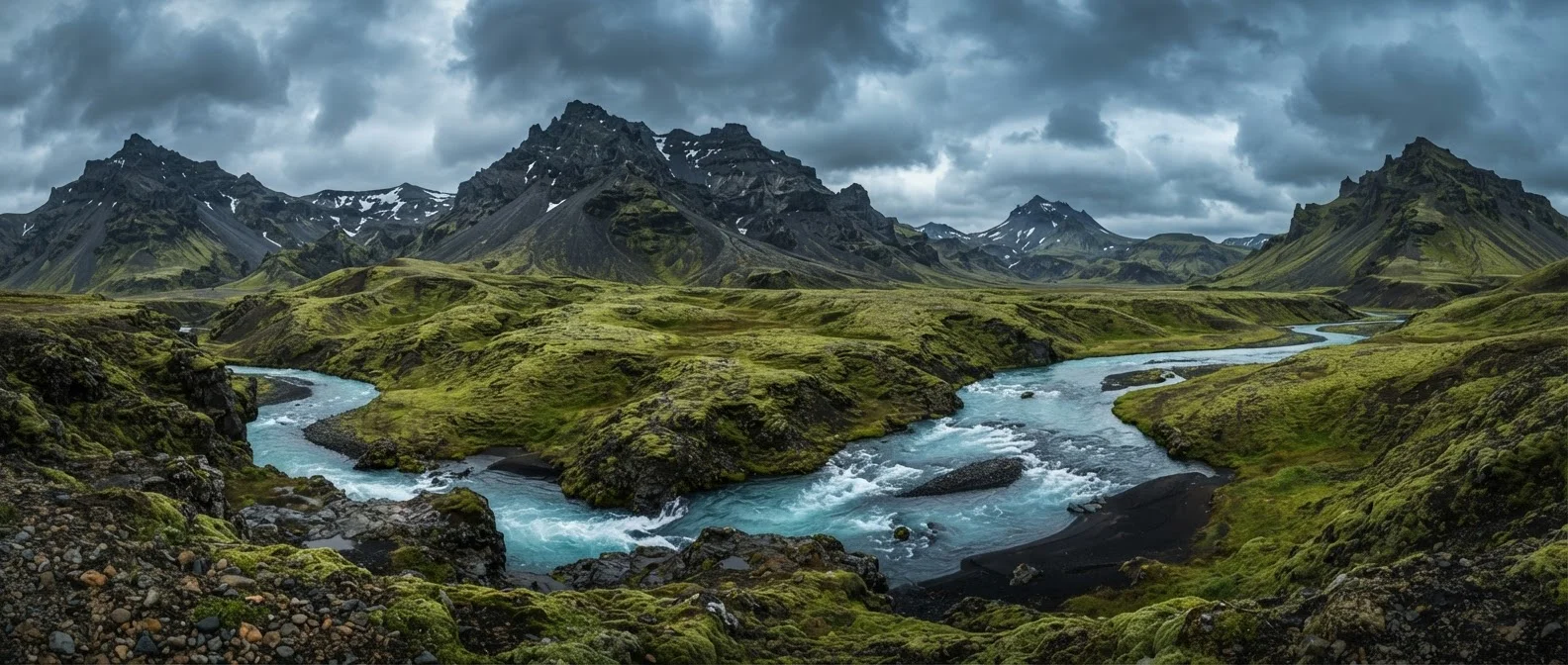
Iceland's Seasonal Personality: The Big Picture
Iceland doesn't have a bad season - it has dramatically different ones. What makes planning tricky is that no single month delivers everything: summer gives you light but crowds; winter offers auroras but limited road access. Understanding the real trade-offs month by month helps you choose a trip that matches what you actually want to see and do.
Think of Iceland as four distinct destinations layered on top of each other, occupying the same island at different times of year. The off-season perspective matters enormously here - visiting Iceland in November versus June isn't just a weather difference; it's a fundamentally different experience of the landscape, the light, and the culture.
Winter (November - February): Darkness, Ice, and the Northern Lights
This is Iceland at its most extreme. Daylight in December shrinks to around four or five hours in Reykjavik, and inland highland roads close entirely due to snow and ice. The landscape turns monochromatic - black lava fields dusted white, frozen waterfalls, and skies that cycle rapidly between purple dusk and star-filled night.
The reward is the aurora borealis. Winter offers the longest hours of darkness, significantly improving the odds of catching the northern lights on a clear night - though cloud cover is frequent and sightings are never guaranteed. Coastal roads like the Ring Road remain mostly drivable with appropriate tires, but conditions change fast. Waterfalls such as Seljalandsfoss and Skógafoss sometimes freeze partially, creating dramatic ice formations that don't exist any other time of year.
Visitor numbers drop considerably after the holiday period, which means popular sites feel genuinely quiet. Prices for accommodation typically reflect this as well, though always verify current conditions and road status through Iceland's official meteorological and road authority sources before traveling.
Spring (March - May): Thaw, Puffins, and Unpredictable Light
March is a transition month - winter's grip loosens unevenly. Snow lingers at elevation while coastal areas begin greening. Daylight returns fast: by late April, you're back to roughly 16 hours of usable light. This is still a viable window for northern lights viewing in March before nights shorten too much.
By May, Iceland turns unexpectedly vivid. Wildflowers push through the mossy lava fields, and puffins return to coastal cliffs - Látrabjarg in the Westfjords and the Vestmannaeyjar archipelago are known puffin-watching areas. Temperatures stay cool (often 40-50°F along the coast), and highland roads begin reopening, typically from late May onward though this varies by year.
Spring also brings Icelandic lambing season. The interior countryside fills with newborn livestock, and small farms along rural roads become lively in a way that feels distinctly local. This is arguably Iceland's most underrated window for landscape photography - the light is golden and low, and the land looks both raw and reborn simultaneously.
Summer (June - August): Midnight Sun and Maximum Access
Around the summer solstice, Iceland sees nearly 24 hours of daylight - the sun doesn't fully set, just dips toward the horizon and rises again. Practically, this means hiking at 11 p.m. in full light, which feels disorienting in the best possible way. All highland roads open, including the iconic F-roads that reach the interior's volcanic deserts, obsidian valleys, and geothermal zones like Landmannalaugar.
The trade-off is crowds. Summer draws the majority of Iceland's annual visitors, and iconic sites - the Blue Lagoon geothermal area, the Golden Circle, Jökulsárlón glacier lagoon - are noticeably busy. Accommodation books far in advance. Wildlife is abundant: whales are active off the north and west coasts, Arctic terns nest aggressively near coastal paths, and seabirds fill every cliff.
The landscape in summer is as green as Iceland ever gets, which surprises many first-timers who expect a stark, lunar terrain. Interior highland plains burst with lupine (an introduced species that's become visually iconic, if ecologically controversial).
Autumn (September - October): Color, Storms, and Early Aurora Returns
Autumn is a genuine sweet spot. Highland roads remain open through September, crowds thin dramatically after August, and the birch scrub and moorland heather turn amber, rust, and gold. The first auroras of the season become visible as nights darken again - late September often delivers strong displays as solar activity interacts with genuinely dark skies.
October brings the first serious storms. Coastal wind speeds can be extraordinary; waterfalls sometimes blow upward in high gusts. This isn't necessarily a deterrent - Iceland's weather is theatrical, and storm-watching from a safe, sheltered position is itself a memorable experience. Road conditions should always be checked through official Icelandic sources before any driving.
Midnight Sun
A phenomenon near the summer solstice where the sun stays above the horizon for 24 hours, creating continuous daylight. In Iceland, this occurs roughly from late May to late July.
F-Roads
Unpaved highland mountain roads in Iceland marked with an 'F' designation. They require 4WD vehicles, are closed in winter, and typically reopen in late June. Driving a regular car on F-roads is illegal and dangerous.
Aurora Borealis
Also called the northern lights, this natural light display is caused by charged solar particles interacting with Earth's atmosphere. Viewing requires dark skies, clear weather, and sufficient solar activity - none of which are guaranteed.
Ring Road (Route 1)
Iceland's main paved highway that circles the entire island, roughly 830 miles long. It remains open year-round but requires winter tires and careful monitoring of weather and road conditions in colder months.
For travelers flexible on timing, late September combines nearly everything: open highland access, autumn color, returning darkness for aurora chances, and far fewer visitors than peak summer. If the off-season concept appeals to you, Iceland in October rewards that mindset.