

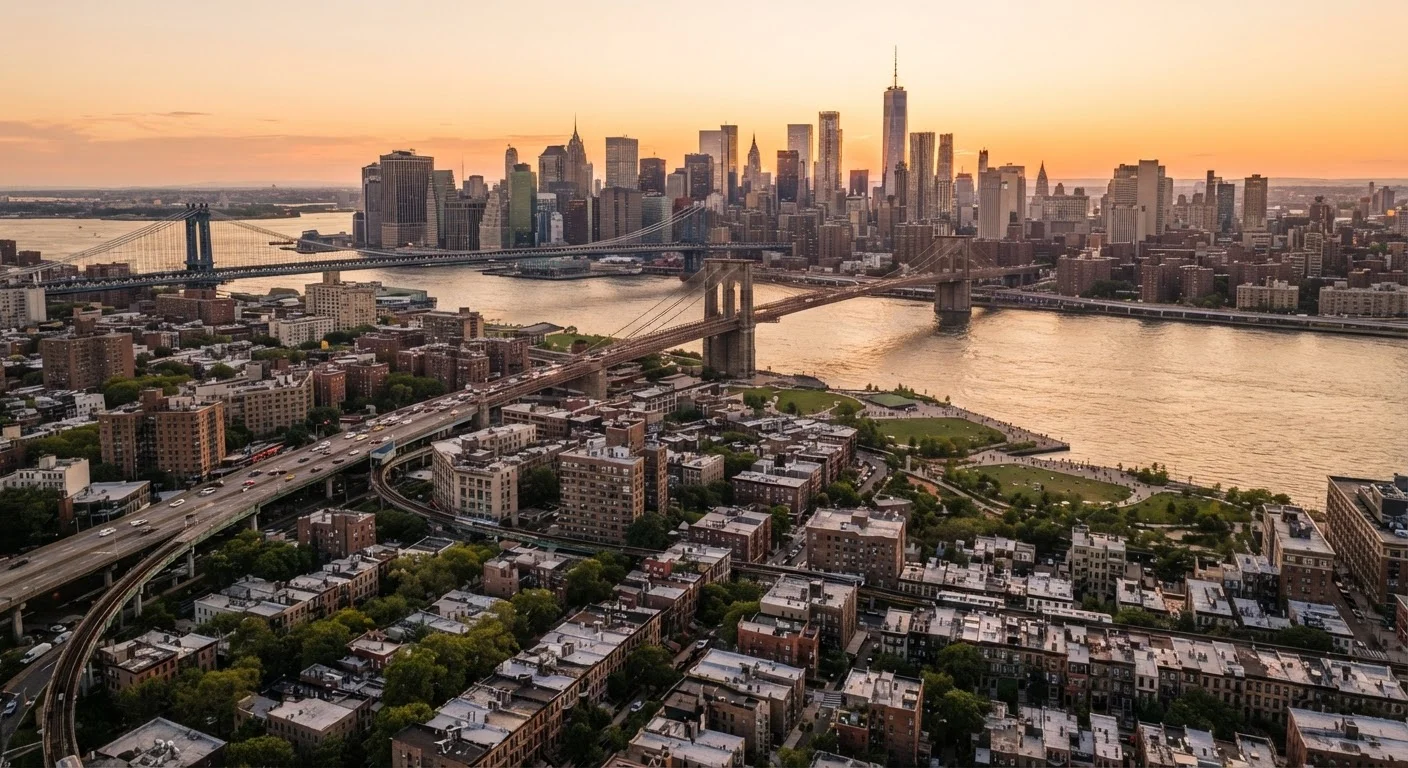
| Number of boroughs | 5 (Manhattan, Brooklyn, Queens, the Bronx, Staten Island) |
| NYC's approximate population | ~8.3 million residents (US Census Bureau estimates) |
| Languages spoken in NYC | Over 200 (NYC Mayor's Office of Immigrant Affairs) |
| Subway lines | 24 service lines across 472 stations (MTA) |
| Most visited area | Midtown Manhattan (Times Square district) |
| Largest borough by area | Queens |
Why Neighborhood Context Changes Everything
Most first-time visitors to New York City orient around a handful of famous landmarks - Times Square, Central Park, the Brooklyn Bridge - and never quite figure out what connects them or why the areas in between feel so different. The city's neighborhoods aren't just geographic zones; they're layered communities shaped by waves of immigration, economic shifts, and hyper-local culture. Understanding that context transforms a checklist trip into something far more rewarding.
NYC spans five boroughs: Manhattan, Brooklyn, Queens, the Bronx, and Staten Island. Within those boroughs are dozens of named neighborhoods, each with a distinct character, price point, transit access, and atmosphere. Before diving into specifics, it helps to know that "midtown" - the dense commercial core of Manhattan roughly between 34th and 59th Streets - is where tourists cluster, but it's one of the least representative slices of how New Yorkers actually live. If you want a more accurate picture of the city, you need to move outward.
Building a layered picture of any destination before you arrive helps you make better decisions about where to stay and how to spend your time - that's especially true in a city as dense and varied as New York.
| Number of boroughs | 5 (Manhattan, Brooklyn, Queens, the Bronx, Staten Island) |
| NYC's approximate population | ~8.3 million residents (US Census Bureau estimates) |
| Languages spoken in NYC | Over 200 (NYC Mayor's Office of Immigrant Affairs) |
| Subway lines | 24 service lines across 472 stations (MTA) |
| Most visited area | Midtown Manhattan (Times Square district) |
| Largest borough by area | Queens |
Manhattan Beyond Midtown
Manhattan is the most visited borough, but its neighborhoods diverge sharply once you leave the tourist corridor.
- Harlem (roughly 110th Street and above): A historic center of African American cultural life with landmark jazz venues, gospel music traditions, and an evolving restaurant scene. The northern stretch, East Harlem (or El Barrio), has deep Puerto Rican roots.
- Washington Heights and Inwood: The northernmost tip of Manhattan, predominantly Dominican-American in character, with some of the most genuinely local bodegas, bakeries, and community life in the borough. Subway access is excellent.
- The Lower East Side: Once the entry point for Jewish and Eastern European immigrants, now a dense mix of century-old appetizing shops and newer bars and galleries. Walking here rewards close attention to architectural detail.
- Chinatown and Little Italy: Adjacent and porous. Manhattan's Chinatown is a working, residential neighborhood - not primarily a tourist attraction - while Little Italy has contracted significantly over decades.
Transit note: Manhattan's subway grid is most reliable on the numbered lines (1, 2, 3 along the west side; 4, 5, 6 along the east). Crosstown travel is slower.
Brooklyn and Queens: The Outer Borough Case
Brooklyn and Queens together hold more people than most American cities and contain some of the most culturally distinct neighborhoods in the country.
Brooklyn highlights for visitors:
- Williamsburg: Heavily gentrified, once a center of Hasidic Jewish life and later a hub for artists. Now primarily known for dining and nightlife along Bedford Avenue.
- Crown Heights and Flatbush: Major centers of Caribbean-American - particularly Afro-Caribbean and Haitian - community life. The West Indian American Day Parade in Crown Heights is one of the largest street festivals in the US.
- Sunset Park: Home to a significant Chinese-American community in its northern section and a large Latin American population further south, with a working waterfront and industrial character.
Queens highlights:
- Jackson Heights: Often cited as one of the most linguistically diverse urban neighborhoods on earth, with dense South Asian, Latin American, and Tibetan communities within blocks of each other.
- Flushing: The largest Chinatown in New York outside of Manhattan, with a sprawling underground food hall and Mandarin as a primary working language in many shops.
If you're weighing how intensively to cover these areas, thinking through your travel style first can help you figure out whether a neighborhood-hopping sprint or a focused slow visit suits you better.
The Bronx and Staten Island: Often Skipped, Worth Knowing
The Bronx is the only borough physically attached to the US mainland, and it's the birthplace of hip-hop - a fact that the borough's cultural institutions, from the Universal Hip Hop Museum (under development) to established community archives, take seriously. The Grand Concourse, a wide Art Deco boulevard, reflects the borough's early-20th-century architectural ambition. The New York Botanical Garden and Bronx Zoo are world-class institutions most visitors reach by commuter rail from Grand Central.
Staten Island is the most suburban of the five boroughs and the hardest to reach without a car, though the Staten Island Ferry from lower Manhattan is free and offers dramatic views of the harbor and Statue of Liberty - making it useful even for visitors who don't explore further.
For visitors new to planning multi-neighborhood trips in an unfamiliar city, grounding yourself in solid trip-planning fundamentals before booking accommodations can save real headaches - neighborhood choice directly affects commute times, costs, and the texture of your experience.
Borough
One of New York City's five administrative divisions - Manhattan, Brooklyn, Queens, the Bronx, and Staten Island. Each functions as both a county and a distinct cultural region with its own neighborhoods and character.
Outer boroughs
A collective term for the four boroughs outside Manhattan: Brooklyn, Queens, the Bronx, and Staten Island. The phrase is a local shorthand, not an official designation.
Gentrification
The process by which a neighborhood's demographics and economic profile shift - typically through rising rents and incoming higher-income residents - often displacing existing communities. Visible in varying stages across NYC's neighborhoods.
Subway grid
NYC's rapid transit network operated by the MTA, covering all five boroughs (with limited coverage in Staten Island). Numbered and lettered lines serve different corridors; service frequency and reliability vary by line and time of day.
Avenue vs. Street
In Manhattan, avenues run north-south and streets run east-west. The grid system makes navigation straightforward in most of the borough, though lower Manhattan and some outer borough neighborhoods use irregular street layouts.