

Key Takeaways
Maximizes destinations within limited vacation time
City breaks are purpose-built for efficiency - travelers can experience multiple iconic destinations without needing extended leave from work or other commitments.
Strong infrastructure reduces planning friction
Major cities typically offer well-developed public transit, clear tourist signage, and abundant accommodation options at various price points, lowering the barrier to first-time visitors.
Variety keeps mixed-interest travel groups engaged
Dense urban destinations tend to offer something for everyone - galleries, food scenes, architecture, parks - making compromise easier when traveling with people who have different interests.
Easier to plan and book in advance
Popular city destinations have predictable tourism seasons and well-documented logistics, making research and booking relatively straightforward compared to off-the-beaten-path slow-travel destinations.
Rushed pace leaves little room for genuine discovery
When the schedule is packed, spontaneous exploration - wandering a neighborhood, stumbling into an unexpected event - is the first casualty. Many travelers report feeling like they observed a city rather than engaged with it.
Constant transit and check-ins drain energy
Moving between cities means repeated airport or station logistics, repacking, reorienting, and adjusting to new environments - which accumulates into significant fatigue over a short trip.
Tourist-district costs add up quickly
Centrally located accommodation, entrance fees for major attractions, and restaurants near popular sights tend to carry a premium that compounds across multiple cities in a single trip.
Our Verdict
City breaks are genuinely rewarding for time-limited travelers who thrive on variety, visual stimulation, and efficiently ticking off a long bucket list. Slow travel delivers something harder to engineer: a sense of actually being somewhere rather than passing through it. Neither approach is wrong - the real mistake is choosing one that conflicts with how you actually recharge, budget, and make decisions on the road.
City breaks suit time-crunched travelers with diverse destination lists; slow travel suits those who prioritize depth, routine, and immersive cultural connection.
What We Mean by Each Style
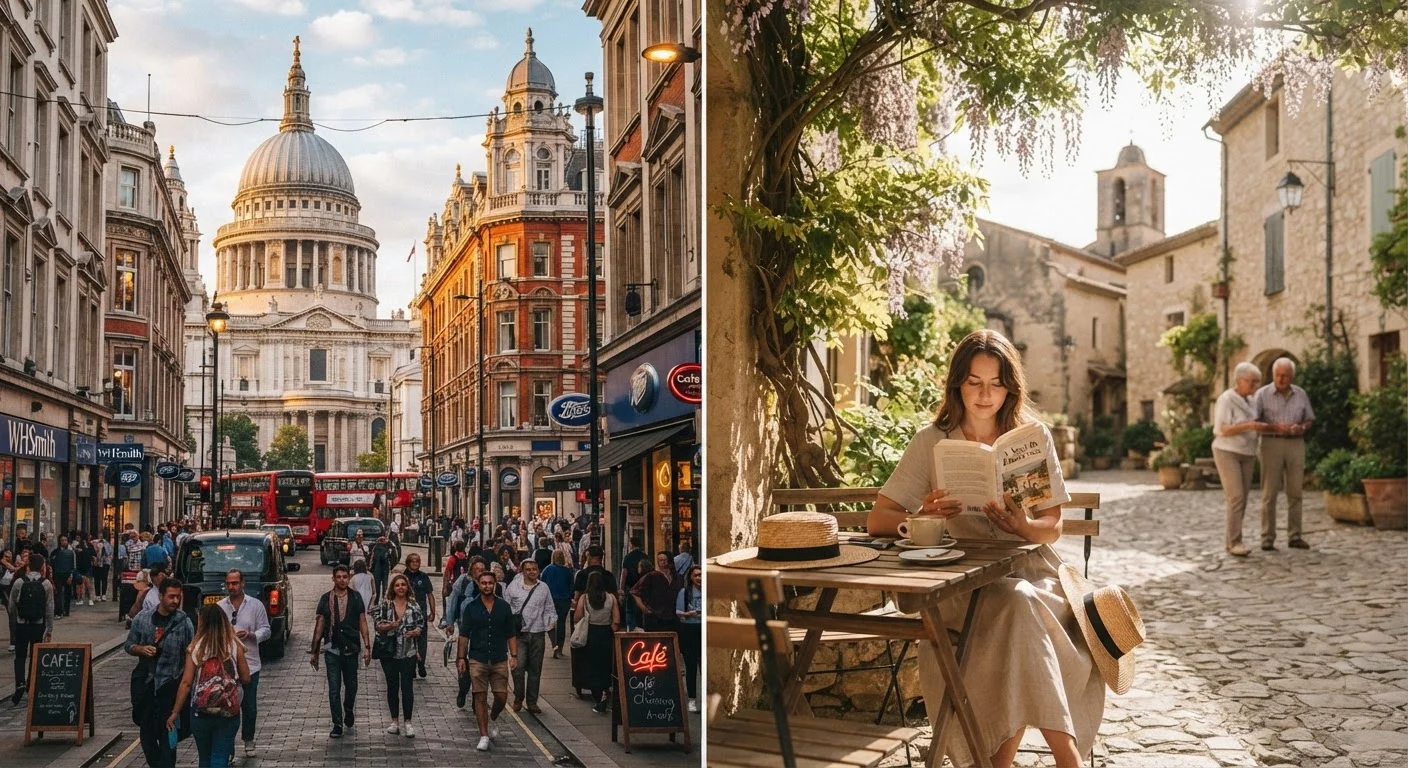
A city break typically means two to five days in one urban destination - think a long weekend in Chicago, a quick hop to Mexico City, or a five-day sweep through three European capitals. The rhythm is fast: mornings at museums, afternoons in neighborhoods, evenings at restaurants you've researched for weeks.
Slow travel, by contrast, is deliberate deceleration. It means staying in one place - a town, a neighborhood, sometimes a single apartment - for weeks or months, letting daily patterns replace itineraries. You find a market you return to, a café owner who remembers your order, streets you stop consulting a map for. The American Southwest is a striking example of a region where this approach radically changes what you actually see and feel.
These aren't rigid categories. A ten-day trip could combine three days in a capital with a week based in a smaller town. But understanding each mode's core logic helps you build a structure that serves your real priorities - not just the one that photographs better.
The Case for City Breaks
For most American travelers working with limited paid vacation, city breaks are the practical reality. They're efficient by design: you can experience the architectural energy of Barcelona, the food culture of Tokyo, or the museum density of Washington D.C. in just a few days if you plan well. Our trip anatomy guide walks through how to structure that kind of intensive itinerary without burning out.
Maximizes destinations within limited vacation time
City breaks are purpose-built for efficiency - travelers can experience multiple iconic destinations without needing extended leave from work or other commitments.
Strong infrastructure reduces planning friction
Major cities typically offer well-developed public transit, clear tourist signage, and abundant accommodation options at various price points, lowering the barrier to first-time visitors.
Variety keeps mixed-interest travel groups engaged
Dense urban destinations tend to offer something for everyone - galleries, food scenes, architecture, parks - making compromise easier when traveling with people who have different interests.
Easier to plan and book in advance
Popular city destinations have predictable tourism seasons and well-documented logistics, making research and booking relatively straightforward compared to off-the-beaten-path slow-travel destinations.
City breaks also adapt well to group dynamics. When four people with different interests travel together, a packed urban itinerary offers enough variety - galleries for one, food markets for another, architecture walks for a third - that no one feels their preferences are being ignored. And because most major cities have well-developed tourism infrastructure, logistics are comparatively forgiving.
The Honest Downsides of City Breaks
Speed has a cost. When you're covering three cities in seven days, the dominant memory is often the exhaustion of check-ins, transit, and recalibration rather than any specific place. Many travelers describe multi-city itineraries as feeling like they watched a destination rather than experienced it.
Rushed pace leaves little room for genuine discovery
When the schedule is packed, spontaneous exploration - wandering a neighborhood, stumbling into an unexpected event - is the first casualty. Many travelers report feeling like they observed a city rather than engaged with it.
Constant transit and check-ins drain energy
Moving between cities means repeated airport or station logistics, repacking, reorienting, and adjusting to new environments - which accumulates into significant fatigue over a short trip.
Tourist-district costs add up quickly
Centrally located accommodation, entrance fees for major attractions, and restaurants near popular sights tend to carry a premium that compounds across multiple cities in a single trip.
There's also a financial pattern worth noting: city breaks tend to front-load costs. Premium accommodation in city centers, tourist-district restaurant pricing, and packed paid-attraction schedules add up quickly. If you're interested in understanding how crowd dynamics affect that experience, overtourism and what it means for your trip is worth reading before you finalize a popular-city itinerary.
The Case for Slow Travel
The argument for slow travel isn't just philosophical - it's practical. Staying in one place longer usually costs less per day. Short-term apartment rentals become economical, you cook some meals, you skip the tourist-trap lunch spots because you've already found the neighborhood equivalent. Logistics simplify dramatically: one unpacking, one set of transit cards to figure out, one neighborhood to learn.
Culturally, slow travel rewards patience in ways city breaks structurally cannot. You start noticing things: how the light changes in a piazza in the afternoon, which stalls at the market are worth returning to, how locals actually spend their weekends. This is the kind of texture that shows up in how you describe a place years later. The contrast between Portugal's Alentejo and Algarve regions illustrates how a slower pace can reveal a destination's character in ways a rushed visit simply won't allow.
A Note on the Hybrid Approach
Many experienced travelers find the city break vs. slow travel framing most useful as a spectrum rather than a binary. A common middle path: anchor a longer trip in one base city or town, then take day trips or one-night excursions to nearby places. This preserves the depth of slow travel while still allowing variety. It also tends to reduce overall luggage stress - relevant if you're weighing carry-on versus checked bag strategies.
It's also worth considering how timing interacts with pace. Off-season slow travel can dramatically alter the atmosphere of a destination - quieter streets and lower costs often make the slower approach feel even more rewarding.
How to Actually Decide
The most useful question isn't "which style do I prefer?" in the abstract - it's "what do I want to feel on the last day of this trip?" If the answer involves a sense of accomplishment, variety, and the satisfaction of having seen a lot, a city break structure probably fits. If the answer involves feeling rested, rooted, and genuinely familiar with a place, slow travel is the more honest choice.
Practical constraints matter just as much. A ten-day trip to Southeast Asia almost certainly warrants picking a base region rather than bouncing between five countries - choosing where to start in Southeast Asia is a good framework for that decision. Conversely, a four-day European long weekend doesn't lend itself to slow travel by definition.
Consider also how you make decisions under uncertainty. City breaks reward people who plan ahead and stick to it. Slow travel suits travelers who want flexibility - the freedom to follow a tip from a local or spend an extra day somewhere that surprised them. For a deeper look at how that flexibility plays out structurally, see our piece on flexible versus fully scheduled itineraries.
Neither style asks you to be a different kind of traveler. Both reward the same thing: an honest reckoning with how you actually travel, not how you imagine you might.