

Key Takeaways
Option A
The Alentejo
The unhurried, inland soul of Portugal.
Best for: Travelers seeking wine, slow food, medieval villages, cork forests, and genuine quiet away from the tourist trail.
Option B
The Algarve
Portugal's iconic sun-and-sea playground.
Best for: Visitors who want dramatic coastline, golden beaches, reliable sunshine, and a well-developed tourism infrastructure.
If you want iconic beaches and guaranteed sunshine
The Algarve
The Algarve's Atlantic coastline delivers world-class beaches, clear water, and reliable summer sun backed by plentiful accommodation and transport links.
If you prefer quiet villages, local wine, and zero crowds
The Alentejo
The Alentejo remains largely off the mass-tourism map, offering authentic cork-country landscapes, Alentejano cuisine, and medieval walled towns at a genuinely unhurried pace.
If you're a food and wine enthusiast
The Alentejo
The Alentejo is one of Portugal's most celebrated wine-producing regions, and its cuisine - slow-cooked pork, açorda bread soups, local cheeses - is deeply rooted in the land.
If you're traveling with children or want resort-style convenience
The Algarve
The Algarve has a well-established family tourism infrastructure, with calm bay beaches, water parks, and a wide range of accommodation suited to families.
If you want to combine both regions in one trip
The Alentejo
Starting inland in the Alentejo then driving south to the Algarve coast is a natural and rewarding circuit - the contrast makes each region feel even richer.
Two Regions, Two Completely Different Journeys
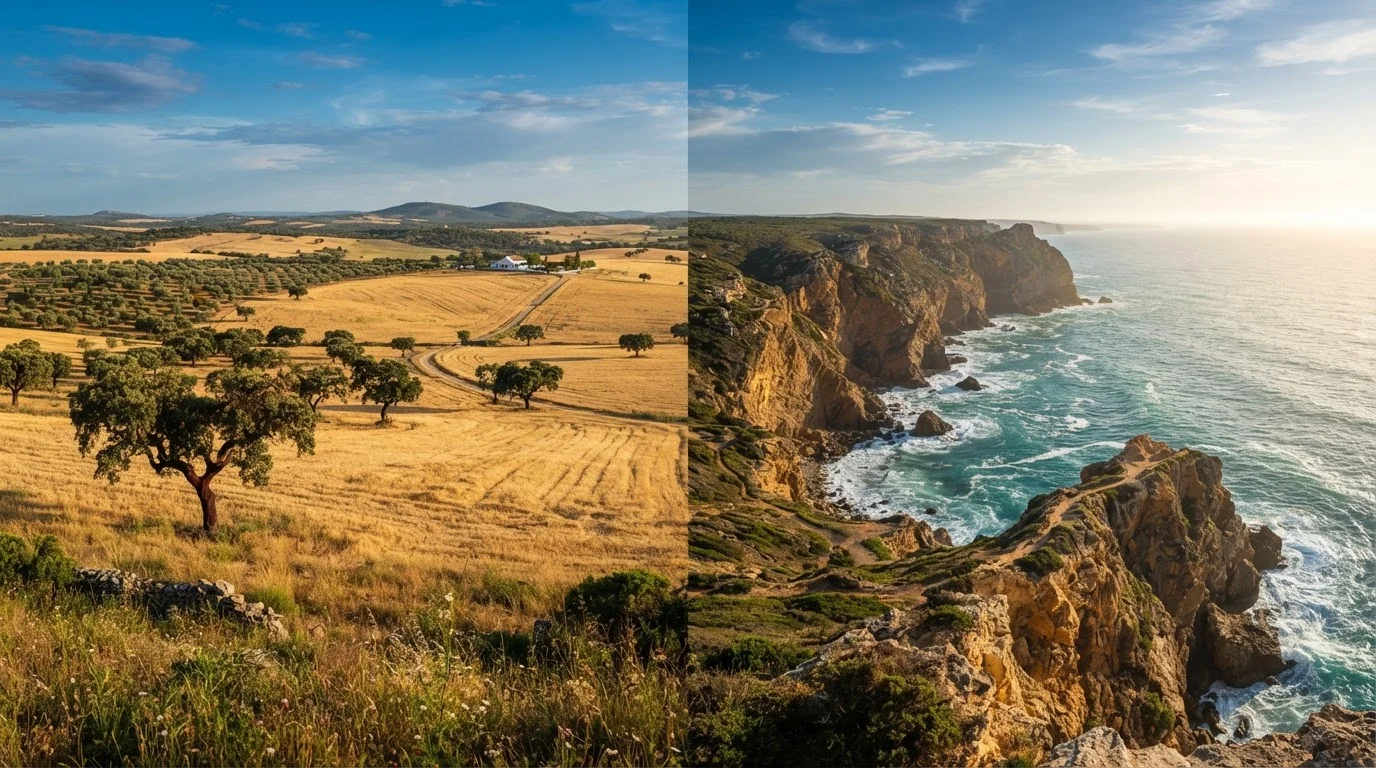
Portugal is a small country that packs in an extraordinary range of landscapes and atmospheres. Nowhere is that variety more striking than in the contrast between the Alentejo - the vast, cork-studded plateau stretching across the country's interior - and the Algarve, the sun-baked southern coast that fills with visitors every summer. They sit just a few hours apart by road, yet stepping from one into the other feels like crossing a border.
The choice between them isn't about one being superior. It's about understanding what kind of trip you actually want. Are you chasing the sea, or fleeing the crowds? Do you want to linger over a long lunch in a whitewashed village, or watch the sunset from a sea stack rising out of turquoise water? Your answer tells you almost everything. If you're still working out your broader travel identity, it helps to think about whether fast-paced or slow travel suits you better before booking either.
Landscape and Atmosphere
The Alentejo is defined by space. Rolling plains of golden wheat give way to cork oak forests - Portugal produces roughly half the world's cork, and much of it grows here. Ancient hilltop towns like Évora, Monsaraz, and Marvão rise from the landscape as if they've always been part of it. The light is different here: wide, warm, and unhurried. Sound drops away. It is, in the truest sense, a place that slows you down.
The Algarve is the opposite of quiet in peak season. Its coastline is genuinely spectacular - honey-colored limestone cliffs carved into arches and sea caves, wide sandy beaches, and turquoise water that photographs almost absurdly well. Towns like Lagos, Tavira, and Sagres each have their own character, but the region as a whole has been shaped by decades of international tourism, and that shows in its infrastructure, prices, and crowd levels between June and August.
| Criterion | The Alentejo | The Algarve |
|---|---|---|
| Landscape | Cork forests, plains, hilltop medieval towns | Dramatic sea cliffs, beaches, coves |
| Crowd levels | Low - genuinely off the beaten track | High in summer, calmer off-season |
| Best season | Spring and autumn | Late spring, summer, early autumn |
| Food highlight | Slow-cooked pork, bread soups, local cheese | Grilled seafood, shellfish stews |
| Wine | Major wine-producing region | Limited local wine production |
| Getting around | Car essential for villages | Car helpful; some coastal buses and trains |
| Accommodation style | Rural estates, agritourism, small inns | Resorts, guesthouses, apartment rentals |
| Overall pace | Slow, contemplative | Active, social, beach-focused |
Food, Wine, and Culture
The Alentejo is arguably Portugal's most compelling food and wine destination. This is where Alentejano cooking - rustic, generous, pork-centered - comes from: slow-cooked porco preto (black pork), açorda bread soups enriched with egg and garlic, and local sheep's milk cheeses. The region's wines, especially its bold reds, have earned serious international recognition. Visiting a quinta (wine estate) and eating lunch in Évora's old town are among Portugal's quieter pleasures.
The Algarve's food scene has improved considerably, with fresh seafood - grilled dourada (sea bream), cataplana shellfish stews - being the highlight. Tourist-facing restaurants dominate in high season, but the inland Algarve towns hold excellent traditional tavernas. Neither region is a bad place to eat; they're just calibrated differently.
When to Go and What to Expect
Timing matters a lot for both regions. The Algarve peaks hard in July and August - beaches are crowded, accommodation prices rise sharply, and booking well ahead is essential. Late spring (May-June) and early autumn (September-October) offer warm temperatures, calmer conditions, and more breathing room. Winter is mild and largely tourist-free, popular with long-stay visitors and golfers.
The Alentejo is at its most beautiful in spring, when the plains bloom with wildflowers and the heat hasn't yet turned the landscape to amber. Summers are genuinely hot - temperatures regularly exceed 40°C (104°F) in July and August - so early morning exploration and long afternoon siestas become the rhythm. Autumn brings harvest season and the olive and grape picks, which adds a festive, agricultural energy to the region. Always verify current entry requirements and local conditions with official sources before traveling.
~50%
Global cork supply from Portugal
Portugal produces roughly half the world's cork, with much of this harvest centered in the Alentejo region's vast oak forests.
150+ km
Length of the Algarve coastline
The Algarve stretches more than 150 kilometers along southern Portugal, encompassing dozens of distinct beaches and cove formations.
40°C+
Peak summer temperatures in the Alentejo
Inland Alentejo regularly reaches temperatures above 40°C (104°F) during July and August, making spring and autumn far more comfortable for exploration.
Practical Planning: Getting Around and Costs
Both regions are reachable from Lisbon - the Alentejo is roughly 90 minutes by car to Évora, while the Algarve is around two to three hours to Faro. A rental car is the most practical choice for exploring either region meaningfully; the Alentejo in particular has limited public transport between its smaller villages. Train services connect Lisbon to Faro for Algarve visitors who prefer to stay based in one coastal town.
Budget-wise, the Alentejo tends to be gentler on the wallet outside of boutique agritourism stays, which can be premium. The Algarve's accommodation ranges from simple guesthouses to high-end resorts, but prices escalate sharply in peak summer. Across both regions, eating and drinking remains good value relative to much of Western Europe, particularly if you stick to local restaurants and the midday menu do dia (set lunch).
Ultimately, the two regions complement each other beautifully. Many travelers choose to spend time in both - a few days inland in the Alentejo followed by the coast - and find the contrast is exactly what makes the trip memorable.