

Key Takeaways
Slow Travel
Slow travel is an approach to exploring a destination that prioritizes depth over breadth - spending more time in fewer places rather than checking off a long list of landmarks. In the American Southwest, it means resisting the urge to sprint between Zion, Bryce, Arches, and the Grand Canyon in five days, and instead sitting with a landscape long enough to understand it. It's less about being slow in pace and more about being present in place.
Slow travel aligns with principles from sustainable tourism research, which suggests longer stays reduce per-day carbon impact from transit and deepen economic benefit to local communities.
What the Highlight Reel Leaves Out
Open any Southwest travel feed and you'll see the same compressed itinerary: Zion on day one, Bryce Canyon on day two, Arches by day four, Grand Canyon for a morning overlook. The landscape is undeniably spectacular at each stop - but this approach treats the Southwest like a museum you're rushing through before closing time.
What gets missed isn't just the "lesser" places. It's the quality of experience at the famous ones. Zion's Narrows - the slot canyon hike through the Virgin River - rewards those who start before dawn, not those who arrive at 10 a.m. into a crowd of hundreds. The canyon light on Angel's Landing shifts through entirely different palettes at 7 a.m. versus noon. You only see that if you sleep nearby twice.
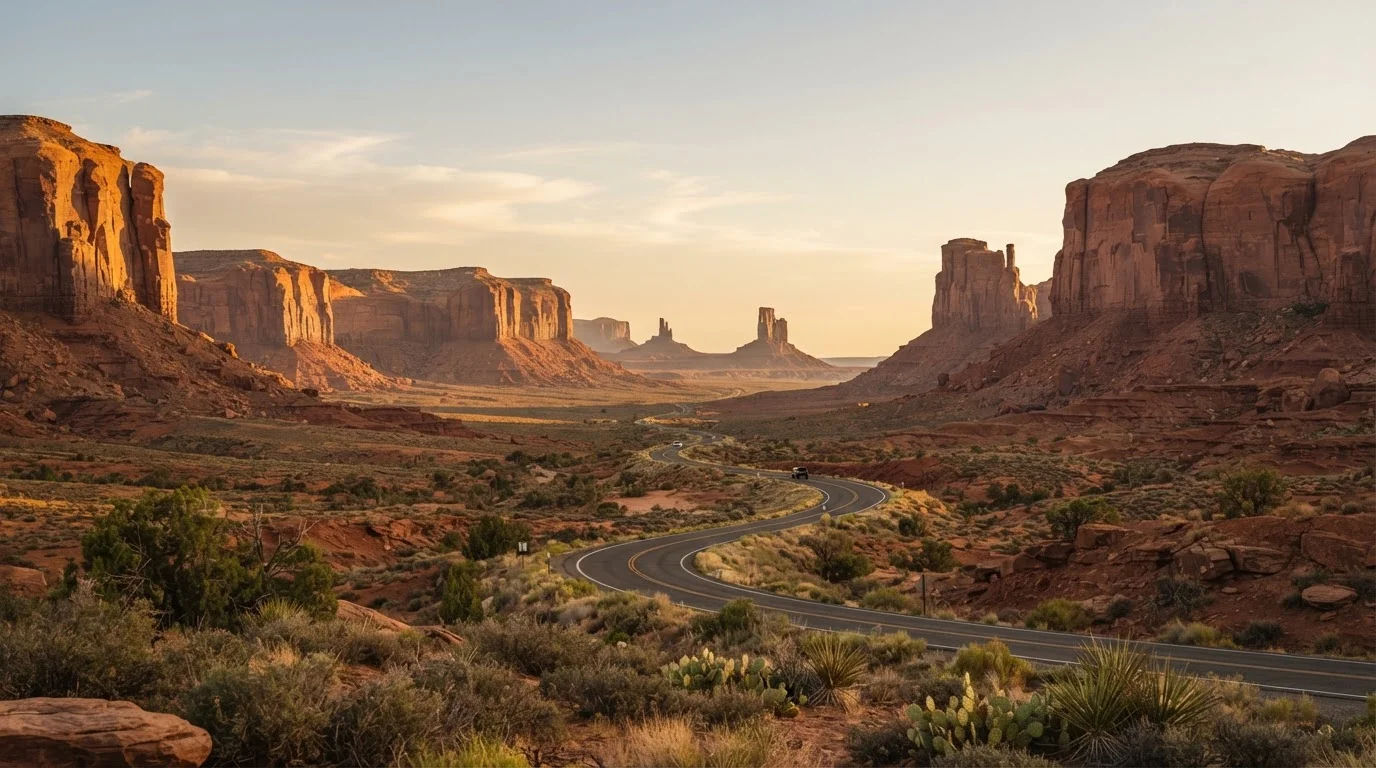
The connective tissue between parks is equally underrated. The road between Capitol Reef and Canyonlands passes through some of the most dramatic, human-free terrain in North America. Travelers on a compressed itinerary experience it at 70 mph. Slow travelers stop, get out, and realize they've found something just as memorable as any named park. See also: lesser-known state parks that rival national park neighbors, because the Southwest has several that barely appear in standard itineraries.
The Case for Two Nights Minimum
The single most practical shift a traveler can make is committing to a minimum of two nights per area. It sounds simple, but it fundamentally changes what becomes possible.
On a one-night stop, your evening is consumed by arrival logistics and your morning by packing up. You're left with one activity window, which defaults to the most famous trail - already crowded by the time you reach it. With two nights, your first day absorbs orientation and the big landmark. Your second day is free to follow a ranger recommendation, take a back road, visit a small museum in a nearby town, or simply watch the light change over the same formation you photographed yesterday. That second day is almost always the one travelers describe when they get home.
Build in at Least One Unscheduled Day
For every five days of a Southwest itinerary, plan at least one day with nothing booked - no drives, no timed-entry trails, no reservations. Use it to follow a recommendation from a local, revisit somewhere you loved, or simply stay put. The best Southwest travel stories almost always come from these open-ended days.
For those still deciding between travel styles, our breakdown of city-break versus slow travel covers the trade-offs in detail - useful if you're weighing the Southwest against an urban-itinerary alternative.
Seasons, Permits, and the Art of Staying Flexible
The Southwest's permit system has grown considerably more complex in recent years, and a slow itinerary actually handles this better than a rigid one. When a timed-entry permit for a specific trail isn't available for your planned date, a flexible traveler can shift a day and try another area - rather than losing the centrepiece of a tightly packed schedule.
Shoulder season amplifies everything that slow travel offers. Fewer crowds genuinely change how a place feels, and in the Southwest that effect is dramatic. October at Capitol Reef means cottonwood trees turning gold along the Fremont River. Early March at White Sands National Monument means you might share the dunes with almost no one.
Flexibility also applies to weather. Desert conditions can shift fast - flash flood warnings, unexpected snow on high-elevation roads, extreme heat advisories. Travelers with loose itineraries adapt; those with back-to-back bookings and tight driving days often don't. Always monitor conditions through official sources like the National Weather Service and park websites, and treat your plan as a starting framework rather than a contract.
If you want to plan thoughtfully before you go, building an accurate picture of a destination without overloading on information is a useful starting point for any Southwest trip.
What Slowing Down Actually Feels Like
Ask anyone who has done both versions of a Southwest road trip - the rushed highlight reel and the slow meander - and the accounts diverge sharply. The rushed version produces great photos and a long list of parks visited. The slow version produces stories: the conversation with a Navajo artist outside Chinle who explained the canyon's cultural significance in ways no guidebook captured; the unexpected thunderstorm that turned a red mesa purple for six minutes; the campfire in Escalante with no cell signal and an unobstructed Milky Way overhead.
These aren't accidents. They're what happens when you leave room in a day for something unscheduled to occur. The American Southwest is one of the few places in the continental United States where genuine solitude, ancient geology, and living Indigenous cultures exist within driving distance of each other. A rushed itinerary touches the surface of all three. A slow one lets at least one of them go deep.
For broader trip planning frameworks that support this kind of flexibility, it's worth thinking through logistics before you book - especially around accommodation types, driving ranges, and how much buffer you genuinely need per day.
10-14 days
Recommended minimum for a Utah-Arizona loop
Travel planners and experienced Southwest road-trippers consistently suggest at least two weeks to avoid feeling rushed across the region's major areas.
~300 miles
Distance between Zion and Arches National Parks
The driving distance between two of Utah's most visited parks illustrates why a single-week itinerary covering multiple parks leaves little time for anything beyond transit.
58+
National park units in AZ, UT, and NM combined
The three-state Southwest region contains dozens of national monuments, recreation areas, and historic sites beyond the well-known parks - most of which rarely appear in standard itineraries.