

Key Takeaways
Why Your Packing Method Matters More Than Your Bag Size
Frequent flyers will tell you the same thing: the bag rarely changes, but the technique makes all the difference. Most travelers default to flat-folding - the same method used in dresser drawers - without realizing it's one of the least space-efficient approaches for a suitcase. Switching to a deliberate system can mean fitting a week's worth of clothes into a carry-on, skipping checked baggage fees, and breezing through airports faster.
The three techniques seasoned travelers rely on most - rolling, bundling, and cubing - each solve a different problem. Understanding when to use each one is what separates a stress-free packer from someone who's always sitting on their bag at the departure gate. For a broader look at whether carry-on travel is right for your next trip, see our carry-on vs. checked luggage breakdown.
The Core Techniques: Rolling, Bundling, and Cubing
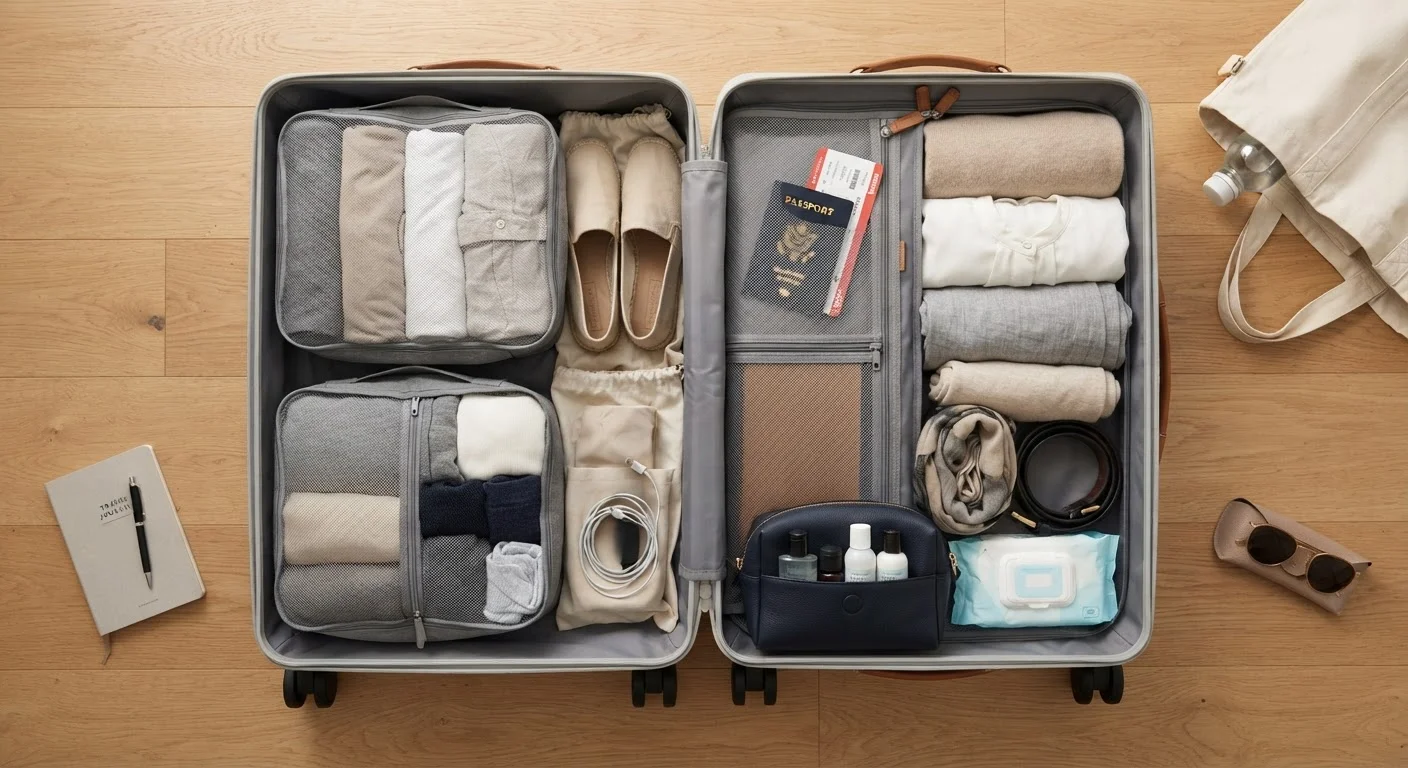
Rolling is the go-to method for casual fabrics: t-shirts, jeans, underwear, workout gear, and anything made of jersey or cotton. Lay the item flat, smooth out wrinkles, then roll tightly from the hem upward. Rolled items stand upright in your bag like a row of sushi rolls, letting you see everything at a glance instead of digging through layers. They also compress better than flat stacks and resist new wrinkles because the fabric is under consistent tension.
The bundle method is the wrinkle-fighter's secret weapon for dress shirts, blouses, slacks, and blazers - anything prone to creasing. The idea is to wrap each garment around a central core (a toiletry pouch works perfectly), with each successive layer cradling the one beneath it. When done correctly, there are no fold lines because there are no folds - each piece curves smoothly around the bundle. It takes a few tries to get right, but the payoff for business travelers or anyone attending events mid-trip is significant.
Packing cubes are compression tools and organizational systems in one. Assign a cube to each clothing category - tops, bottoms, undergarments - and compression cubes can squeeze a surprising volume into a small footprint. Cubes also make unpacking at your destination instantaneous: slip the cube into a drawer and you're done. They're especially useful for family travel, where keeping one person's items separate from another's is genuinely valuable.
Smart Habits That Multiply Your Packing Gains
Technique only goes so far if your pre-packing habits work against you. The most consistent packers follow a few non-negotiable routines that compress the process itself.
Planning longer or more complex itineraries? These packing principles integrate well with the broader planning frameworks seasoned travelers use for long-haul trips to keep every phase of the journey organized, not just the luggage.