

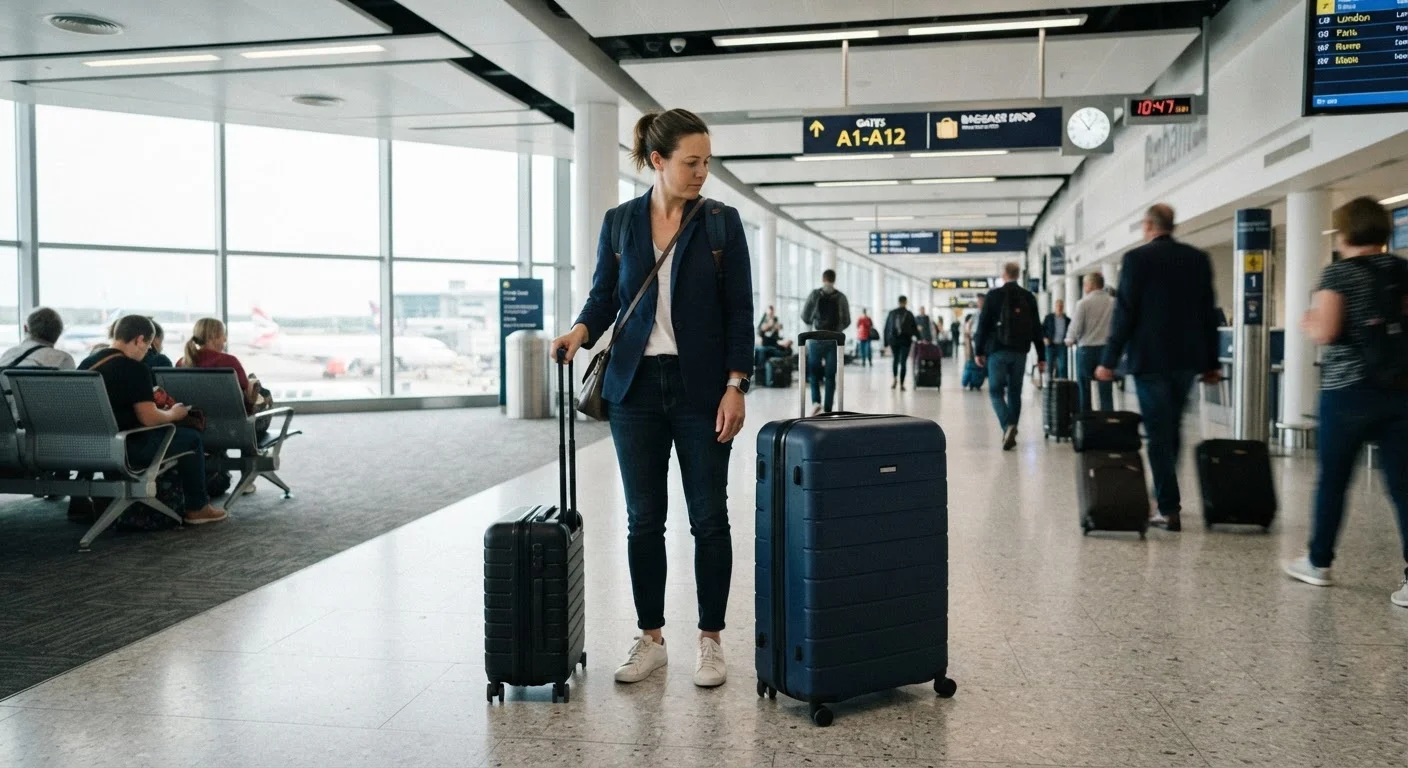
Key Takeaways
Option A
Carry-On Only
The streamlined, go-fast approach.
Best for: Short to medium trips where speed, flexibility, and avoiding fees matter most.
Option B
Checked Luggage
The roomy, worry-free packing strategy.
Best for: Longer trips, family travel, or itineraries requiring specific gear or formal attire.
If you're taking a weekend trip or city break
Carry-On Only
A few days rarely requires more than a well-packed cabin bag, and you'll move through the airport in a fraction of the time.
If you're traveling for two or more weeks
Checked Luggage
Extended trips demand clothing variety and toiletries that simply won't fit within carry-on limits without serious compromise.
If you're flying budget or ultra-low-cost carriers
Carry-On Only
Budget airlines often charge more for checked bags than legacy carriers, making a carry-on the financially smarter default.
If your itinerary involves specialized equipment or formal events
Checked Luggage
Ski gear, formal wear, or bulky medical devices require checked baggage - forcing them into a carry-on risks damage and stress.
If you're hopping between multiple cities or destinations
Carry-On Only
Multi-stop trips dramatically increase the risk of checked bag delays or loss, making cabin luggage the more reliable option.
The Real Cost of Each Strategy
The financial math matters before anything else. Checked bag fees on domestic US flights typically run $30-$40 per bag each way on major carriers, meaning a round trip could cost $60-$80 before you've even boarded. On a multi-stop itinerary with a budget airline, that number can climb higher still. If travel spending is something you track closely, it's worth folding baggage fees into your trip planning - see how to build a travel budget that holds for a practical framework.
Carry-on only isn't entirely free of financial risk, however. Airlines increasingly charge for oversized or overweight cabin bags at the gate, and enforcement varies by route and carrier. If your bag doesn't fit the sizer at the gate, you may end up paying more than a standard checked fee. Verify dimensions with your specific airline before every trip - not just the first time.
| Criterion | Carry-On Only | Checked Luggage |
|---|---|---|
| Typical additional cost | $0 (if within limits) | $30-$80+ round trip |
| Airport time added | Minimal - straight to security | 20-60 min check-in + carousel wait |
| Liquid restrictions | 3-1-1 rule applies | No liquid restrictions |
| Risk of loss or delay | Very low | Low but real, especially on connections |
| Packing flexibility | Limited - discipline required | High - bring what you need |
| Best trip length | 1-7 days typically | 8+ days or gear-heavy trips |
| Multi-city travel ease | Excellent - light and mobile | Cumbersome between stops |
Where You Gain and Lose Time
This is where carry-on travel earns its devoted following. Skip check-in queues, bypass the bag-drop line, and walk straight to security. On the back end, you exit the airport the moment you land - no waiting at the carousel, which at busy US airports can run 20-45 minutes. For frequent flyers on tight schedules, that time savings compounds meaningfully across a year of travel.
Checked luggage costs you time at both ends, but it buys you something in the middle: freedom at security. Liquids in any quantity, full-size toiletries, a proper hair dryer, and sharp items like scissors and nail clippers all travel without restriction in a checked bag. Packing decisions become far simpler, and the mental load of fitting everything into 22 linear inches drops considerably. For long-haul international flights where comfort items matter, this flexibility has real value.
One underappreciated time factor: overstuffed carry-ons slow down entire boarding processes. When bin space fills up, late-boarding passengers are often forced to gate-check anyway - combining the worst of both worlds. Packing smartly is as important as choosing the right strategy. Techniques frequent flyers use can dramatically reduce what you actually need to bring.
When the Choice Is Made For You
Some trips remove the decision entirely. Ski vacations, dive trips, camping excursions, and weddings that require formal attire all but mandate checked luggage. Fighting those realities with a carry-on leads to gear shortcuts that can affect safety or enjoyment. Similarly, traveling with young children often means a checked bag is simply practical - no amount of packing discipline compensates for the volume of supplies a toddler requires.
On the flip side, fast-paced city-hopping - the kind of city break travel where you're changing hotels every couple of nights - punishes anyone lugging a large checked suitcase through cobblestone streets or crowded metro systems. Mobility is a genuine asset in those scenarios, and a well-organized carry-on pays dividends every single day.
The honest answer is that neither strategy is universally superior. Match the bag to the trip, not to an identity. Frequent travelers who swear by carry-on only will occasionally need to check a bag; those who always check will sometimes wish they hadn't. Treating it as a decision rather than a habit keeps you in control of both your time and your spending.