

Key Takeaways
Why Most Travel Budgets Fall Apart
Most travelers build their budget around two numbers: the flight and the hotel. Everything else gets lumped into a vague mental category called "spending money," and that's exactly where things unravel. Meals stretch longer than expected, an entrance fee appears that wasn't on anyone's radar, a taxi from the airport costs three times what a ride-share would have - and suddenly the trip feels financially stressful before it's even half over.
The root problem isn't overspending on purpose. It's underestimating how many cost categories a trip actually has. A solid travel budget isn't a single number - it's a framework with distinct buckets, realistic estimates for each, and a built-in buffer for what you didn't see coming. This guide walks you through building exactly that, step by step.
What you will need
What You'll Need Before You Start
Before you run any numbers, gather the inputs that will make your estimates meaningful rather than guesswork. Check official government and tourism sources for visa fees or entry requirements, and review your destination's general cost of living through travel forums or destination guides. Keep in mind that conditions, prices, and entry rules change - always verify with official sources close to your travel date.
For a deeper foundation on smart money habits that carry into trip planning, the Budgeting Basics hub is a strong starting point. And if you're coordinating with others, group trip budgeting introduces its own layer of complexity worth addressing early.
Spreadsheet or budgeting app
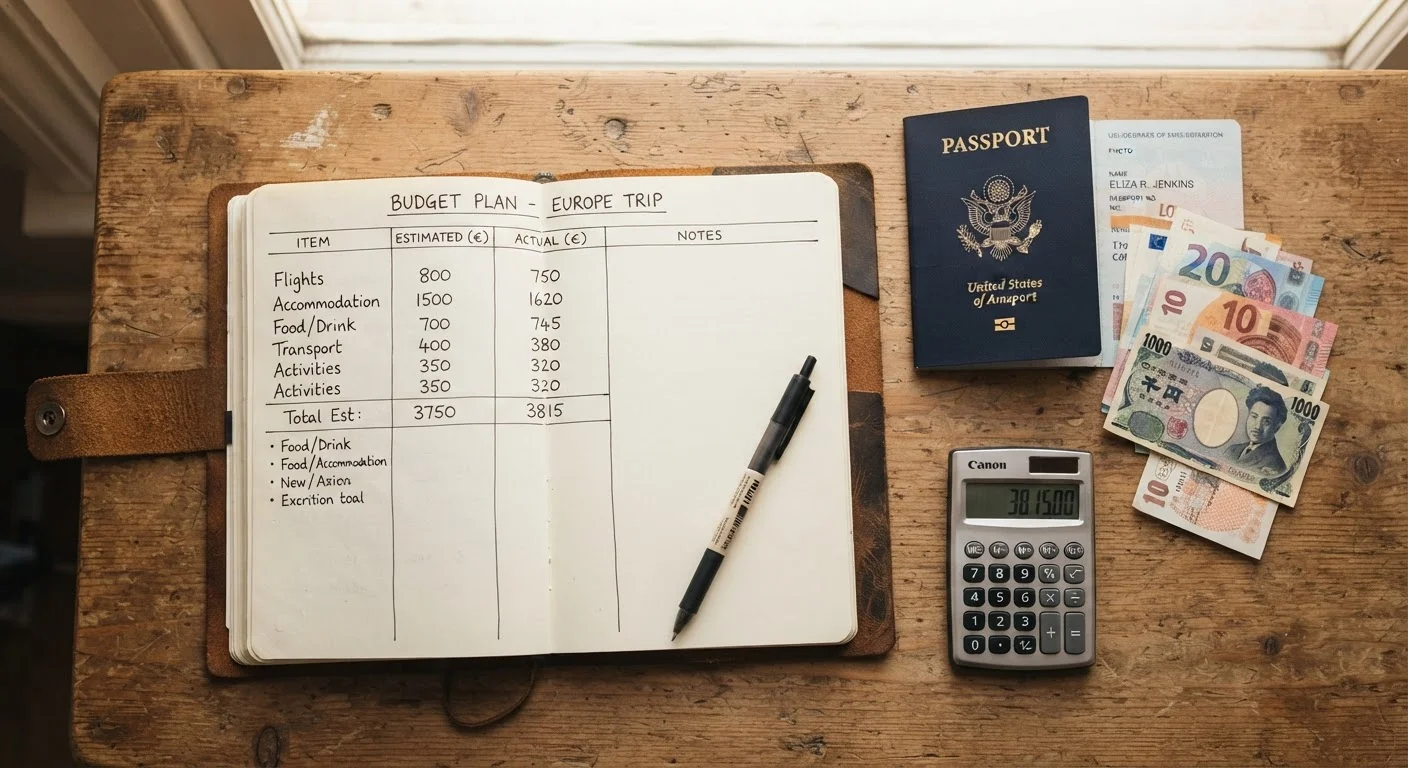
Organize each expense category with estimated and actual costs side by side.
Destination travel forums or guides
Research realistic local costs for meals, transport, and activities before you build estimates.
Official government travel advisory page
Verify visa requirements, entry fees, and any safety or health advisories for your destination.
Currency converter
Translate local prices into your home currency to build accurate category estimates.
Travel rewards account summary
Check available points or miles that could offset specific costs before finalizing your cash budget.
How to Build Your Travel Budget Step by Step
Follow these steps in order. Each one builds on the last, and skipping ahead - particularly the buffer step - is the most common reason budgets fail mid-trip.
List every cost category before estimating anything
Open a blank spreadsheet and create a row for each expense category. Standard categories include: flights, ground transportation (to/from airports and local), accommodation, meals and drinks, activities and entrance fees, travel insurance, visa and entry fees, luggage fees, souvenirs, communication (local SIM or roaming plan), tips and gratuities, and a contingency buffer. Leave the numbers blank for now - just get every category on the page.
Research real local costs for your destination
For each category, look up what things actually cost at your destination - not what you hope they'll cost. Travel forums, destination-specific subreddits, and recent trip reports from other travelers often provide more realistic meal and transport prices than polished travel websites. Search for "budget per day [destination]" and read posts from the past 12-18 months. Note the currency and convert all figures before entering them into your sheet.
Assign a daily estimate to each variable category
For expenses that repeat daily - meals, local transport, small purchases - multiply your daily estimate by the number of trip days. For fixed one-time costs like flights, accommodation totals, and insurance, enter the full amount directly. This gives you a line-by-line picture of where your money goes rather than one undifferentiated lump sum.
Add a 10-15% contingency buffer on top of your subtotal
Once every category has an estimate, sum the column. Then add 10-15% of that subtotal as a dedicated contingency line. This isn't a slush fund for extra cocktails - it's reserved for the delayed flight that requires an unplanned hotel night, the pharmacy run, or the entrance fee that wasn't listed online. Treating it as a protected reserve, not spending money, is what makes it effective.
Compare your total to your available fund and adjust
If your estimated total exceeds what you have, adjust categories - not the buffer. Look first at accommodation (one fewer nights in a pricier area, or a different neighborhood), then meals (more market lunches, fewer sit-down dinners), then activities (prioritize the two or three that matter most). Cutting the buffer to make the math work creates a false sense of security and usually backfires.
Track actual spending daily during the trip
A budget only holds if you monitor it in real time. Each evening, log what you actually spent against each category. Many travelers use a simple notes app or the same spreadsheet they built during planning. Seeing where you're over or under by day three lets you adjust the remaining days intentionally - eating in one night, skipping a paid attraction - rather than arriving home to an unpleasant credit card statement.
Pair Your Budget With a Flexible Itinerary
A budget and an itinerary are two sides of the same planning coin. If you're weighing how much structure your trip needs, this breakdown of flexible versus fully scheduled plans can help. A looser itinerary often means more spontaneous spending - so factor that into how generous your daily estimates and contingency buffer need to be.
The Categories Most Travelers Forget
Even careful planners miss costs that seem small individually but compound fast. Airport-to-hotel transfers are chronically underbudgeted - especially in cities where the airport sits far outside the center. Luggage fees deserve their own line if you're checking bags; see how carry-on versus checked luggage choices affect your overall costs. Travel insurance is another category people either skip or forget to budget for entirely - understanding what a policy actually covers helps you decide how much to allocate.
Currency exchange is a budget leak hiding in plain sight. Airport kiosks and hotel desks typically offer the least favorable rates, so research your exchange options before you land. For a broader look at spending categories that budgets routinely miss, this resource on undercounted budget lines applies directly to travel planning too.
Don't Rely on Estimates Alone for Entry Requirements
Visa fees, health requirements, and entry conditions can change with little notice. Always check official government sources - your country's foreign affairs or state department website, and the destination country's official immigration portal - well before your departure date. Outdated information from travel blogs or forums has caused real problems for travelers at the border.