

Key Takeaways
Why a Basic Kit Matters More Than Roadside Assistance Alone
Roadside assistance plans are useful, but wait times can stretch to an hour or more - and some situations are simple enough to resolve on your own in minutes. A dead battery on a cold morning or a slow tire leak doesn't have to turn into a two-hour ordeal if you've set yourself up with the right basics.
The goal isn't to carry a mechanic's toolbox. It's to handle the most common, manageable situations - and stay safe while you wait for help with the ones you can't. The items below are practical, take up little space, and require no special training to use effectively. For a broader picture of keeping your vehicle ready year-round, see our seasonal car maintenance checklist.
Jumper cables or a portable jump starter
A dead battery is one of the most common reasons drivers get stranded. Standard jumper cables require a second vehicle, but a compact lithium jump starter lets you handle the job solo. These portable units are small enough to fit in a glove compartment and can typically start a car multiple times on a single charge. If you opt for cables, choose a set that's at least 12 feet long - longer cables give you more flexibility in how vehicles are positioned.
A portable jump starter lets you handle a dead battery without flagging down a stranger.
Portable tire inflator and a can of tire sealant
A slow leak or minor puncture doesn't always mean a full tire change. A 12V inflator plugs into your car's power outlet and can top up a tire enough to reach a service station safely. A can of temporary tire sealant can plug small tread punctures in minutes. Neither is a permanent fix, but both can get you moving again quickly. For a deeper look at tire health, our piece on tire pressure and tread basics covers what drivers frequently overlook.
A 12V inflator and sealant can turn a stranding situation into a five-minute fix.
Reflective warning triangles or road flares
When you're stopped on the shoulder - day or night - visibility is your first safety priority. Reflective triangles are reusable, require no batteries, and meet federal safety standards for roadside use. Set them at 10, 100, and 300 feet behind your vehicle to give approaching traffic adequate warning. Electronic LED flares are a battery-powered alternative that can be seen from a greater distance and eliminate any fire risk associated with traditional flares.
Placing triangles behind your vehicle reduces the risk of a secondary accident on the shoulder.
A basic first aid kit
Minor injuries - cuts from glass, scrapes from changing a tire - happen in roadside situations. A compact kit with adhesive bandages, gauze, antiseptic wipes, medical tape, and disposable gloves covers most minor wound care. Pre-assembled kits designed for vehicles are widely available and take up almost no space. Verify the kit's contents annually and replace anything that's expired or been used.
A compact first aid kit handles the minor injuries that roadside situations often produce.
Flashlight with fresh batteries (or a rechargeable model)
Breakdowns don't schedule themselves around daylight hours. A reliable flashlight lets you inspect a tire, locate a fuse box, or signal for help after dark. A headlamp is even more practical - it keeps your hands free while you work. If your flashlight uses standard batteries, replace them each spring and fall. Rechargeable models eliminate that step but need occasional recharging; some drivers keep a USB-rechargeable light plugged into the car's port so it's always ready.
A headlamp keeps your hands free for roadside tasks after dark.
Basic hand tools and a multi-tool
You don't need a full toolkit. A small set - including a lug wrench (matched to your vehicle's lug nuts), a screwdriver set, and a multi-tool with pliers - handles a surprising range of minor fixes. If your car carries a spare tire, verify that the lug wrench in your kit actually fits before you need it; factory tools don't always work as expected. A pair of work gloves is also worth keeping nearby to protect your hands when handling dirty or sharp components.
Verify that your lug wrench fits your vehicle's lug nuts before you actually need it.
Water and a small supply of non-perishable snacks
Long waits - whether for a tow or roadside assistance - are more manageable with water on hand. In warm weather, staying hydrated matters more than most drivers account for, especially if you're working outside the vehicle. A sealed bottle or two and a few non-perishable snacks add almost no weight and require zero maintenance. This matters even more on longer trips; our road trip safety guide covers additional preparation steps worth taking before extended drives.
Water and snacks cost almost nothing to carry but make long waits considerably more manageable.
Build the Habit, Then Maintain It
Assembling a kit once isn't enough - items expire, batteries drain, and seasonal conditions change what you actually need. A quick audit every few months keeps everything functional. If you're preparing for a longer journey, our guide before every road trip walks through a fuller pre-departure safety check.
Refresh Your Kit Each Season
Set a reminder to check your kit at least twice a year - spring and fall are natural checkpoints. Replace expired first aid supplies, recharge or swap out batteries, and swap in a heavier blanket heading into winter. Seasonal checks take less than ten minutes and ensure nothing lets you down when you need it most.
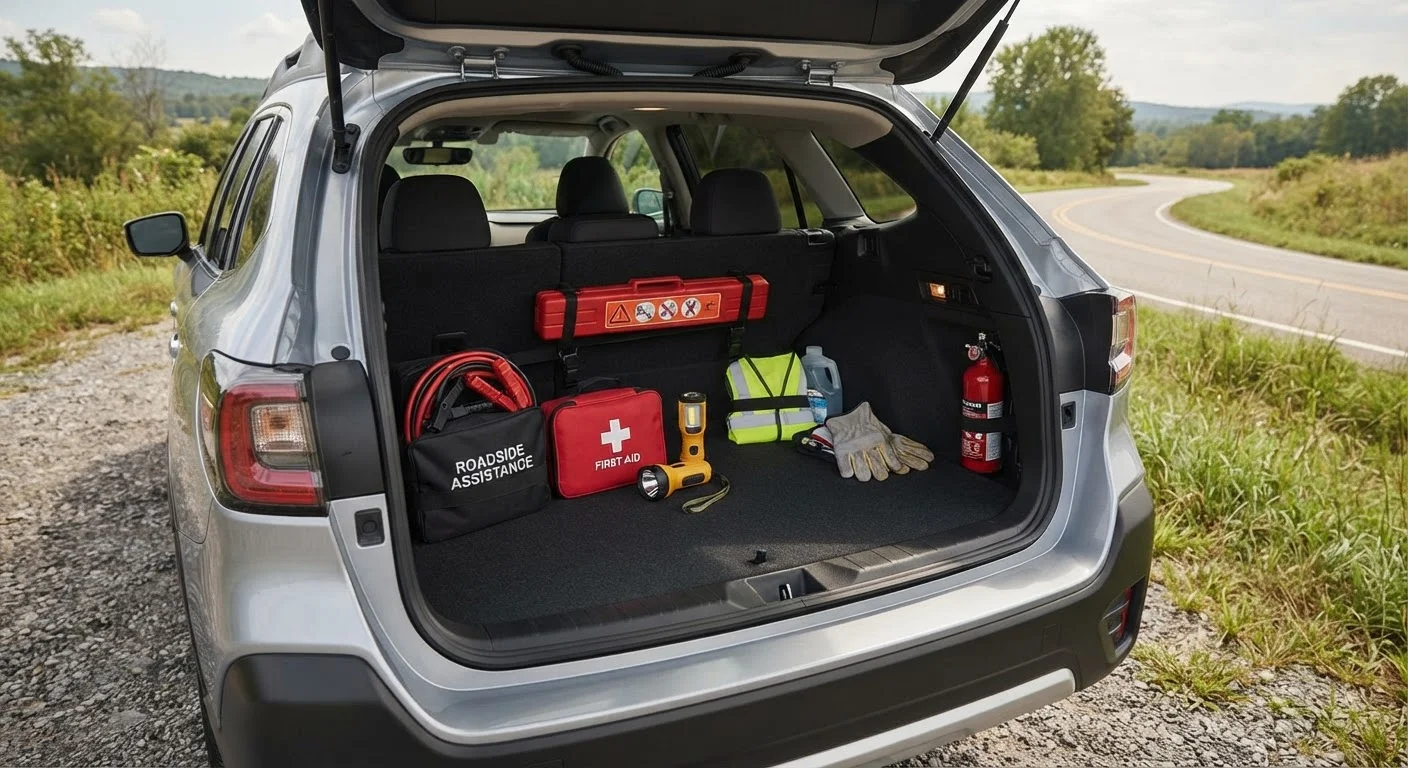
Keep the kit in a consistent location - a small bag or bin in the trunk works well - so you're not searching for items under pressure. Most of what's listed here costs very little upfront and can prevent repair bills, towing fees, or worse. That's a straightforward trade-off worth making.