

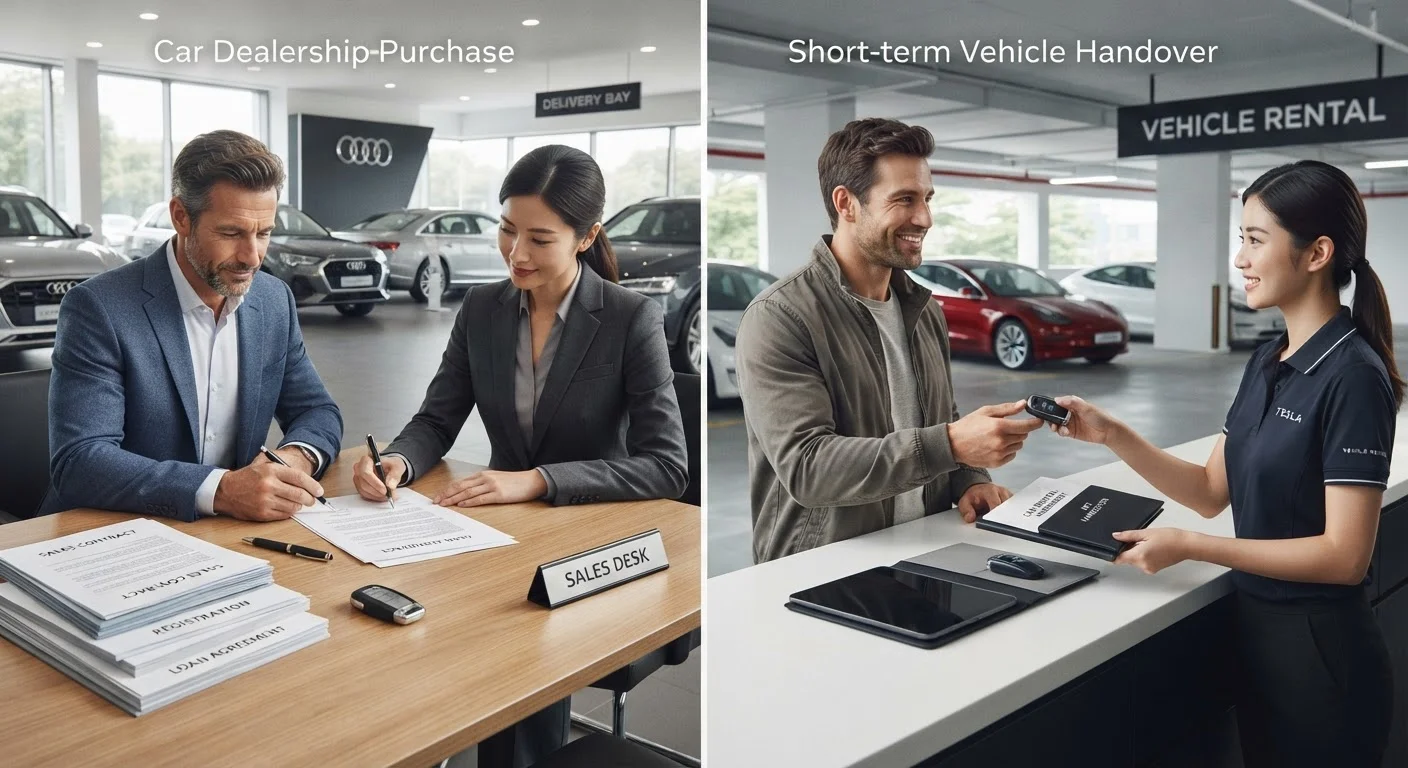
Key Takeaways
Option A
Buying a Car
The path to full ownership and long-term equity.
Best for: Drivers who keep vehicles long-term, log high annual miles, or want to build equity over time.
Option B
Leasing a Car
Lower monthly payments with built-in flexibility to switch vehicles.
Best for: Drivers who prefer newer vehicles every few years, drive moderate miles, and want predictable costs.
If you drive more than 15,000 miles per year
Buying a Car
Most leases cap annual mileage at 10,000-15,000 miles; exceeding those limits triggers per-mile fees that can eliminate any monthly payment savings.
If you want the lowest possible monthly payment right now
Leasing a Car
Lease payments are typically lower because you're only financing the vehicle's depreciation during the lease term, not its full value.
If you plan to keep the vehicle for seven or more years
Buying a Car
Once a loan is paid off, ownership costs drop significantly - a clear long-term financial advantage over perpetual lease payments.
If you want to drive a new vehicle every two to three years
Leasing a Car
Leasing removes the hassle of selling or trading in a used vehicle and keeps you in a car covered by the manufacturer's warranty.
If you need flexibility to modify or customise your vehicle
Buying a Car
Leased vehicles must generally be returned in near-original condition; aftermarket modifications can trigger end-of-lease penalty charges.
Where the Money Goes Upfront
The first financial difference between leasing and buying appears before you ever leave the lot. When purchasing, you typically make a down payment - often 10-20% of the vehicle's price - plus taxes, registration fees, and any dealer fees. Financing the remainder means interest charges accumulate over the loan term, commonly 48 to 72 months.
With a lease, the upfront outlay is usually lower: a security deposit, the first month's payment, acquisition fees, and taxes on the capitalized cost. However, a larger "cap cost reduction" payment at signing can lower your monthly lease bill - essentially a down payment on a car you'll never own.
One critical point: money paid upfront on a lease is rarely refundable if the vehicle is totalled or stolen early in the contract. Gap insurance - which covers the difference between what you owe and what the car is worth - is worth factoring into upfront cost comparisons for both options. See how financing terms shape total cost for a deeper look at how loan structure affects what you actually pay.
| Criterion | Buying | Leasing |
|---|---|---|
| Upfront costs | Higher (down payment + fees) | Lower (deposit + first payment) |
| Monthly payment | Higher (full purchase price) | Lower (depreciation only) |
| Ownership at end | Yes - asset you keep or sell | No - return or buy-out |
| Mileage restrictions | None | Typically 10,000-15,000/yr |
| Customisation | Unrestricted | Generally not permitted |
| Warranty coverage | Expires; repairs become owner's cost | Usually covered throughout term |
| Long-term cost (10+ yrs) | Lower once loan is paid off | Higher due to continuous payments |
| Early exit flexibility | Sell or trade with equity | Costly early termination fees |
Monthly Costs, Equity, and the Long View
Lease payments are almost always lower than loan payments for the same vehicle. That's because you're only paying for the portion of the car's value you consume during the lease term - its projected depreciation - plus finance charges and fees. A buyer pays down the full purchase price.
The equity gap is where the long-term math shifts. Every loan payment builds ownership stake. After the final payment, you own an asset you can sell, trade, or drive payment-free. A lessee at term's end owns nothing and must lease or buy again, restarting payment obligations.
Over a decade of continuous leasing, total payments often exceed what a buyer would have spent - including the buyer's post-loan years of driving cost-free. That said, buyers absorb out-of-warranty repair costs that lessees avoid (most leases align with factory warranty coverage). For a broader view of what drives total ownership expense, our guide on new vs. used ownership costs adds useful context.
The Hidden and Ongoing Costs Each Option Carries
Both paths carry costs that aren't obvious at signing. Buyers should budget for:
- Depreciation: New vehicles lose a significant portion of value in the first few years. This affects resale value, not monthly cash flow - but it matters if you sell before the loan is paid off.
- Out-of-warranty repairs: Once factory coverage ends, mechanical costs fall entirely on the owner.
- Insurance: Lenders require comprehensive and collision coverage, which lapse-prone owners may be tempted to drop once the loan is paid - a risky move.
Lessees face a different set of risks:
- Mileage overages: Fees typically range from $0.15 to $0.30 per mile over the contract limit. A driver 5,000 miles over a three-year lease could owe $750-$1,500 at return.
- Excess wear-and-tear charges: Scratches, interior damage, and tyre wear beyond "normal" thresholds are billed at lease end.
- Early termination penalties: Breaking a lease early is expensive - often requiring payment of remaining charges plus a termination fee.
Check Gap Coverage Before You Sign
Gap insurance (Guaranteed Asset Protection) covers the difference between what you owe on a lease or loan and the vehicle's actual cash value if it's totalled or stolen. Many leases include gap coverage automatically, but loan-financed purchases typically do not. Confirm what's included in your contract - and if it's absent from a financed purchase, evaluate whether adding it makes sense for your situation.
Understanding these costs before signing helps you budget accurately. The hidden costs buyers routinely overlook covers similar traps across major purchases.
Making the Right Call for Your Situation
The decision between leasing and buying isn't about which option is objectively cheaper - it's about which aligns with your driving habits, financial priorities, and how you value flexibility versus ownership. Drivers who prioritise monthly cash flow and always-under-warranty reliability may find leasing genuinely suits them. Those focused on long-term wealth-building and unrestricted use of their vehicle are generally better served by buying.
Before committing, model both scenarios with realistic numbers: your actual annual mileage, the full cost of financing versus the full cost of successive leases, and what happens to each path after five years. Budgeting basics can help you structure that comparison within your broader financial picture. If you're weighing financing methods, our overview of paying cash vs. using credit is a useful complement to this analysis.
This article is for general informational and educational purposes only and does not constitute personalised financial or legal advice. Consult a qualified financial professional before making major vehicle financing decisions.