

Key Takeaways
Vehicle Blind Spot
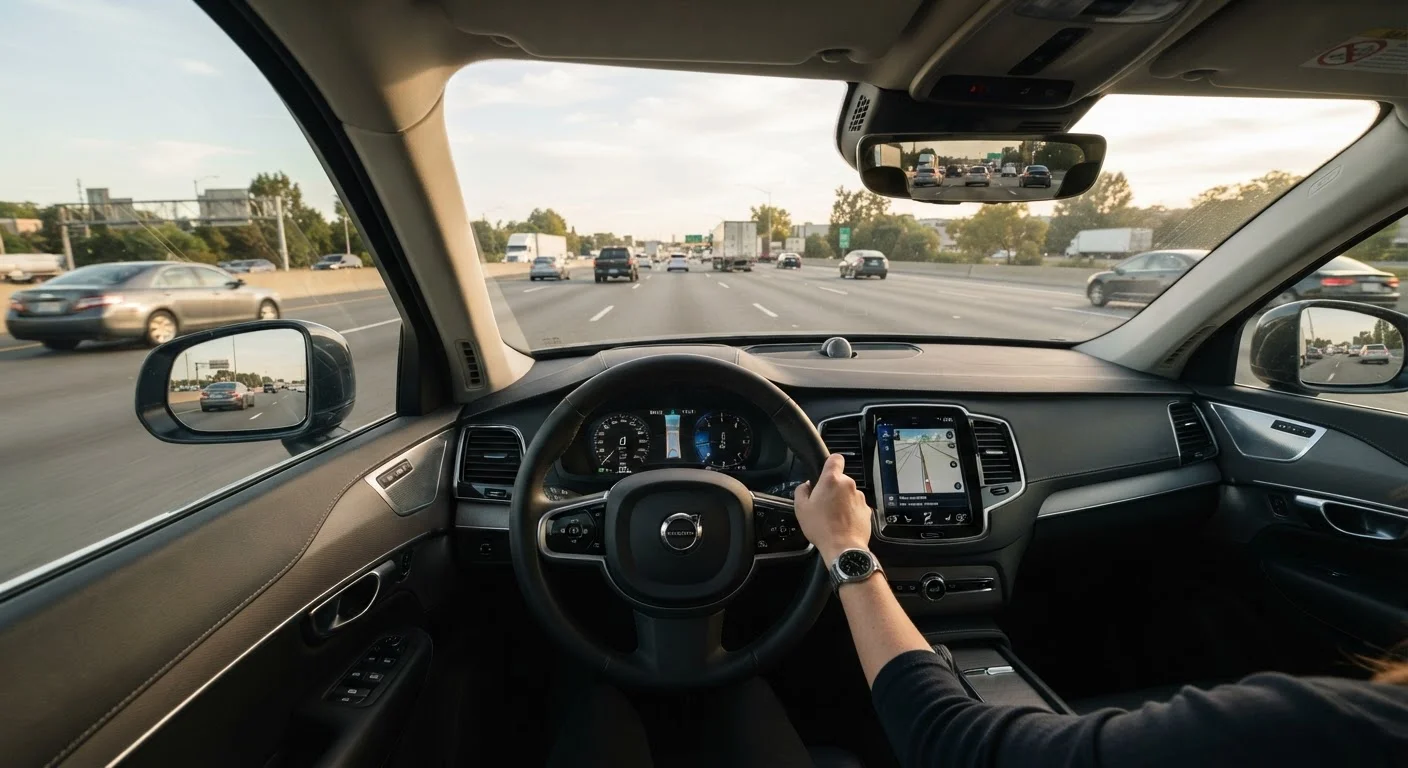
A blind spot is any area around your vehicle that cannot be seen using your mirrors alone. These zones exist because mirrors have physical limits - they reflect only a portion of the space beside and behind your car. Any vehicle, person, or obstacle hiding in a blind spot is invisible to you unless you physically turn your head to look.
Blind spot size is influenced by mirror angle, vehicle geometry (pillars, roof height, cargo area), and seat position. Larger vehicles generally produce larger blind zones.
What Mirrors Can - and Cannot - Show You
Mirrors are powerful tools, but their geometry is fixed. No matter how well adjusted they are, they reflect only a defined arc of space. The zones they miss - your blind spots - are predictable and consistent for each vehicle type, which is actually good news: once you know where they are, you can account for them deliberately.
A typical passenger sedan has two primary blind spots: one on each rear quarter, roughly beside and slightly behind your back doors. These are the zones where a motorcycle or compact car can sit completely out of frame from all three mirrors simultaneously. There's also a narrower rear-center blind spot on vehicles with large headrests or high trunk lines that limit the rear-view mirror's reach.
Forward blind spots are less discussed but real. The A-pillars - the structural posts flanking your windshield - can obscure pedestrians, cyclists, or other vehicles when you're navigating a curve or tight intersection. Thicker pillars, a trade-off made for rollover protection in modern vehicles, can make this more pronounced.
The 'Just a Sliver' Mirror Rule
When adjusting your side mirrors, aim to see just a sliver of your own vehicle's side panel - not a broad view of it. Most drivers set mirrors too inward, wasting mirror coverage on their own car rather than the lanes beside them. This small adjustment can meaningfully shrink your side blind zones without requiring any special equipment.
How Blind Spot Size Varies by Vehicle Type
Not all blind spots are created equal. The size of your blind zones scales with vehicle dimensions, ride height, and rear-end design.
840,000+
Annual US crashes involving blind spots
According to NHTSA estimates, hundreds of thousands of crashes each year are attributed at least in part to blind zone limitations.
~28%
Of reversing fatalities involving children under 5
NHTSA data shows a disproportionate share of backup fatalities involve young children who are hidden in the rear blind zone of larger vehicles.
4
Distinct blind zones on a standard semi-truck
The Federal Motor Carrier Safety Administration identifies four no-go zones around large trucks where smaller vehicles should never linger.
- Sedans and coupes: Relatively manageable blind spots, though low rooflines and sloped rear windows can restrict the rearview mirror's effectiveness.
- SUVs and crossovers: Higher seating position improves forward sightlines, but the wider body and longer rear quarters expand the side blind zones considerably.
- Pickup trucks: Tall cabs and long beds create an extended rear blind zone during reversing - a leading factor in backup incidents involving children and small objects.
- Large commercial vehicles: Semi-trucks have four distinct blind zones: directly in front of the cab, directly behind the trailer, and along both full lengths of the truck. Staying out of these areas is critical on highways.
If you're transitioning to a larger vehicle, it's worth spending time in a parking lot recalibrating your spatial sense before joining traffic. As detailed in our guide to highway versus city driving skills, merging environments each carry distinct blind-spot risks that reward deliberate practice.
How to Account for Blind Spots in Practice
Managing blind spots is less about eliminating them and more about building habits that compensate for them reliably.
- Adjust your mirrors outward. Most drivers angle their side mirrors too far inward, seeing too much of their own car. Angle them so just a sliver of your vehicle's side is visible - this expands coverage into the lanes beside you.
- Use the shoulder check. Before any lane change or merge, turn your head briefly toward the relevant blind spot. This takes less than a second and catches anything mirrors missed. It is the most direct and reliable blind-spot technique available.
- Signal early and consistently. Activating your turn signal before moving gives drivers in your blind spot time to react or adjust position before you change lanes.
- Track surrounding traffic continuously. Glance at your mirrors every five to eight seconds so you have a mental model of where nearby vehicles are - making a blind spot check more predictive rather than reactive.
Technology helps too. Blind spot monitoring systems use radar sensors to flag vehicles in your adjacent lanes, usually via a light in your mirror housing. They're a meaningful safety layer, but sensor range and response time mean they work best as a secondary confirmation, not a primary alert. Even experienced drivers can fall into the trap of over-relying on assistance systems at the expense of active awareness.
Blind Spots Beyond Your Own Vehicle
Blind spot awareness isn't only about protecting yourself - it also means recognizing when you might be hiding in someone else's blind zone.
Avoid lingering alongside large trucks or buses on the highway. If you can't see the truck driver's face in their mirror, they almost certainly cannot see you. Pass promptly and position yourself where you're visible. The same applies when cycling or driving a motorcycle near larger vehicles.
When reversing, especially in a larger vehicle, always add a physical walk-around before backing over long distances. Backup cameras improve the picture but still leave corner gaps uncovered.
Reduced visibility environments amplify blind spot risk - see our overview of night driving hazards for how darkness compounds the challenge. Heightened mirror discipline after dark, combined with consistent shoulder checks, keeps your situational awareness intact when visibility is already compromised.
Blind spots are a structural reality of driving, not a flaw to be embarrassed by. Understanding their location, accounting for them with reliable habits, and treating driver-assistance technology as a supplement rather than a substitute are the pillars of confident, low-risk lane management.