

Key Takeaways
Why Most Indoor Plants Fail (And How to Avoid It)
Indoor plants are one of the most effective - and affordable - ways to add life, texture, and personality to a room. But a wilting fern on a windowsill tells a different story. The gap between a thriving plant display and a graveyard of good intentions almost always comes down to one thing: matching the plant to the environment, not the other way around.
Before choosing a species, take stock of your space. Note how many hours of direct sunlight each window receives and from which direction. South-facing windows deliver the most intense light; north-facing ones offer the least. Humidity matters too - heated homes in winter can drop to desert-level dryness, which rules out moisture-loving tropical varieties without supplemental humidification.
Once you understand your conditions, styling becomes intuitive. The list below covers five plant categories that genuinely perform indoors, paired with concrete advice on how to arrange them well. For readers also thinking about watering practices, our guide on watering habits that quietly kill healthy plants is an essential companion read.
Pothos - The Forgiving Trailing Vine
Pothos (Epipremnum aureum) is frequently recommended for beginners, and the reputation is earned. It tolerates low light, irregular watering, and the temperature swings typical of most homes. Leaves are waxy, heart-shaped, and available in solid green, variegated cream-and-green, and neon chartreuse - each reading differently in a room.
Styling tip: Trail pothos from a high shelf or hang it in a macramé planter near a north- or east-facing window. The cascading vines add softness and organic movement that balances angular furniture. Prune stems occasionally to keep growth dense rather than sparse and stringy.
Pothos thrives on neglect - trail it from shelving to add organic movement without demanding much care.
Snake Plant - Structural and Drought-Tolerant
The snake plant (Dracaena trifasciata, formerly Sansevieria) is defined by its stiff, upright leaves and striking vertical form. It tolerates low light and infrequent watering exceptionally well, making it one of the least demanding options available. Overwatering is its primary vulnerability - always let the soil dry fully between waterings.
Styling tip: Use snake plants as architectural anchors in corners or beside furniture with strong horizontal lines, like a long sofa or low credenza. The vertical contrast is visually compelling. A trio of snake plants in graduated heights in matching pots makes a statement without clutter.
Snake plants create bold architectural contrast - anchor corners and balance strong horizontal furniture lines.
ZZ Plant - Glossy Leaves for Low-Light Rooms
The ZZ plant (Zamioculcas zamiifolia) stores water in its rhizomes, meaning it genuinely handles weeks without attention. Its deep green, waxy leaves reflect light beautifully, giving even a dim room a polished look. It's one of the few species that performs respectably in north-facing rooms or interior spaces far from windows.
Styling tip: Place a ZZ plant on a side table or plant stand where its reflective leaves catch ambient light. Because it grows slowly, it won't outgrow its pot or overwhelm a small space quickly - a useful quality noted in our container gardening guide.
ZZ plants thrive in low-light interiors, and their glossy leaves add polish without demanding attention.
Peace Lily - Blooms and Air Movement Indoors
Peace lilies (Spathiphyllum spp.) are one of the few flowering houseplants that bloom reliably in indirect indoor light. White spathes appear periodically throughout the year, offering a seasonal shift in texture without needing a south-facing window. They prefer consistently moist - but not soggy - soil and moderate humidity.
Styling tip: Peace lilies work particularly well in bathrooms and kitchens where ambient humidity is naturally higher. Their soft, arching leaves contrast nicely with harder surfaces like tile and stone. Avoid cold drafts near exterior doors; they show stress quickly through yellowing leaf edges.
Peace lilies bloom in indirect light - style them in humid rooms for seasonal texture and soft contrast.
Rubber Plant - Bold Foliage, Minimal Fuss
The rubber plant (Ficus elastica) brings scale and dramatic leaf texture that few other houseplants match. Burgundy-leaved varieties add a moody richness; bright green cultivars feel more tropical and fresh. It grows upright and eventually tall, making it a natural choice when you want a statement without a complex arrangement.
Styling tip: Position a rubber plant in a bright spot with indirect light - near but not directly in a south or west window. Wipe the leaves occasionally with a damp cloth to remove dust and keep them looking their best. Pair a single large rubber plant in a statement pot with simpler surrounding décor to let the plant be the focal point.
A rubber plant's dramatic scale and rich foliage make it a focal-point plant that needs little else around it.
Putting It All Together: Styling Principles That Work
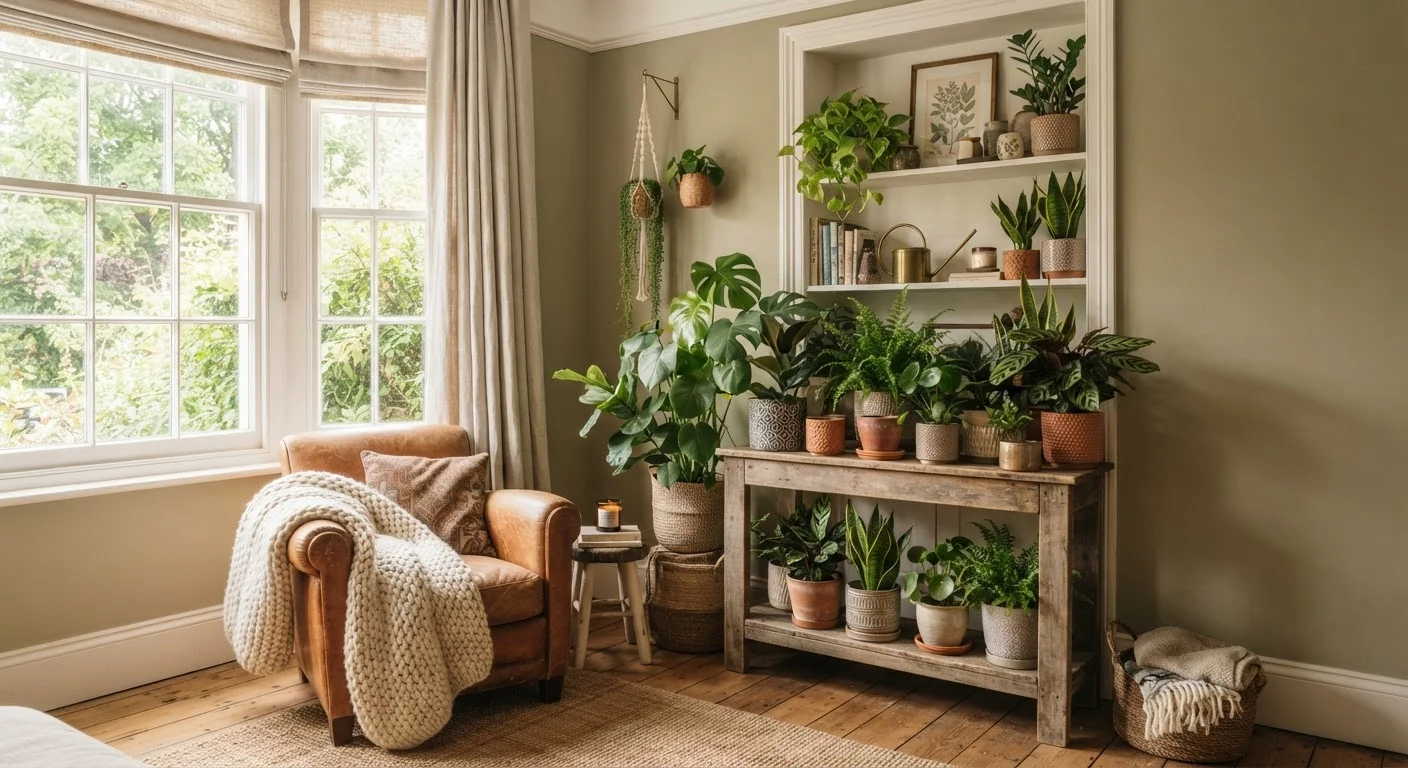
Individual plant choices matter, but arrangement is where design instincts kick in. Group plants in clusters of three or five rather than lining them up evenly - asymmetry feels more natural and draws the eye. Vary heights deliberately: a tall snake plant anchors a corner, a mid-height peace lily fills the middle, and a trailing pothos on a low shelf or pedestal creates visual flow downward.
Use Plant Stands to Create Layers
Elevating even a single plant on a stand immediately adds dimension to a flat surface arrangement. Tiered plant stands, wooden stools, and stacked books all work as risers. Varying the height of your containers by at least 8-12 inches between tiers creates a layered effect that professional stylists use consistently. This technique also improves airflow around the plants, which can reduce pest pressure.
Pot selection is décor, full stop. Terracotta suits rustic, bohemian, and Mediterranean-inspired rooms. Matte white or pale gray ceramic reads as Scandinavian or contemporary. Dark glazed pots work well in moody, maximalist spaces. Keep a consistent palette across three or four pots in a grouping - it unifies the display without making it look like a nursery shelf.
If your home has limited floor space, think vertically. Wall-mounted planters, hanging macramé, and staggered floating shelves are all practical options covered in more depth in our article on decorating strategies for compact rooms. The goal is for plants to feel integrated into your interior - not placed, but planted in the design itself.