

Key Takeaways
Why Good Intentions Go Wrong at the Hose
Most plants don't die from neglect - they die from too much love. Watering is the garden task gardeners perform most often, yet it's also where subtle, repeated mistakes quietly accumulate into real damage. The good news: once you know what to look for, most bad watering habits are easy to correct.
This guide walks through the most common watering errors, explains why they're so easy to fall into, and gives you concrete steps to change course. Whether you're managing raised beds, container plants, or an in-ground border, the principles apply. For container-specific guidance, our container gardening guide covers drainage and soil selection in depth.
Watering on a fixed schedule regardless of weather or soil conditions.
Why it happens: Routines feel reliable, and gardeners assume plants need water at regular intervals the way people need meals.
Watering shallowly and frequently instead of deeply and less often.
Why it happens: Short watering sessions feel efficient, and gardeners worry about overwatering if they run the hose too long.
Wetting foliage in the evening and leaving it damp overnight.
Why it happens: Evening watering is convenient after work, and overhead sprinklers are the default tool for many gardeners.
Overwatering plants in pots with poor or blocked drainage.
Why it happens: Gardeners water containers as frequently as in-ground plants, not realizing that pots can trap excess moisture around roots.
Treating all plants in the same bed with an identical watering amount.
Why it happens: It's easier to water an entire bed uniformly than to tailor flow to each plant's individual needs.
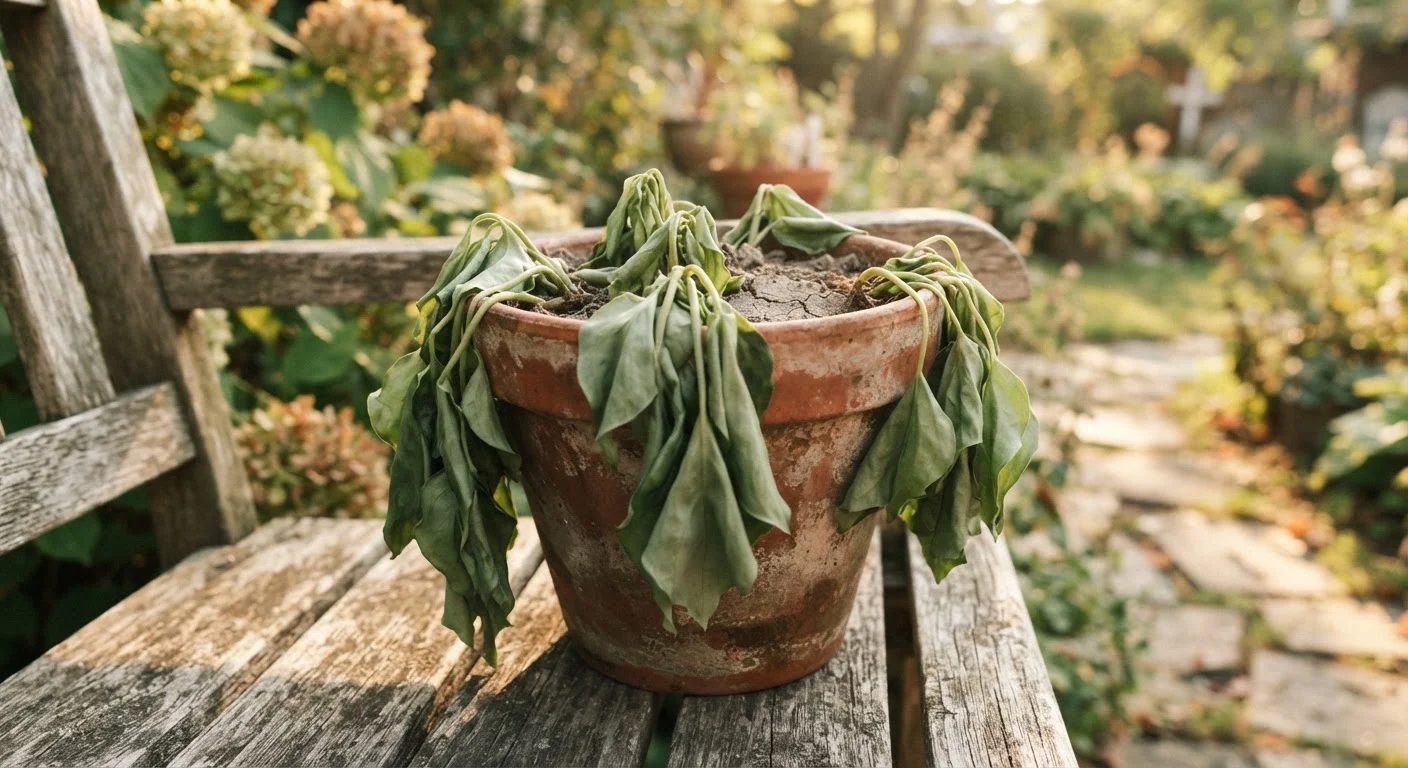
Ignoring wilting as a reliable indicator of underwatering.
Why it happens: Wilting looks like drought stress, so gardeners immediately reach for the hose - but wilting is also a symptom of root rot from overwatering.
Reading the Signs and Fixing the Routine
Correcting a watering habit starts with diagnosis. Push your finger two inches into the soil - if it feels moist, hold off regardless of what the calendar says. If it's dry and pulling away from pot edges, water deeply and slowly until it drains through. Shallow, frequent watering encourages shallow roots that are vulnerable to heat and drought stress.
Soggy Soil Is a Root-Rot Risk
Roots need oxygen as much as water. When soil stays saturated for extended periods, oxygen is pushed out and anaerobic conditions allow root-rot pathogens to thrive. If your plant looks droopy despite wet soil, stop watering immediately, check for dark or mushy roots, and consider repotting into fresh, well-draining mix. Persistent overwatering damage can be irreversible once the root system collapses.
Timing matters too. Morning watering gives foliage time to dry before nightfall, reducing fungal pressure. If you water in the evening, direct the flow at the soil, not the leaves. For lawns, the same logic applies - our lawn care myths article debunks the common idea that daily light watering builds a resilient turf.
If your garden has shaded corners where moisture lingers longer, factor that into your schedule. Low-light areas dry out more slowly than sun-drenched beds - our guide to shade gardening explains how light levels should shape your whole care approach. And for anyone considering a more systematic solution, drip irrigation delivers water directly to the root zone, reducing both waste and foliage wetting. Pair smarter watering with a broader seasonal plan using our month-by-month garden reference.