

Key Takeaways
Choosing the Right Container
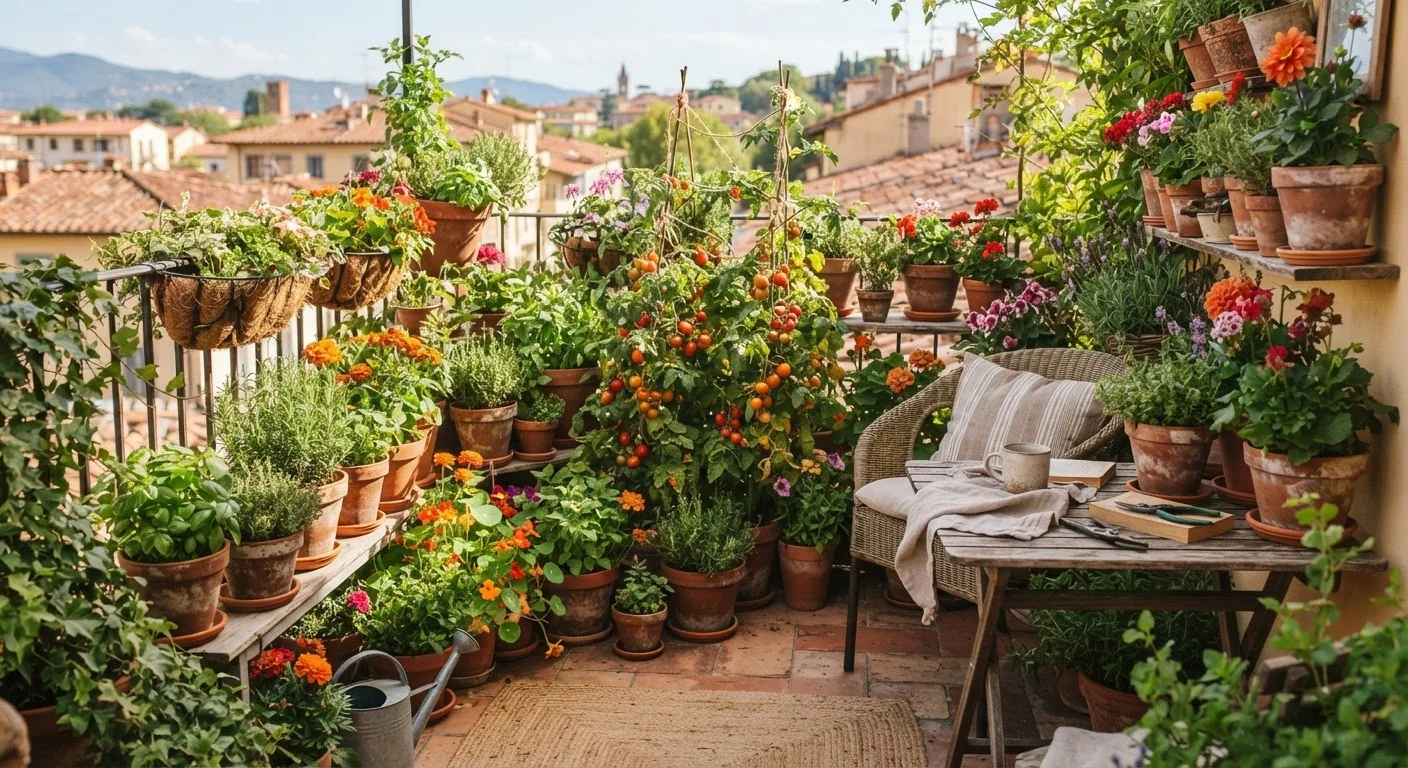
Container material, size, and drainage shape everything that follows. Get these three right and you've built a strong foundation; ignore them and even healthy plants will struggle.
Material Trade-offs
- Terracotta: Breathable and attractive, but it dries out quickly and cracks in freeze-thaw cycles. Best for Mediterranean herbs and succulents that prefer drier conditions.
- Glazed ceramic: Retains moisture longer, resists cracking better than unglazed clay, and comes in every size - but it's heavy to move.
- Plastic and resin: Lightweight, affordable, and moisture-retentive. A practical choice for vegetables and annuals that need consistent watering.
- Fabric grow bags: Promote air-pruning of roots, which prevents the root-circling that chokes plants in rigid pots. Excellent for tomatoes, peppers, and root vegetables.
- Wood: Insulates roots from heat and cold well, though it eventually degrades. Line with landscape fabric to extend life.
Size Guidelines
As a general rule, match volume to mature root mass. Shallow-rooted herbs like basil and chives do well in 6-8 inch pots. A single tomato plant needs at least 15-20 gallons of soil to produce well. When in doubt, go larger - undersized containers dry out rapidly and restrict yields.
Drainage Is Non-Negotiable
Every container must have at least one drainage hole. Roots sitting in standing water quickly develop root rot. If you fall in love with a decorative pot that has no drainage, use it as a cachepot: place a plain nursery pot with holes inside it, and empty the outer pot after each watering. Avoid placing gravel or pebbles at the bottom of a sealed container - research shows this actually raises, not lowers, the water table inside the pot.
Soil Mixes: Why Potting Mix Matters
Garden soil - even excellent, amended garden soil - compacts in containers, cuts off air to roots, and drains poorly. Always start with a commercial potting mix designed for containers, then consider amendments based on what you're growing.
Elevate containers on pot feet or bricks to ensure air can circulate beneath the drainage hole. This prevents the hole from becoming blocked and roots sitting in pooled water on a flat surface.
Blocked drainage is one of the most overlooked causes of root rot in otherwise well-set-up containers; even a small gap makes a measurable difference.
When potting up vegetables, fill the container, water it thoroughly, let it settle overnight, and then top off the soil before planting. Soil that settles after planting can bury crowns and rot stems.
Potting mixes containing peat or coco coir compress significantly when first saturated; pre-settling avoids disturbing transplant roots during the critical establishment window.
Group containers together during heat waves. Clustered pots create a microclimate with slightly higher humidity and slower moisture loss than isolated pots in full sun.
Evapotranspiration rates drop when leaf canopies overlap, reducing the watering frequency needed during the hottest weeks of the season.
Reading a Potting Mix Label
Good potting mixes typically combine peat moss or coco coir (for moisture retention), perlite or pumice (for drainage and aeration), and sometimes composted bark. For a deeper look at how these components relate to in-ground soil science, see our guide to soil composition.
Customizing for Plant Type
- Vegetables and annuals: A standard all-purpose potting mix works well. Add a slow-release granular fertilizer at planting time.
- Succulents and cacti: Blend standard potting mix 50/50 with coarse perlite or grit to improve drainage sharply.
- Acid-loving plants (blueberries, azaleas): Look for mixes formulated for acid-lovers, or blend in fine pine bark to lower pH.
- Herbs: Most culinary herbs prefer lean, well-draining soil. Avoid mixes with heavy added fertilizer, which produces lush growth but diminished flavor.
Refreshing Soil Season to Season
Potting mix degrades - peat breaks down, perlite floats away with watering, and nutrients deplete. Plan to refresh or replace potting mix every one to two growing seasons. Mixing in a portion of homemade compost is a cost-effective way to replenish organic matter; our composting guide explains how to produce consistent, garden-ready compost at home.
Selecting Plants and Pairing Varieties
One of container gardening's greatest advantages is control - you can position pots wherever light conditions are ideal and group plants with similar care needs. That flexibility is also an invitation to overreach, so focus on compatibility.
Thriller, Filler, Spiller
A classic formula for mixed containers: a thriller is the tall focal point (ornamental grasses, upright salvia, pepper plants), a filler is a mounding mid-layer (petunias, basil, compact marigolds), and a spiller trails over the edge (sweet potato vine, creeping jenny, trailing nasturtium). Combining all three creates depth and visual balance.
Vegetable Combos That Actually Work
- Tomatoes + basil + a trailing nasturtium (nasturtium may deter aphids and fills visual space)
- Peppers + compact bush beans
- Lettuce + radishes + chives (all shallow-rooted, fast producers)
- Strawberries in a dedicated strawberry planter or hanging basket
If you're comparing container growing to traditional beds, our raised beds vs. in-ground guide covers drainage, cost, and soil control trade-offs. For a broader introduction to food gardening, starting a vegetable garden from scratch is a useful companion read.
Light Matching
Pair plants with the same light requirement in each pot. Sun-lovers (tomatoes, basil, peppers) need six or more hours of direct sun; shade-tolerant plants (ferns, impatiens, coleus) thrive with two to four hours. Mixing the two guarantees one group will underperform. For low-light situations, see our shade gardening guide.
Watering and Feeding in Containers
Containers dry out faster than garden beds - sometimes twice as fast on a hot, windy day. They also flush nutrients with every watering. Both realities demand a more attentive approach than in-ground gardening.
How to Know When to Water
The most reliable method is the finger test: press your finger one to two inches into the soil. If it feels dry, water thoroughly until it drains freely from the bottom. If it's still moist, wait. Most failures in container gardening stem from watering on a fixed schedule rather than responding to actual soil moisture. Our article on watering habits that kill healthy plants explains the signs of both overwatering and underwatering in detail.
For gardeners with multiple large containers, drip irrigation can automate consistent moisture delivery and reduce water waste significantly.
Feeding Container Plants
Because nutrients leach out with watering, container plants need supplemental feeding - roughly every two to four weeks during the growing season for most vegetables and annuals. Use a balanced, water-soluble fertilizer or a slow-release granular product worked into the soil surface. Herbs generally prefer less feeding than fruiting vegetables.
Common Container Gardening Pitfalls
Even experienced gardeners encounter setbacks in containers. These are the most frequent culprits:
Avoid These Frequent Mistakes
Many container failures are entirely preventable. The single most common mistake is treating containers like miniature garden beds - choosing pots that are too small, filling them with garden soil, and watering on a rigid schedule regardless of actual soil moisture. Before planting, confirm that your container has functional drainage, your mix is designed for pots, and you have a plan for regular feeding.
- Pot too small: Roots become rootbound, water drains instantly, and the plant stresses quickly. When you see roots circling the drain holes or emerging from the soil surface, it's time to repot one size up.
- No drainage: Standing water leads to root rot within days. Check every container before planting.
- Using garden soil: It compacts and holds water in ways that starve roots of oxygen.
- Skipping fertilizer: A potting mix's starter nutrients are typically exhausted within four to six weeks. After that, unfed plants produce less and yellow prematurely.
- Crowding plants: A pot that looks full at transplant time is often severely overcrowded by midsummer. Follow spacing guidelines on plant tags, even when containers look sparse at the start.
- Ignoring heat buildup: Dark-colored plastic containers can overheat roots in direct sun during summer. Choose light-colored pots for hot climates, or wrap dark pots with burlap.
Seasonal Care and Winter Prep
Container plants face harsher winters than the same species planted in-ground, because roots are exposed to air temperature on all sides rather than insulated by earth. Planning ahead prevents losses.
End-of-Season Tasks
- Pull spent annuals and compost healthy plant material (avoid composting diseased plants).
- Refresh or replace potting mix rather than storing nutrient-depleted soil over winter.
- Clean pots with a diluted vinegar solution to remove mineral deposits and reduce disease carryover.
Overwintering Perennials and Tender Plants
Hardy perennials in containers can often survive winter if moved to an unheated garage or shed where temperatures stay above hard-freezing. Wrap containers in burlap or bubble wrap for additional insulation if storing outside. Tender plants - citrus, bougainvillea, tropical hibiscus - need to come indoors before the first frost. For a full calendar of when to act, our seasonal garden tasks reference provides month-by-month guidance for US climates.
Container gardening rewards attentiveness. The more closely you observe your plants - checking soil moisture, monitoring leaf color, adjusting position as seasons shift - the more consistently productive and beautiful your containers will be. Start with one or two well-chosen pots and expand once you've found your rhythm.