

Key Takeaways
Option A
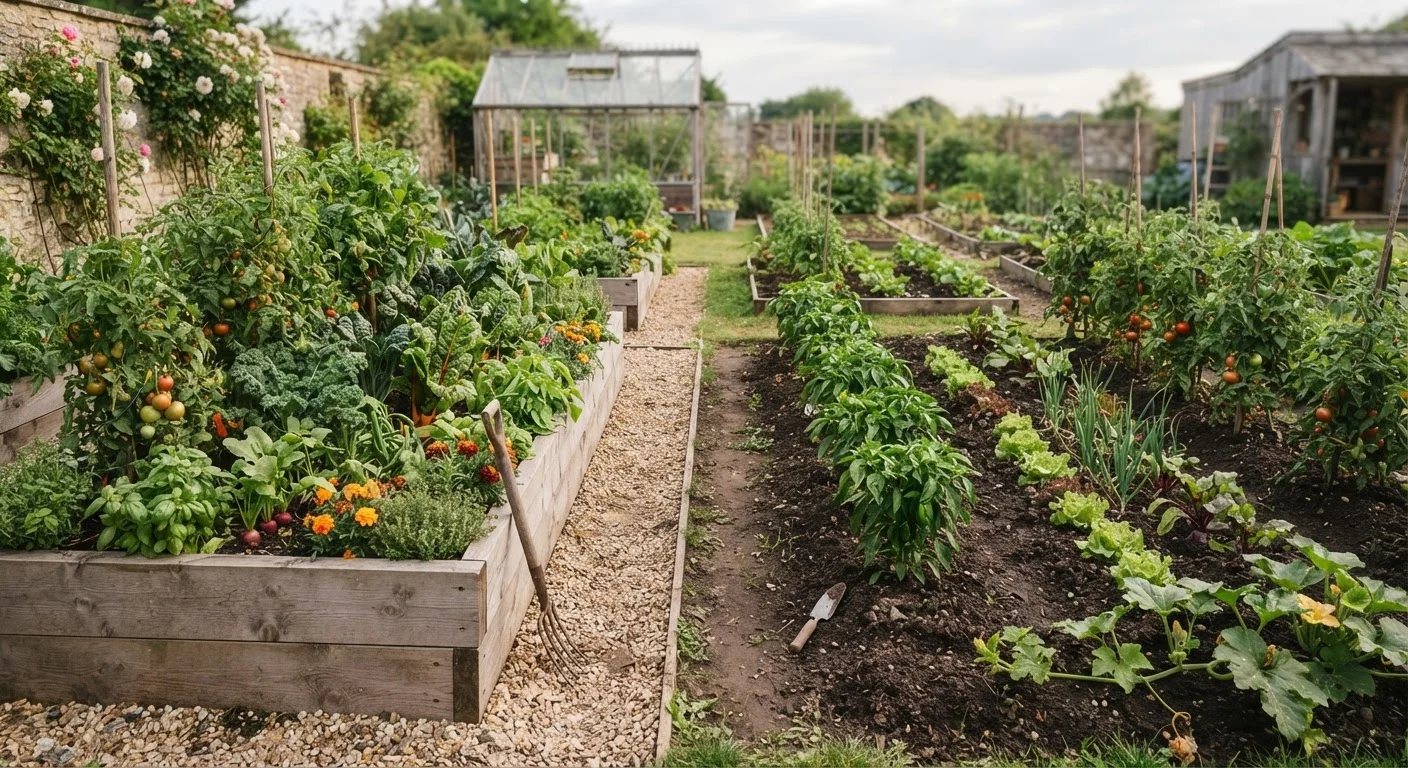
Raised Beds
The controlled, customizable growing environment.
Best for: Gardeners dealing with poor native soil, limited space, or physical limitations who want precise control over growing conditions.
Option B
In-Ground Planting
The traditional, scalable approach rooted in your existing landscape.
Best for: Gardeners with healthy native soil, larger planting areas, and plants that benefit from deep, unrestricted root growth.
If your yard has compacted, clay-heavy, or contaminated soil
Raised Beds
Raised beds let you bypass poor native soil entirely by filling with a custom mix, giving plants the ideal growing medium without years of ground remediation.
If you want to grow at large scale on a limited budget
In-Ground Planting
In-ground gardens require no upfront construction materials, making it far more cost-effective when you're planting across a wide area.
If you have back, knee, or mobility challenges
Raised Beds
A raised bed built 24-30 inches tall eliminates the need to kneel or bend deeply, making gardening accessible and more comfortable.
If you're planting deep-rooted crops like fruit trees, asparagus, or large squash
In-Ground Planting
Unrestricted soil depth allows taproots and spreading root systems to develop fully, which raised beds can limit depending on their construction depth.
If you're just starting out and want a beginner-friendly, low-risk setup
Raised Beds
The contained environment makes it easier to manage weeds, water, and nutrients while learning how different plants respond to care.
Soil Quality and Control
Soil is where every garden succeeds or struggles, and it's the clearest dividing line between these two approaches. With in-ground planting, you're working with what nature gave you - for better or worse. If your yard has loamy, well-draining soil with balanced pH, in-ground planting can be highly productive with minimal prep. But many US homeowners discover their native soil is compacted clay, sandy and nutrient-poor, or even contaminated from prior land use.
Raised beds sidestep this entirely. You fill them with a custom blend - typically a mix of topsoil, compost, and an aerating material like perlite or aged bark - and you control pH, drainage, and fertility from the start. This is especially valuable for growing vegetables and herbs that demand specific conditions. For a deeper dive into what your native soil is actually composed of, see our guide to soil health fundamentals.
If you're amending in-ground soil, home composting is one of the most effective long-term investments you can make. Over several seasons, consistent organic matter additions can transform even struggling ground into a productive growing medium.
Drainage, Temperature, and Season Length
Raised beds drain more freely than most in-ground plots because the growing medium sits elevated above the water table and isn't subject to surface runoff pooling. This matters significantly in regions with wet springs or heavy clay soils where standing water can rot roots.
Raised beds also warm up faster in spring. Exposed on multiple sides, the soil in a raised bed can be several degrees warmer than the surrounding ground - a meaningful advantage that can let you plant two to three weeks earlier, extending your growing season without any additional equipment.
| Criterion | Raised Beds | In-Ground Planting |
|---|---|---|
| Upfront cost | Moderate to high | Low |
| Soil control | Full - you fill it yourself | Limited by native soil |
| Drainage | Excellent in most setups | Varies by site and soil type |
| Spring soil warm-up | Faster - weeks earlier | Slower - tied to ground temp |
| Weed pressure | Lower with fresh soil | Higher from native weed seeds |
| Scalability | Limited by cost and space | Easy to expand |
| Deep root crops | Constrained by bed depth | Unrestricted growth |
| Accessibility | High - adjustable height | Requires bending and kneeling |
In-ground soil, being part of a larger thermal mass, stays cooler longer in spring but also retains warmth deeper into fall. This can actually benefit crops that prefer cooler root zones, such as brassicas and root vegetables. For gardens relying on consistent moisture, pairing either method with drip irrigation is worth considering for water efficiency.
Upfront Cost and Long-Term Maintenance
Cost is one of the most practical factors for most gardeners. In-ground planting has a very low barrier to entry - you need basic hand tools, seeds or transplants, and time. If your soil is reasonable to start with, the investment is minimal.
Raised beds carry upfront costs that add up quickly: lumber or composite materials for the frame, hardware, and enough quality soil mix to fill the bed. A single 4×8-foot bed filled 12 inches deep requires roughly one cubic yard of growing medium, and material costs vary widely by region and supplier. For help thinking through garden project budgets, the Budgeting Basics hub offers practical frameworks.
Over time, raised bed soil compacts and depletes nutrients faster than in-ground plots because the volume is smaller and there's no connection to the broader soil ecosystem. Annual topping-off with compost and periodic fertilizer additions - whether organic or synthetic - are necessary to maintain productivity.
Weed and Pest Management
Raised beds offer a significant advantage in weed control. A thick layer of quality planting mix with minimal weed seeds, combined with a physical barrier like landscape fabric beneath the bed, dramatically reduces weed pressure compared to in-ground beds where dormant weed seeds permeate the native soil.
Pest management is more nuanced. Some pests - particularly soil-dwelling ones like certain root maggots and nematodes - are less prevalent in raised beds with fresh soil mix. However, above-ground pests like aphids, squash bugs, and caterpillars affect both methods equally. Raised beds can make it slightly easier to install row covers or pest barriers due to their defined edges.
A Note on Pollinators and Plant Choice
Whichever method you choose, consider incorporating pollinator-friendly plants at garden edges or in nearby beds. Both raised and in-ground gardens benefit from nearby pollinators for fruiting crops. See our guide on building pollinator habitat for low-effort strategies that support your whole garden.
If you're new to building a productive garden from the ground up, our vegetable garden starter guide walks through planning, plant selection, and layout - applicable whether you go raised or in-ground. And if space or portability is your constraint, container gardening is another approach worth comparing.