

Key Takeaways
Significantly reduces overall water use
Drip systems can use up to 50% less water than conventional sprinklers by eliminating evaporation and overspray. This translates to meaningful savings on water bills over a full growing season.
Delivers consistent moisture directly to roots
Slow, steady delivery keeps soil moisture stable rather than swinging between wet and dry. Plants under consistent moisture conditions generally show stronger growth and fewer stress-related problems.
Keeps foliage dry, reducing fungal disease risk
Many common garden diseases require wet leaves to take hold. Root-zone watering removes that condition, reducing the likelihood of fungal issues without relying on chemical treatments.
Suppresses weed growth in unplanted areas
Because only the root zone of desired plants receives water, surrounding soil stays dry, limiting the conditions weed seeds need to sprout. This can noticeably reduce hand-weeding over the season.
Easily automated with a timer
Connecting the system to an inexpensive hose-end timer allows fully automated watering on a set schedule, freeing gardeners from daily tasks and protecting plants during vacations or busy periods.
Emitters clog without regular maintenance
Small emitter openings are vulnerable to sediment, mineral buildup, and algae. Without a filter at the source and periodic flushing, some emitters will block silently, leaving plants underwatered.
Upfront planning and installation take real time
Mapping plant locations, calculating emitter flow rates, and fitting the network correctly is a several-hour project. Errors in layout often aren't apparent until plants show stress mid-season.
Not practical for lawns or dense ground covers
Drip is designed for defined plant spacing. Turf grass and spreading ground covers require uniform surface coverage that overhead or in-ground systems deliver far more effectively.
Lines can be damaged by digging or rodents
Thin supply tubing running along or just below the soil surface is vulnerable to accidental cuts during weeding and chewing damage from rodents. Periodic visual inspection of the full line is necessary.
Requires winterization in cold climates
Water left in lines and fittings will expand when frozen, cracking emitters and fittings. Draining or blowing out the system before the first hard frost is an essential seasonal step in most US growing regions.
Our Verdict
Drip irrigation is a genuinely efficient watering method for gardens where plants have defined root zones and consistent moisture needs. The upfront time spent planning and installing a system is real, as is the ongoing maintenance requirement, but most home gardeners find the trade-off worthwhile. Water savings and reduced weed pressure are consistent benefits, while clogging and layout complexity are manageable with routine attention.
Drip irrigation is best suited for gardeners with established vegetable beds, fruit trees, or ornamental borders who want to reduce watering time and conserve water without sacrificing plant health.
How Drip Irrigation Works
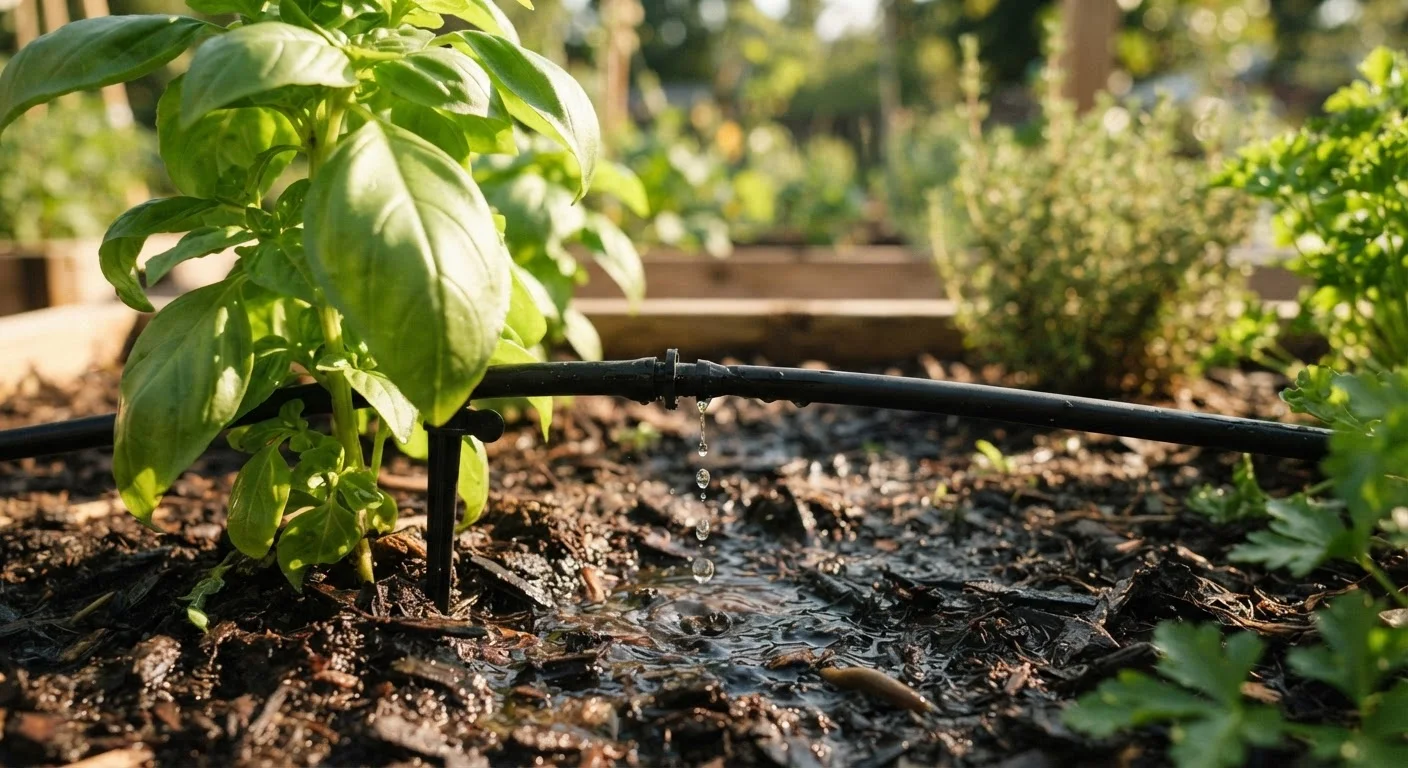
Drip irrigation delivers water slowly and directly to the soil at or near a plant's root zone through a network of tubes, emitters, and fittings. Unlike overhead sprinklers that wet foliage and surrounding soil indiscriminately, drip systems apply water where roots can actually absorb it. A typical home garden setup includes a main supply line connected to an outdoor faucet, a pressure regulator (to protect emitters from household water pressure, which is usually too high), a filter, and a series of smaller distribution tubes with emitters spaced according to plant spacing and soil type.
Emitters are rated by flow rate - commonly 0.5, 1, or 2 gallons per hour - allowing you to match water delivery to each plant's needs. Sandy soils that drain quickly may call for higher-output emitters or more frequent cycles; clay soils that hold moisture may need lower output and longer intervals between runs. Most systems connect to a timer, automating the schedule entirely. If you're planning a new vegetable garden, designing the drip layout during the initial setup is far simpler than retrofitting it later.
The Real Advantages
The case for drip irrigation rests on several well-documented benefits that stack up across a growing season.
Significantly reduces overall water use
Drip systems can use up to 50% less water than conventional sprinklers by eliminating evaporation and overspray. This translates to meaningful savings on water bills over a full growing season.
Delivers consistent moisture directly to roots
Slow, steady delivery keeps soil moisture stable rather than swinging between wet and dry. Plants under consistent moisture conditions generally show stronger growth and fewer stress-related problems.
Keeps foliage dry, reducing fungal disease risk
Many common garden diseases require wet leaves to take hold. Root-zone watering removes that condition, reducing the likelihood of fungal issues without relying on chemical treatments.
Suppresses weed growth in unplanted areas
Because only the root zone of desired plants receives water, surrounding soil stays dry, limiting the conditions weed seeds need to sprout. This can noticeably reduce hand-weeding over the season.
Easily automated with a timer
Connecting the system to an inexpensive hose-end timer allows fully automated watering on a set schedule, freeing gardeners from daily tasks and protecting plants during vacations or busy periods.
Water savings are the headline benefit. Because water goes directly to the root zone with minimal evaporation or runoff, drip systems typically use significantly less water than overhead methods - an important consideration in regions where water costs are rising or seasonal restrictions apply. Pair that efficiency with consistent moisture delivery and plants are less likely to experience the stress cycles caused by irregular watering habits.
Keeping foliage dry also matters for disease management. Fungal problems like powdery mildew and leaf blight thrive when leaves stay wet, so root-zone-only watering creates a less hospitable environment for those pathogens. And because drip waters targeted areas rather than broad soil surfaces, weed seeds in unwatered zones are far less likely to germinate - a quiet but meaningful reduction in garden labor.
The Real Disadvantages
Drip irrigation is not a set-it-and-forget-it solution, and understanding its limitations prevents frustration after installation.
Emitters clog without regular maintenance
Small emitter openings are vulnerable to sediment, mineral buildup, and algae. Without a filter at the source and periodic flushing, some emitters will block silently, leaving plants underwatered.
Upfront planning and installation take real time
Mapping plant locations, calculating emitter flow rates, and fitting the network correctly is a several-hour project. Errors in layout often aren't apparent until plants show stress mid-season.
Not practical for lawns or dense ground covers
Drip is designed for defined plant spacing. Turf grass and spreading ground covers require uniform surface coverage that overhead or in-ground systems deliver far more effectively.
Lines can be damaged by digging or rodents
Thin supply tubing running along or just below the soil surface is vulnerable to accidental cuts during weeding and chewing damage from rodents. Periodic visual inspection of the full line is necessary.
Requires winterization in cold climates
Water left in lines and fittings will expand when frozen, cracking emitters and fittings. Draining or blowing out the system before the first hard frost is an essential seasonal step in most US growing regions.
Clogging is the most common operational problem. Emitters have very small openings, and mineral deposits, algae, or sediment can block them - often without obvious signs until plants begin to show drought stress. A filter at the water source and annual flushing of lines address most of this risk, but the maintenance step can't be skipped. If you're comparing garden setups, consider how drip complements your overall approach: the method pairs well with raised beds and in-ground planting systems alike, though the layout demands differ between the two.
Drip Irrigation and Soil Type
Soil texture affects how water spreads from each emitter. In sandy soils, water moves mostly downward, so emitters need to be placed closer together. In clay soils, water spreads more laterally, allowing greater spacing between emitters. Understanding your soil type before finalizing your layout will prevent dry spots and overwatered zones from developing. A simple jar test - shaking a soil sample with water and letting it settle - can reveal your basic soil composition at no cost.
Drip is also genuinely impractical for lawns and dense ground covers, where uniform coverage across a large surface is needed - overhead irrigation or other methods remain more appropriate there, as explored in common lawn watering misconceptions.
Planning and Cost Considerations
A basic drip kit for a modest vegetable bed can cost anywhere from $30 to $100 in materials, with larger or more complex gardens running higher. The real investment is time: sketching a layout map, calculating emitter placement, and adjusting the system after the first few watering cycles to confirm even delivery. Factoring in smart spending habits means weighing the upfront cost against multi-season water savings, which vary by region and local water rates.
~50%
Water savings vs. overhead sprinklers
The EPA's WaterSense program estimates that drip irrigation can reduce outdoor water use by up to 50% compared with conventional sprinkler systems.
0.5-2 GPH
Typical emitter flow rate range
Standard drip emitters are rated at 0.5, 1, or 2 gallons per hour, allowing gardeners to calibrate delivery to individual plant and soil needs.
For container gardens, drip can work but requires emitters placed carefully given limited soil volume - for more on that challenge, see our guide on container gardening soil and drainage. Ultimately, a well-planned system is a durable one; many homeowners run the same main lines for a decade with basic seasonal care. Drain lines before the first hard frost, store pressure regulators and timers indoors, and inspect emitters each spring before the growing season begins.