

Key Takeaways
Start here
Choosing the Right Location
Next
Planning Your Garden Layout
Then
Preparing the Soil
When you're ready
Selecting and Starting Your Vegetables
Ongoing
Watering, Feeding, and Ongoing Care
Choosing the Right Location
Before you buy a single seed packet, walk your yard at different times of day and observe where sunlight falls. Most vegetables need at least six hours of direct sun daily - eight is even better for fruiting crops like tomatoes and peppers. A shady spot might suit herbs or leafy greens, but it will disappoint you if you're hoping for cucumbers or squash.
Beyond sun, consider these factors:
- Proximity to water: Locate your garden close to an outdoor spigot. Dragging a hose across the yard makes watering feel like a chore, and you'll do it less.
- Level ground: A flat or gently sloped site drains better than a low-lying area where water pools. If drainage is a concern, review our pre-planting site checklist for grading and drainage basics.
- Away from large trees: Tree roots compete aggressively for water and nutrients, and leaf canopy creates shade that fluctuates unpredictably.
Start With a Compass and a Watch
Before committing to a garden location, observe the spot on a sunny day and note how many hours of direct sunlight it receives. Do this in late spring or summer when the sun's angle most closely matches your growing season. A location that looks sunny in winter may be heavily shaded by buildings or trees once leaves appear.
Planning Your Garden Layout
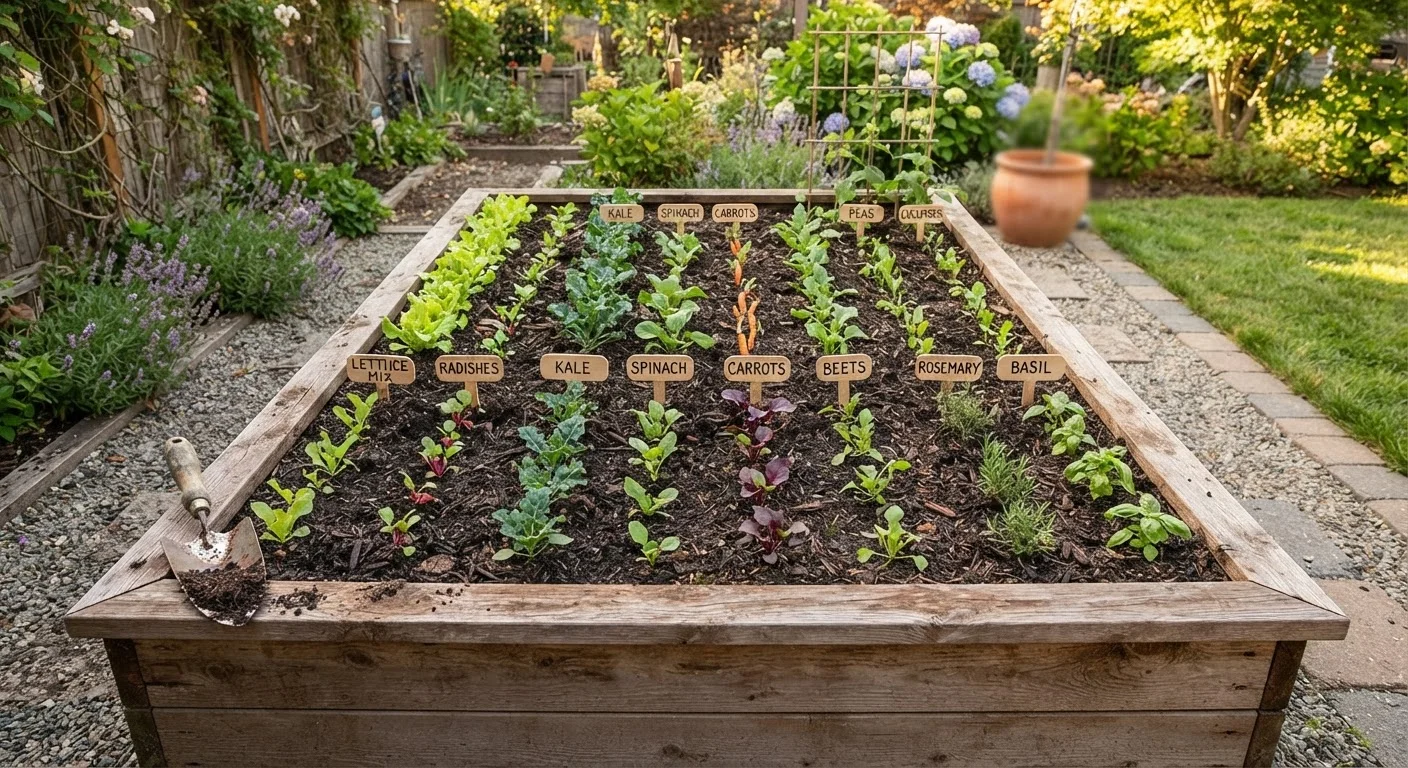
Resist the urge to plant everything at once. A 4×8-foot bed is a practical starting size - large enough for a genuine harvest, small enough to manage without burnout. If you're weighing whether to build a raised structure or work directly in the ground, our detailed raised beds vs. in-ground planting guide breaks down cost, drainage, and soil control side by side.
Sketch your layout on paper before digging. Group plants by their water and sun needs, and account for mature plant size - crowding is one of the most common beginner mistakes. Tall crops like corn or staked tomatoes belong on the north side of the bed so they don't shade shorter neighbors.
Also think seasonally. Cool-season crops (spinach, peas, kale) go in early spring and again in fall. Warm-season crops (tomatoes, beans, squash) fill the summer gap. Planning for two or three rotations per season maximizes a small space considerably. A month-by-month seasonal garden calendar can help you track these windows precisely.
Frost date
The average date of the last spring freeze or first fall freeze in your area. It determines when it is safe to plant tender crops outdoors without cold damage.
Direct-sow
Planting seeds directly into the outdoor garden bed rather than starting them indoors and transplanting later.
Transplant
A seedling started indoors or in a greenhouse that is moved to the outdoor garden once it has developed enough to survive outdoor conditions.
Soil amendment
Any material - such as compost, perlite, or aged manure - mixed into soil to improve its structure, drainage, or fertility.
Cool-season crops
Vegetables that grow best in cooler temperatures, typically spring and fall, and may be damaged by summer heat. Examples include lettuce, spinach, and peas.
Loamy soil
A balanced soil texture containing roughly equal parts sand, silt, and clay, which provides good drainage while retaining enough moisture and nutrients for plant roots.
Preparing the Soil
Soil quality is where gardens succeed or fail quietly. Before planting, test your soil if you can - many county extension offices offer low-cost or free soil testing kits. Understanding your pH and nutrient levels prevents guesswork and wasted effort.
For most vegetable gardens, aim for soil that is:
- Loamy: A balanced mix of sand, silt, and clay that holds moisture without becoming waterlogged.
- Rich in organic matter: Work in two to four inches of compost before planting. Making your own compost from kitchen scraps is a cost-effective way to build fertility over time.
- Well-draining: Water should absorb steadily, not pool on the surface after watering.
If your native soil is heavy clay or very sandy, raising your bed and importing a quality soil blend is often the most efficient path forward rather than trying to amend poor ground extensively.
Selecting and Starting Your Vegetables
Choose vegetables your household actually eats. It sounds obvious, but many first-time gardeners plant what looks exciting in seed catalogs, then realize they have no plan for twenty pounds of kale. Start with two or three reliable crops and expand in future seasons.
Beginner-friendly picks include:
- Lettuce and salad greens (fast germination, cut-and-come-again harvesting)
- Radishes (ready in as few as 25 days, great confidence builders)
- Green beans (bush varieties need no staking and produce abundantly)
- Zucchini (prolific and forgiving of minor neglect)
- Basil and chives (dual-purpose herbs that double as kitchen staples)
Decide whether to direct-sow seeds into the garden bed or start with nursery transplants. Seeds cost less and offer more variety, but some crops - particularly tomatoes and peppers - benefit from being started indoors six to eight weeks before your last frost date, then transplanted outdoors. If indoor seed starting feels like too much for year one, transplants from a local nursery are a perfectly reasonable shortcut.
Not every garden has to be in-ground or in a raised bed. If space is limited, container gardening is a capable alternative for herbs, lettuce, and even compact tomato varieties.
Watering, Feeding, and Ongoing Care
Most vegetable gardens need roughly one inch of water per week. Deep, infrequent watering (two to three times per week rather than a light daily sprinkle) encourages roots to reach deeper into the soil, improving drought resilience. Water at the base of plants rather than overhead to reduce fungal disease risk. If you want to conserve water while keeping plants consistently fed at the root zone, our overview of drip irrigation for home gardens explains how the setup works and what to expect.
For feeding, compost-enriched soil often provides enough nutrition early in the season. Watch your plants - yellowing lower leaves can signal nitrogen deficiency, while purple-tinged foliage may suggest phosphorus is low. A general-purpose vegetable fertilizer applied according to package directions can correct deficiencies, but avoid over-fertilizing, which can push leafy growth at the expense of fruit production.
Check your garden every day or two during the growing season. Early detection of pests - aphids, caterpillars, squash vine borers - makes control far easier than responding to an established infestation. Hand-picking pests and using row covers on vulnerable crops are two low-intervention options. Remove dead or diseased foliage promptly to prevent spread.
Above all, keep notes. Recording what you planted, when, and how it performed is the fastest way to improve each season. Even a simple notebook transforms first-year trial and error into a foundation for lasting success.