

Key Takeaways
Understanding Your Shade Before You Plant
Not all shade is created equal, and treating it as one condition is the most common mistake shade gardeners make. Before buying a single plant, observe your yard at different times of day and across the seasons. This investment of time pays off more than any soil amendment.
Dappled shade occurs beneath high, open canopies where sunlight filters through constantly shifting leaves - this is actually a generous growing environment that suits a wide range of plants. Partial shade means an area receives roughly two to four hours of direct sun daily, typically in the morning or late afternoon. Full shade describes spots that receive less than two hours of direct light - under dense evergreens or along north-facing walls. Dry shade is the hardest case: full shade combined with root competition from established trees that draws moisture away from the soil surface.
Note whether your shade is wet (low-lying areas that collect rain) or dry. This single variable narrows your plant list dramatically and saves you from watching expensive purchases fail within a season.
Best Practices for Planting in Low-Light Conditions
Once you've mapped your light and moisture, apply these proven practices to build a shade garden that genuinely thrives rather than merely survives.
Identify your exact shade type before selecting any plants.
Planting a moisture-loving astilbe in dry shade under a Norway spruce will result in failure regardless of how well you tend it. Accurate diagnosis is the foundation of every other decision. Shade type determines both which plants will survive and how much supplemental watering you'll need.
Amend soil with organic matter before planting, especially in compacted areas.
Shaded spots under trees often have compacted, nutrient-depleted soil due to root competition and reduced organic input. Incorporating compost improves both moisture retention and drainage simultaneously, giving new plants a better start without requiring you to fight the existing conditions.
Choose plants rated for one shade category harsher than your actual conditions.
Plant labels tend to be optimistic about light tolerance. A plant labeled 'partial shade' may struggle in true full shade. Selecting plants rated for slightly deeper shade than you have creates a buffer, especially in summer when the canopy is densest and light levels drop.
Layer planting heights to maximize visual interest and ground coverage.
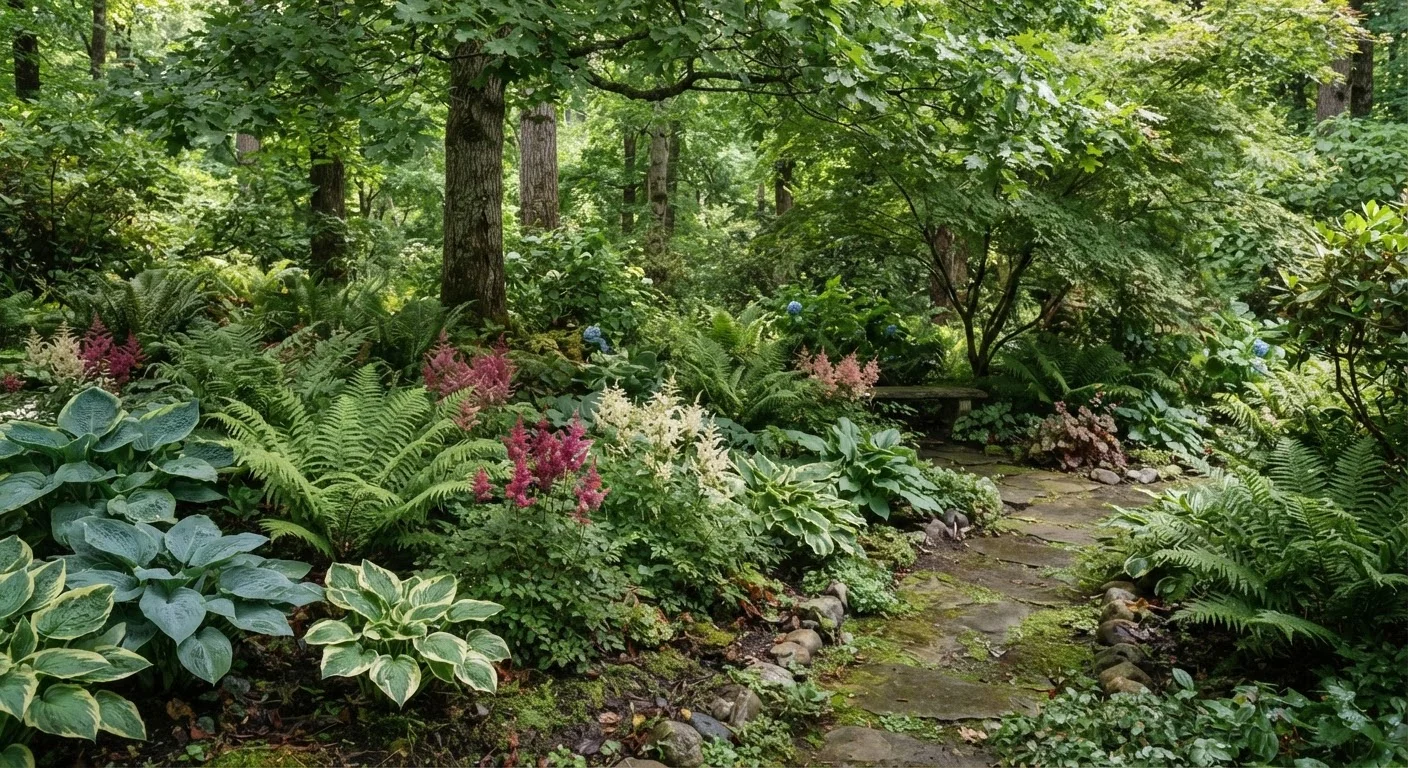
A single-level planting of groundcover looks sparse and does little to suppress weeds or retain moisture. Layering - with taller ferns or astilbes at the back, medium hostas in the middle, and low creeping phlox or pachysandra at the front - creates depth and a more self-sustaining ecosystem.
Mulch heavily and consistently in shaded beds.
Mulch conserves the soil moisture that shade plants depend on, moderates temperature swings, and gradually improves soil structure as it breaks down. It also dramatically reduces weed pressure in areas where you don't want to disturb plant roots with frequent cultivation.
For dry shade, rely on drought-tolerant natives and give new plants extra irrigation for the first two seasons.
Dry shade is the most difficult garden condition because plants must contend with low light and limited water simultaneously. Native species adapted to woodland edges - such as native ginger, epimedium, or liriope - are far more likely to establish successfully than conventional shade perennials. Even tough plants need help getting their roots established before they can fend for themselves.
For container options that complement shaded patios and entryways, see our guide to container gardening varieties and soil mixes.
Building Layers and Long-Term Resilience
The most visually compelling shade gardens mimic the natural woodland floor: a tall canopy overhead, mid-story shrubs and large perennials at mid-height, and low groundcovers or bulbs carpeting the soil beneath. This layering also serves a practical purpose - denser planting suppresses weeds, retains moisture, and reduces the bare soil that erodes under heavy rain.
When choosing plants, consider incorporating species native to your region. Native woodland plants are often already adapted to the soil pH, seasonal moisture fluctuations, and pest pressures of your area - which means less intervention from you. They also support local pollinators. Our article on native plants vs. ornamental exotics explores the trade-offs in detail.
Once established, many shade gardens are low-maintenance - but watering during establishment is critical. Newly planted perennials and shrubs need consistent moisture for the first growing season regardless of shade level. Review watering habits that quietly kill healthy plants to avoid the most common missteps.
Use Light-Colored Foliage to Brighten Dark Spots
Variegated hostas, silver-leafed heucheras, and white-flowered impatiens visually brighten shaded areas far more effectively than dark-foliaged plants. This is a simple design trick that works even in deep shade where flowers refuse to bloom reliably. Pair chartreuse or cream-edged foliage with darker greens to create contrast without relying on sunlight.
If your shaded area is along a path or patio, containers planted with shade-lovers can bridge gaps where in-ground planting is impractical. This approach also makes it easy to refresh seasonal interest by rotating plants in and out.