

Key Takeaways
Option A
Native Plants
The ecologically integrated, low-intervention choice.
Best for: Homeowners who want a low-maintenance yard that actively supports local wildlife and soil health.
Option B
Ornamental Exotics
The design-forward, high-impact aesthetic option.
Best for: Gardeners seeking specific colors, textures, or bloom times not easily achieved with regional native species.
If you want to reduce watering and ongoing maintenance
Native Plants
Natives are adapted to local rainfall patterns and soil conditions, meaning they typically thrive with minimal supplemental irrigation after establishment.
If you want to support pollinators and local wildlife
Native Plants
Native species have co-evolved with local insects, birds, and mammals, providing food sources and habitat that most exotics cannot replicate.
If you're designing for a specific color palette or formal aesthetic
Ornamental Exotics
Carefully selected non-invasive exotics offer greater variety in bloom color, foliage texture, and seasonal structure that natives in some regions may lack.
If you want the best of both ecological and visual goals
Native Plants
Start with a native plant foundation, then accent with vetted non-invasive ornamentals to achieve design goals without sacrificing ecological function.
If you're gardening in challenging conditions like deep shade or dry slopes
Native Plants
Many regional natives are specialized for difficult microclimates, often outperforming exotics that struggle without ideal conditions.
Understanding the Core Difference
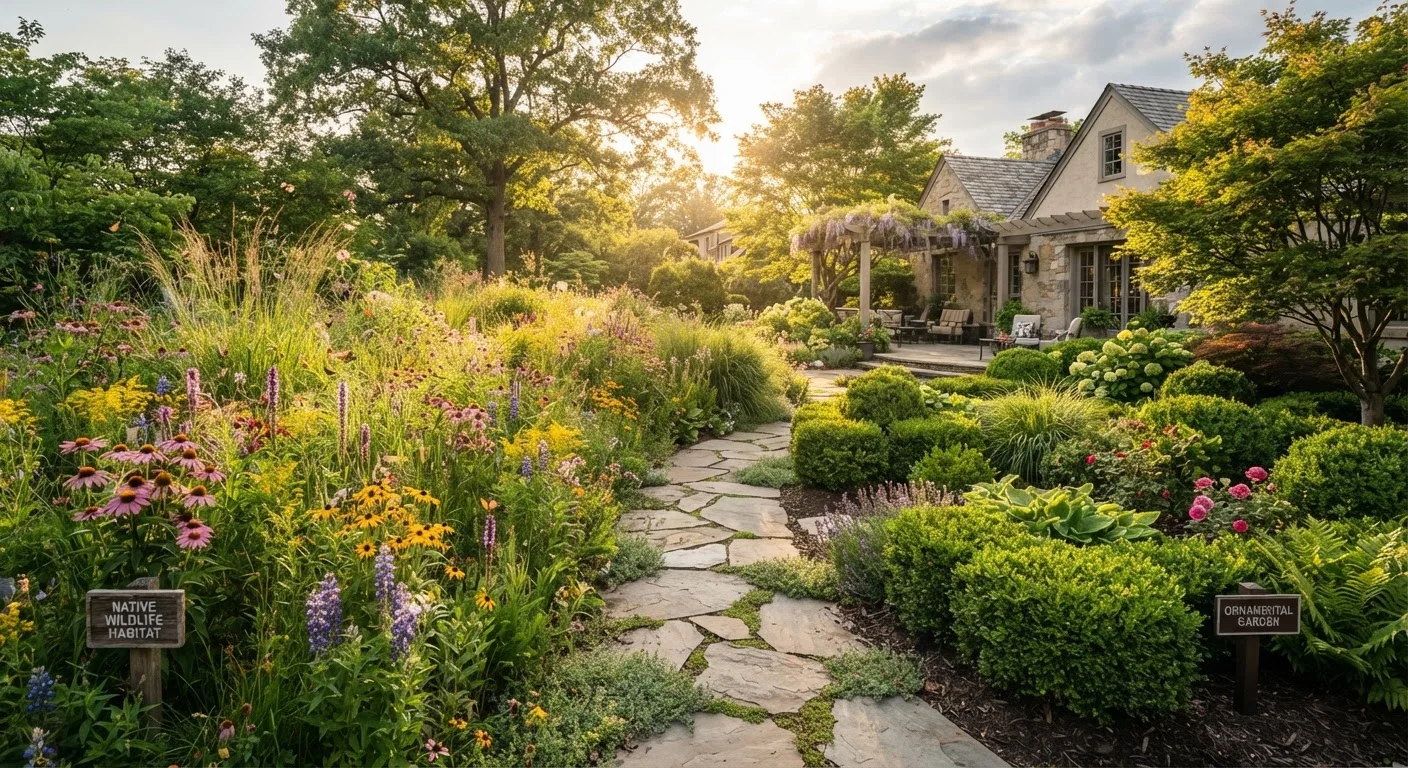
A native plant is any species that evolved naturally in a specific region without human introduction. These plants have developed relationships with local soil microbes, insects, and rainfall patterns over thousands of years. An ornamental exotic (also called a non-native or introduced species) is any plant brought from another region or country - often for its visual appeal, unusual form, or reliable performance in cultivation.
Not all exotics are problematic. Many popular garden plants - think ornamental grasses from Europe or flowering shrubs from Asia - establish without spreading aggressively. The concern arises with invasive exotics: non-natives that spread beyond the garden and outcompete local vegetation. Understanding this distinction matters before you plant. Your state's department of agriculture or a local cooperative extension office can provide a current invasive species list for your region.
If you're planning how to structure your planting areas, our guide to raised beds vs. in-ground planting can help you decide which setup supports your plant choices best.
Ecological Impact: Where Natives Have a Clear Edge
The ecological case for native plants is well-supported. Research from the University of Delaware and others shows that native oak trees alone support hundreds of caterpillar species - a critical food source for nesting birds. Exotic ornamentals, even attractive ones, often support far fewer native insects because local fauna haven't evolved to feed on them.
90%
of specialist insects are host-plant specific
Research by entomologist Doug Tallamy suggests roughly 90% of plant-eating insects can only complete their life cycle on native plant species.
35%
less water needed by established natives
General estimates from horticultural extension programs indicate established native plantings may use significantly less supplemental water than conventional landscapes, though exact figures vary by region and species.
3,000+
documented invasive plant species in the US
The USDA estimates over 3,000 non-native plant species have established in US ecosystems, with a subset causing significant ecological and economic harm.
Natives also tend to improve soil structure over time. Their root systems are matched to local conditions - deep taproots in drought-prone areas, shallow fibrous roots in wetter climates - which reduces erosion and supports beneficial soil organisms. If you're gardening in a shaded yard where native ferns or woodland species might thrive, our shade gardening guide offers practical planting strategies.
That said, a non-invasive exotic in a well-maintained bed is not an ecological catastrophe. The risk is proportional to the plant's capacity to seed itself into wild areas and outcompete native vegetation.
Maintenance and Cost Realities
One of the most practical arguments for natives is reduced maintenance after establishment - a period that typically spans one to three growing seasons. Once rooted, many native species require no supplemental fertilizer, minimal irrigation, and little to no pesticide application because they're naturally resistant to regional pests.
| Criterion | Native Plants | Ornamental Exotics |
|---|---|---|
| Water needs after establishment | Low - matched to local rainfall | Moderate to high - varies by origin |
| Fertilizer requirements | Minimal to none | Often moderate, soil-dependent |
| Wildlife and pollinator support | High - co-evolved relationships | Low to moderate |
| Invasive spread risk | None | Varies - research required |
| Aesthetic variety | Region-limited | Very broad range |
| Establishment period | 1-3 seasons; patient approach needed | Often faster visual impact |
Ornamental exotics often require more attention: additional watering during dry spells, fertilization to compensate for soil mismatches, and occasional treatment for pests or diseases they didn't evolve to resist. This doesn't mean they're impossible to grow well - it means the maintenance investment is higher and ongoing. For gardeners mindful of long-term costs, our smart spending resource can help frame those trade-offs in practical terms. If you're amending soil for either plant type, understanding fertilizer options is also worthwhile - see our comparison of organic vs. synthetic fertilizers for a grounded overview.
Aesthetic Trade-offs and Designing a Balanced Yard
Native plant gardens have shed the outdated reputation of being unkempt. Thoughtfully designed native landscapes can be as polished and structured as any traditional garden. However, regional limitations are real - if your climate produces mostly green-and-brown native shrubs, achieving a year-round color display may require supplementing with non-invasive ornamentals.
A practical approach for most homeowners is a layered landscape: a native plant foundation of trees, shrubs, and groundcovers that provide habitat and structure, accented by carefully vetted non-invasive ornamentals for color or seasonal interest. Before adding any exotic, cross-reference it with your state's invasive species database. If a plant is listed as invasive in your region, avoid it entirely regardless of how it's being sold commercially.
For gardeners interested in extending plant variety without ground planting, container gardening is a useful option - exotics grown in containers pose virtually no invasive-spread risk since they're contained and seasonal.
This article is for general informational and educational purposes. Always verify plant suitability and invasive status with local authorities and extension services before planting.