

Key Takeaways
Significant cost savings on labor
Electrician labor rates vary widely by region, but simple tasks like outlet replacement or fixture installation can cost $100-$200 or more per visit when hiring out. DIY eliminates that cost for work within your skill level.
Flexible scheduling on your timeline
Coordinating with a licensed electrician can mean waiting days or weeks. Handling permitted, low-complexity work yourself lets you schedule repairs around your availability.
Builds working knowledge of your home's systems
Completing basic electrical tasks teaches you how your circuits are organized, where shutoffs are, and how to identify problems early - knowledge that pays dividends over time.
Permit process adds a safety checkpoint
When DIYers pull permits, their work is inspected by a licensed official. This creates an accountability layer that can actually make permitted DIY work safer than unchecked unlicensed contractor work.
Codes vary - missteps carry legal consequences
Performing work that requires a license in your jurisdiction can result in fines, forced remediation, and voided homeowner's insurance. The burden falls on the homeowner to know local rules.
Electrical mistakes can cause fires or electrocution
Unlike a leaky faucet, a wiring error may cause no immediate symptom, then trigger a fire or shock risk months later. The stakes of getting it wrong are unusually high.
Unpermitted work can complicate home sales
Home inspectors routinely identify unpermitted electrical modifications. Disclosure obligations and buyer demands can turn a skipped permit into a costly renegotiation at closing.
DIY errors may void manufacturer warranties
Some electrical components and appliances specify professional installation as a warranty condition. Self-installation can void coverage before any fault develops.
Rental and multi-family properties have stricter rules
In most states, homeowner electrical exemptions apply only to owner-occupied primary residences. Work on rental units nearly always requires a licensed electrician regardless of task complexity.
Our Verdict
DIY electrical work is a legitimate option for many US homeowners tackling straightforward tasks like replacing outlets, switches, or fixtures - provided they pull the required permits and follow local code. However, the line between legal DIY and licensed-only work is real, and crossing it carries meaningful risk to safety, insurance coverage, and resale value. Understanding that line is the most important step before picking up a screwdriver.
Best suited for confident, detail-oriented homeowners comfortable reading instructions, working methodically, and pulling permits - tackling low-complexity repairs in their primary residence.
Why the Legal Line Exists
Electrical work is regulated because mistakes can kill. A mis-wired outlet, an undersized circuit breaker, or improper grounding can cause fires, electrocution, or both - often without any immediate warning sign. The National Electrical Code (NEC), published by the National Fire Protection Association, sets minimum safety standards, and most US states adopt some version of it. Local jurisdictions layer additional rules on top.
The result is a patchwork: what's legal for a homeowner to self-perform in Texas may require a licensed electrician in California or Massachusetts. Some states permit homeowners to do virtually any electrical work in their own primary residence with an approved permit; others restrict unlicensed work to cosmetic replacements only. Before starting any project, contact your local building department - not a neighbor, not a forum - to confirm exactly what's allowed where you live.
If you're new to the DIY world, our first-time DIYer guide covers foundational safety concepts worth reviewing before any electrical task.
Tasks Homeowners Can Typically Handle
In most jurisdictions, homeowners working on their primary residence can legally perform these tasks - usually with a permit:
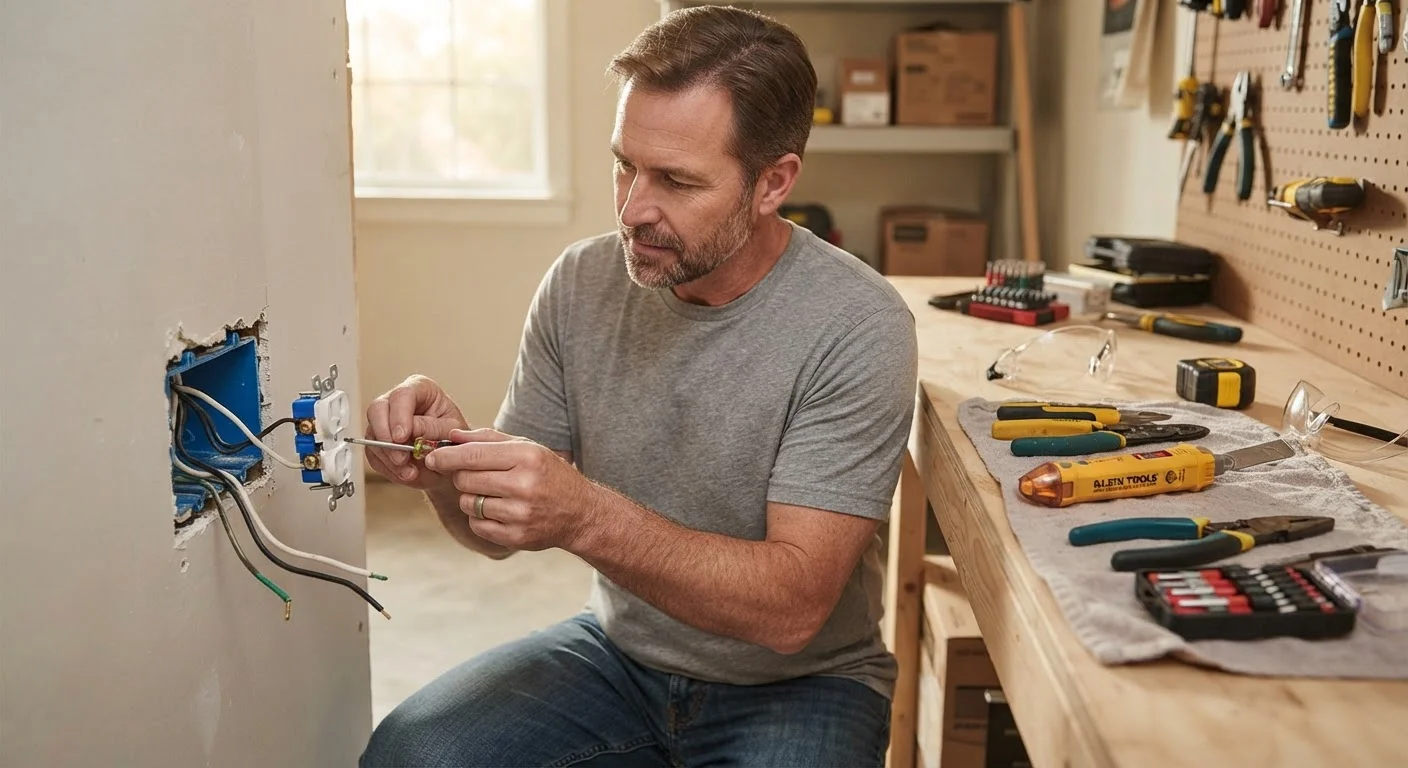
- Replacing outlets and switches - swapping a standard outlet for a GFCI (GFCI) model or replacing a faulty switch on an existing circuit
- Installing light fixtures - changing a ceiling fixture or ceiling fan on an existing, properly rated circuit
- Replacing a receptacle or cover plate - straightforward like-for-like swaps
- Running a new circuit with a permit - permitted in many states, though inspection is typically required
- Installing low-voltage systems - doorbells, thermostats, and some data/cable lines often carry fewer restrictions
Even for these tasks, the rules don't change: shut off the breaker, verify the circuit is dead with a non-contact voltage tester, and work methodically. Our guide to hand tools vs. power tools can help you select the right equipment for the job.
Significant cost savings on labor
Electrician labor rates vary widely by region, but simple tasks like outlet replacement or fixture installation can cost $100-$200 or more per visit when hiring out. DIY eliminates that cost for work within your skill level.
Flexible scheduling on your timeline
Coordinating with a licensed electrician can mean waiting days or weeks. Handling permitted, low-complexity work yourself lets you schedule repairs around your availability.
Builds working knowledge of your home's systems
Completing basic electrical tasks teaches you how your circuits are organized, where shutoffs are, and how to identify problems early - knowledge that pays dividends over time.
Permit process adds a safety checkpoint
When DIYers pull permits, their work is inspected by a licensed official. This creates an accountability layer that can actually make permitted DIY work safer than unchecked unlicensed contractor work.
Tasks That Require a Licensed Electrician
Some work is off-limits for DIYers in virtually every jurisdiction - and for good reason. These tasks involve higher voltages, more complex system interactions, or code requirements that demand professional training and accountability:
- Main panel upgrades or replacements - working inside a live panel is extremely dangerous and almost universally restricted to licensed electricians
- Service entrance work - the wires connecting your home to the utility grid remain live even when your main breaker is off
- Subpanel installation - requires load calculations and precise code compliance
- Aluminum wiring repairs - older homes with aluminum branch wiring require specialized connectors and evaluation
- Work in rental properties - most states require licensed work in units you don't personally occupy
If a project on this list is what you're facing, the next step is hiring a qualified professional. Our contractor vetting checklist walks you through how to evaluate electricians before signing anything.
Codes vary - missteps carry legal consequences
Performing work that requires a license in your jurisdiction can result in fines, forced remediation, and voided homeowner's insurance. The burden falls on the homeowner to know local rules.
Electrical mistakes can cause fires or electrocution
Unlike a leaky faucet, a wiring error may cause no immediate symptom, then trigger a fire or shock risk months later. The stakes of getting it wrong are unusually high.
Unpermitted work can complicate home sales
Home inspectors routinely identify unpermitted electrical modifications. Disclosure obligations and buyer demands can turn a skipped permit into a costly renegotiation at closing.
DIY errors may void manufacturer warranties
Some electrical components and appliances specify professional installation as a warranty condition. Self-installation can void coverage before any fault develops.
Rental and multi-family properties have stricter rules
In most states, homeowner electrical exemptions apply only to owner-occupied primary residences. Work on rental units nearly always requires a licensed electrician regardless of task complexity.
Permits: The Step Most DIYers Skip - and Shouldn't
Pulling a permit feels bureaucratic, but it serves a concrete purpose: a licensed inspector reviews your work before walls close up, catching wiring errors that could cause fires years later. Beyond safety, permits matter for two practical reasons.
First, homeowner's insurance policies often exclude damage caused by unpermitted work. If a fire originates from an outlet you wired without a permit, your claim may be denied. Second, unpermitted electrical work typically surfaces during a home inspection when you sell. Buyers or their agents flag it, and you may be required to open walls, have work inspected retroactively, or renegotiate the sale price.
For a deeper look at what permits actually protect - and the real cost of skipping them - see our article on what permits actually cover.
Check Before You Start - Every Time
Even if you've completed electrical work legally in one home or one state, never assume the same rules apply to your current property. Codes are updated on adoption cycles that vary by jurisdiction, and some municipalities amend the NEC significantly. A quick call to your local building department takes minutes and can prevent expensive, dangerous mistakes. Ask specifically whether a permit is required, whether a homeowner exemption applies, and whether an inspection is needed before closing walls.