

Key Takeaways
Start here
How to Think Like a DIYer Before You Pick Up a Tool
Next
The Starter Tool Kit Every Homeowner Should Build
Then
Reading a Project Scope: Know What You're Getting Into
Essential
Safety Basics That Belong on Every Job
When you're ready
When to DIY and When to Call a Licensed Professional
How to Think Like a DIYer Before You Pick Up a Tool
The most important DIY skill isn't wielding a drill - it's honest self-assessment. Before any project begins, ask yourself three questions: Do I understand what this job involves? Do I have (or can I safely acquire) the skills? What happens if something goes wrong?
Experienced DIYers don't jump in blind. They read instructions, watch instructional videos from credible sources, and research local codes before touching a wall. This habit separates successful projects from expensive call-backs to a contractor.
It also helps to understand what DIY genuinely saves you - and what it doesn't. Labor costs account for a large share of most renovation estimates, so hands-on work can reduce expenses meaningfully on straightforward tasks. For guidance on where DIY fits into a broader financial picture, the Saving & Debt hub offers grounded perspective on home-related spending decisions.
Project scope
The complete list of tasks, materials, and steps required to finish a job from beginning to end. Defining scope upfront prevents surprises and budget overruns.
Load-bearing wall
A wall that supports the weight of the structure above it. Removing or modifying one without professional assessment can cause serious structural damage.
Permit
Official approval from your local building authority to carry out specific types of construction or renovation work. Permits ensure work is inspected for safety and code compliance.
PPE (Personal Protective Equipment)
Safety gear worn to reduce the risk of injury, including safety glasses, gloves, dust masks, and hearing protection.
Stud
A vertical framing member inside a wall, typically spaced 16 inches apart. Fastening shelves, brackets, or heavy items into studs - rather than just drywall - provides secure, lasting support.
Non-contact voltage tester
A handheld tool that detects electrical current without touching wires. Used to confirm a circuit is de-energized before any electrical work begins.
The Starter Tool Kit Every Homeowner Should Build
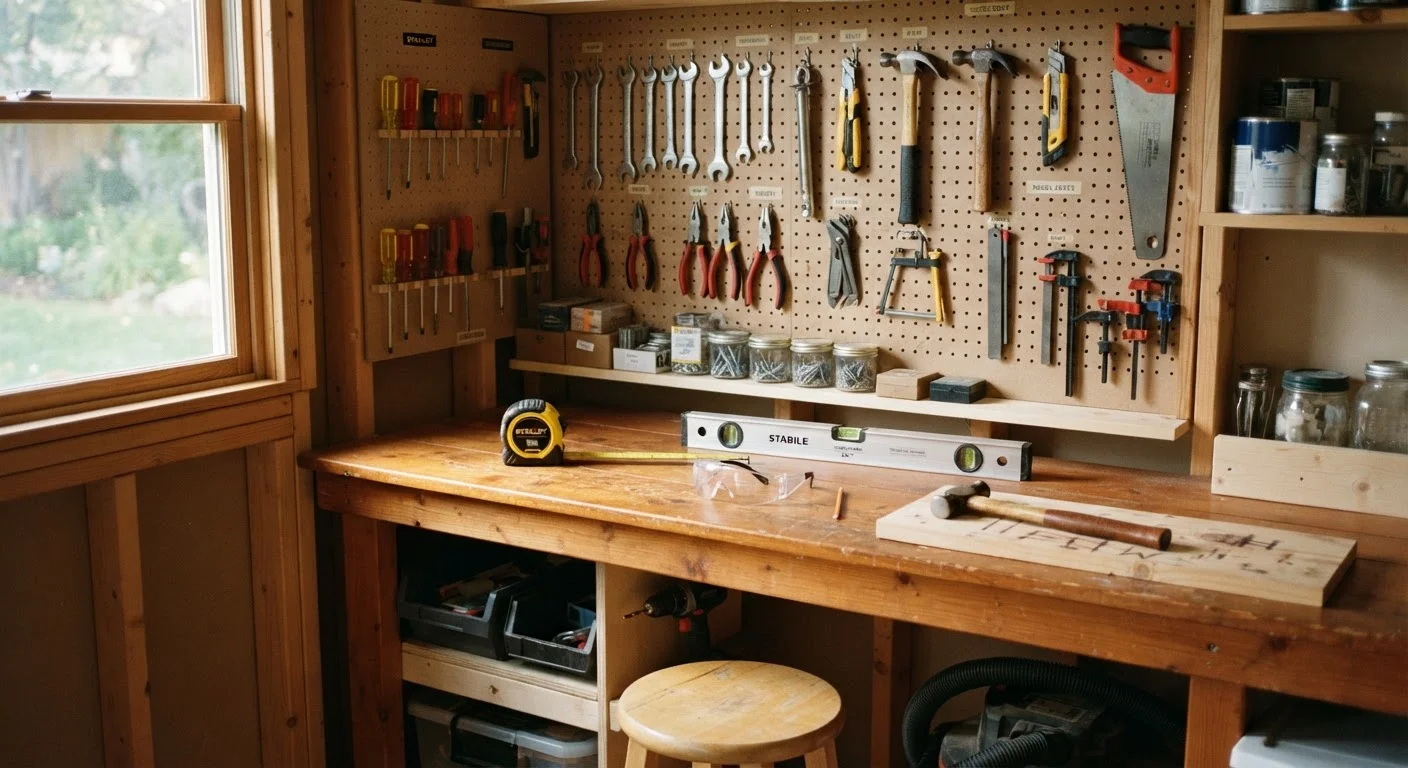
You don't need a full workshop to handle most beginner repairs. Focus on versatile hand tools first, then add power tools as specific projects demand them.
Hand Tool Essentials
- Tape measure (25 ft) - used on virtually every project
- Hammer - claw style handles driving and pulling nails
- Flathead and Phillips screwdrivers - multiple sizes
- Adjustable wrench - grips a wide range of fastener sizes
- Level (24 in) - ensures shelves, frames, and fixtures hang straight
- Utility knife - cuts drywall, caulk, packaging, and more
- Stud finder - locates framing behind walls before drilling
Your First Power Tool
A cordless drill/driver with a basic bit set is the single highest-value power tool for beginners. It handles screws, pilot holes, and light drilling across dozens of tasks. Buy a reputable mid-range model rather than the cheapest available - quality here directly affects safety and performance.
As your projects grow in scope, complementary resources like our Garden & Yard hub can point you toward the outdoor tools worth adding next.
Reading a Project Scope: Know What You're Getting Into
A project scope is simply the full list of tasks, materials, and steps required to complete a job from start to finish. Experienced DIYers always define scope before buying a single item.
How to Build a Scope Yourself
- Identify the problem precisely - "leaking faucet" is more useful than "plumbing issue."
- Research the repair process - understand every step before starting, not during.
- List every material and tool needed - missing a critical item mid-project causes costly delays.
- Estimate time honestly - first-time tasks routinely take two to three times as long as expected.
- Check for permits or code requirements - your local building department's website is the authoritative source.
If you encounter contractor language you don't recognize during research, the renovation glossary decodes common trade terms in plain English. For larger projects like bathroom work, review what's involved end-to-end with our guide to bathroom remodel scope and sequence.
Build a Project Binder Before You Start
Keep a simple folder - physical or digital - for each project containing your materials list, receipts, permit documentation, and photos of work in progress. If you ever sell your home or need to revisit the work, this record is invaluable. It also helps contractors understand what was done if you hand the job off mid-stream.
Safety Basics That Belong on Every Job
No repair is worth an injury. Even small jobs carry risks that are easy to underestimate.
Personal Protective Equipment (PPE)
- Safety glasses - mandatory when cutting, drilling, or working overhead
- Work gloves - protect against cuts, splinters, and abrasion
- Dust mask or N95 respirator - essential when sanding, cutting drywall, or working in dusty spaces
- Hearing protection - use when operating loud power tools for more than a few minutes
Workspace Safety Habits
- Always cut away from your body, never toward it.
- Unplug power tools before changing blades or bits.
- Keep your workspace clear of trip hazards and clutter.
- Never work on live electrical circuits - shut off the breaker and verify with a non-contact voltage tester before touching any wiring.
- Store chemicals, solvents, and sharp tools out of reach of children.
If your project involves older homes, be aware that materials like lead paint and asbestos may be present. Disturbing these without proper precautions is a serious health risk. Consult a licensed professional or local health authority before proceeding with any renovation in a pre-1980s home.
When to DIY and When to Call a Licensed Professional
One of the most valuable skills a homeowner can develop is knowing their limit. Some work is legally restricted, structurally complex, or simply dangerous without professional training.
Generally Safe for Informed DIYers
- Painting interior walls and trim
- Replacing outlet covers, switch plates, or light fixtures (with power off and verified dead)
- Patching small drywall holes
- Caulking around tubs, sinks, and windows
- Installing shelf hardware and basic furniture assembly
Work That Typically Requires a Licensed Professional
- Electrical panel work - dangerous and almost always permit-required
- Gas line installation or repair - licensed plumber or gas fitter required in most jurisdictions
- Structural modifications - removing or altering load-bearing walls requires engineering assessment
- Roofing - height risk and code compliance make this high-stakes territory
- Plumbing tied to mains - mistakes cause water damage and mold
For a deeper look at where the DIY line sits for electrical tasks specifically, see our article on what homeowners can legally do themselves for electrical work. And if a project has grown beyond your scope, our contractor vetting checklist helps you hire with confidence.