

Key Takeaways
Why Paint Myths Are So Persistent
Painting looks deceptively simple - brush, roller, can. That accessibility breeds confidence, and confidence breeds shortcuts. Over time, those shortcuts harden into widely repeated advice passed between neighbors, shown in quick-cut online videos, and printed on packaging that prioritizes marketing over nuance.
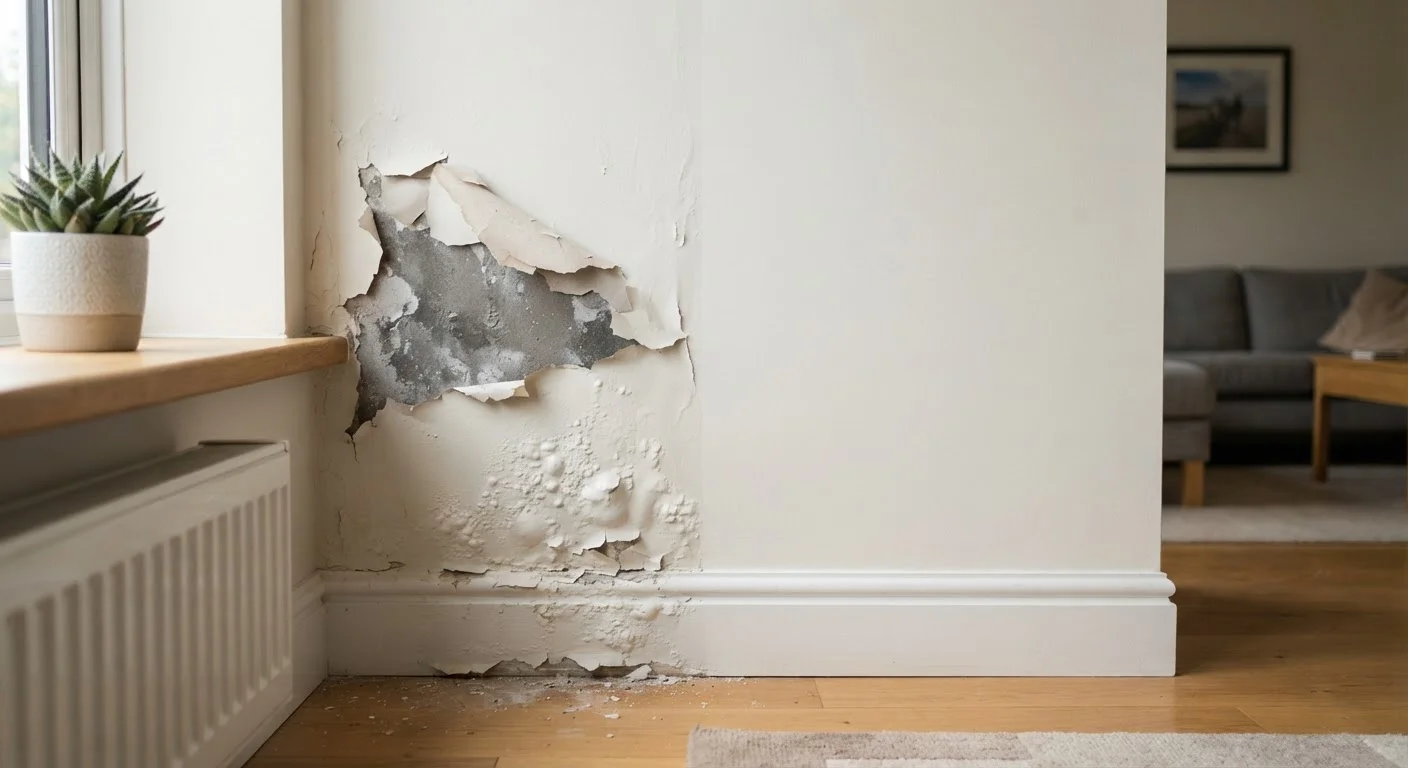
The result? Peeling walls, bubbling ceilings, and uneven finishes that leave homeowners frustrated and back at the hardware store. Most painting failures aren't random - they trace directly back to a handful of persistent myths about how paint behaves. Understanding the science behind adhesion, curing, and coverage helps you make smarter decisions before you open a single can. For more ways targeted upgrades can transform a room, see our guide to small-scale room upgrades.
Myth
Primer is optional if you're using a paint-and-primer-in-one product.
Fact
Paint-and-primer-in-one products improve coverage on previously painted surfaces, but they are not a substitute for a dedicated primer coat on raw drywall, bare wood, or stain-prone surfaces.
Dedicated primers are formulated to penetrate porous substrates, seal stains, and create a consistent surface tension that topcoat paint can grip. On new drywall, for example, the paper facing absorbs paint unevenly - some areas drink it in while others repel it - resulting in flashing (visible dull patches) even after multiple topcoats. A bonding primer applied first standardizes the surface so the topcoat distributes evenly. On wood with tannins or water stains, only a shellac- or oil-based primer reliably blocks bleed-through. Paint-and-primer hybrids are genuinely useful for recoating clean, previously painted walls in good condition, but calling primer universally optional sets up a frustrating outcome on any raw or problem surface.
Myth
Two coats is always enough, regardless of the color or surface.
Fact
The number of coats needed depends on the color change, the paint's pigment load, and the condition of the surface - not a fixed rule.
Painting a deep red or yellow over a white wall often requires three or even four coats because those pigments have inherently lower opacity. Conversely, painting a near-identical color over a clean, well-primed surface may look excellent after one coat of a high-solids formula. The "two-coat rule" became popular because it works reasonably well in average conditions, but applying it rigidly causes problems at both extremes. Too few coats leaves the substrate or old color showing through; adding unnecessary coats on a surface that was ready after one creates a thick paint film more prone to cracking as the wall expands and contracts with temperature changes.
Myth
You can paint over glossy surfaces without sanding - just use a de-glosser.
Fact
Chemical de-glossers reduce sheen but do not create the mechanical tooth that sanding provides; on high-gloss surfaces, sanding is still the more reliable adhesion method.
Paint adheres through a combination of chemical bonding and mechanical grip - the paint literally wraps around tiny surface irregularities. High-gloss finishes are designed to be smooth and non-porous, which means new paint has very little to hold onto. Liquid de-glossers (sometimes called liquid sandpaper) use solvents to etch or dull the surface slightly, which can be adequate for low-traffic areas or when followed by a bonding primer. For trim, cabinets, or doors that take daily contact, light sanding with 120- to 150-grit sandpaper creates a more reliable surface profile. Skipping this step is a leading cause of paint chipping off cabinet edges and door frames within months of application.
Myth
Stirring paint at the store makes mixing unnecessary at home.
Fact
Paint components begin to separate again during transport and storage; re-stirring before each use session is necessary for consistent color and sheen.
Paint is a suspension of pigments, binders, and solvents. Heavier pigment particles gradually settle toward the bottom of the can even after thorough machine mixing at the store. By the time the can reaches your home, sits in the car, and gets carried inside, some separation has already occurred. Painting from an unstirred or insufficiently stirred can results in the first portion applied being pigment-light (paler, lower sheen) and later portions being pigment-heavy (darker, thicker). Always stir - not just shake - with a wooden stir stick for at least two minutes, periodically scraping the bottom of the can. For paint stored between sessions, re-stir each time you open the can.
Myth
Latex paint can go directly over oil-based paint without any special preparation.
Fact
Applying latex paint directly over oil-based paint without proper preparation causes adhesion failure because the two chemistries repel each other.
Oil-based (alkyd) paint cures to a hard, slick surface with very low porosity. Water-based latex paint, applied on top without preparation, sits on rather than bonding to that surface and will peel - sometimes within weeks. The correct process involves cleaning the surface, lightly sanding to scuff the existing finish, and applying an oil-based or bonding primer rated for use over alkyd before topcoating with latex. If you're unsure whether your existing surface is oil- or latex-based, a simple test helps: rub a cotton ball dampened with denatured alcohol over a hidden area. If paint comes off on the cotton ball, it's latex; if nothing transfers, it's likely oil-based.
Getting the Conditions and Process Right
Even when you've chosen the right products, application conditions determine whether the paint bonds properly and cures to a durable finish. Two variables that homeowners routinely underestimate are temperature and humidity.
Most latex paints require application temperatures between roughly 50°F and 85°F. Below that range, the paint film forms too slowly and can crack. Above it, the paint surface dries before the deeper layers do, trapping moisture and causing bubbling. High indoor humidity - common in bathrooms, laundry rooms, and basements - prevents water-based paints from releasing moisture evenly during curing, which leads to adhesion failures over time.
Don't Paint in Extreme Heat or High Humidity
Applying paint when indoor temperatures exceed 85°F or relative humidity is above 85% dramatically increases the risk of bubbling, poor adhesion, and an uneven sheen. These conditions interfere with the curing process at a chemical level, not just cosmetically. Check both temperature and humidity with an inexpensive gauge before starting any painting project, and reschedule if conditions aren't in the acceptable range listed on your paint's label.
Ventilation matters as well. Running fans during and after painting helps moisture escape without creating drafts that deposit dust onto wet surfaces. Patience between coats - not just waiting until the paint feels dry to the touch, but allowing the full recoat window listed on the label - is what separates a surface that holds for years from one that peels within months.
The same careful thinking applies across home improvement disciplines. Just as mixing metal finishes requires understanding visual rules rather than blindly following them, painting well requires understanding why each step exists - not just following a checklist by rote.