

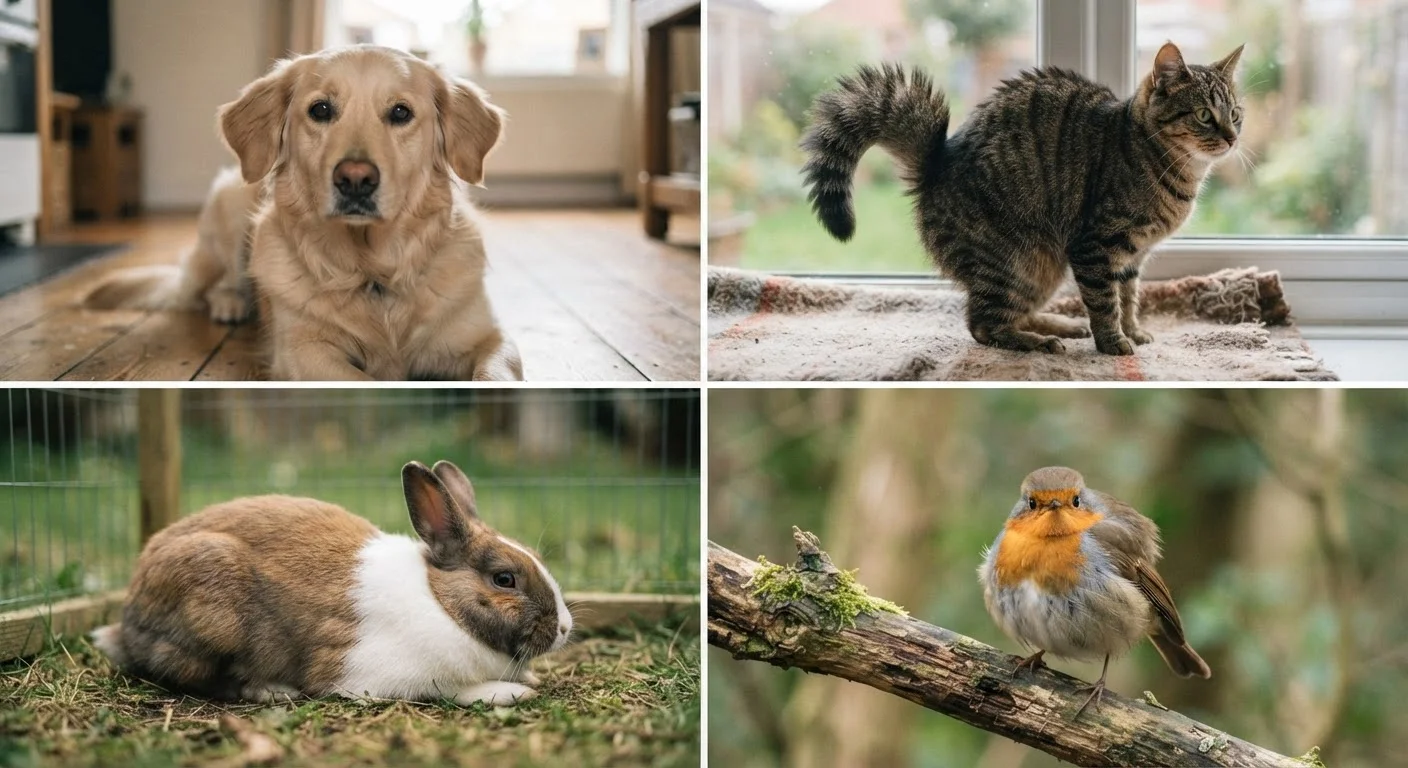
| Species covered | Dogs, cats, rabbits, and pet birds |
| Most commonly missed dog signal | Whale eye (visible white of the eye) (Animal behavior literature) |
| Rabbit discomfort posture | Hunched body, ears flat against back |
| Bird stress indicator | Feather fluffing combined with eye pinning (Avian veterinary guidance) |
| Cat pain signal often missed | Squinted or half-closed eyes at rest (Feline Grimace Scale research) |
| When to contact a vet | Any sudden or sustained change in behavior or posture |
Why Discomfort Signals Vary by Species
Animals don't experience or express discomfort the way humans do. Each species has evolved a communication system shaped by its ecological role - whether as predator, prey, or social group member. A rabbit that freezes when handled isn't being calm; it may be terrified. A cat that stops grooming isn't just lazy; it could be in pain. Understanding these differences is one of the most practical skills a pet owner can develop.
Reading your pet's full body language - posture, ears, tail, and facial expression together - gives you a much more accurate picture than any single signal alone. Context always matters.
| Species covered | Dogs, cats, rabbits, and pet birds |
| Most commonly missed dog signal | Whale eye (visible white of the eye) (Animal behavior literature) |
| Rabbit discomfort posture | Hunched body, ears flat against back |
| Bird stress indicator | Feather fluffing combined with eye pinning (Avian veterinary guidance) |
| Cat pain signal often missed | Squinted or half-closed eyes at rest (Feline Grimace Scale research) |
| When to contact a vet | Any sudden or sustained change in behavior or posture |
Dogs: Subtle Signals That Owners Regularly Miss
Dogs communicate stress through a layered vocabulary of body language. Many of the most meaningful signals are easy to overlook because they're brief and quiet.
- Whale eye: When a dog turns its head but keeps its gaze fixed on something, revealing the white of the eye - this often signals discomfort or conflict about a situation.
- Yawning or lip-licking out of context: When neither tired nor hungry, these are appeasement signals indicating stress. See calming signal in the glossary below.
- Piloerection: Raised hackles along the spine indicate heightened arousal - which can mean fear just as often as aggression.
- Tucked tail and lowered body posture: Classic signals of anxiety or submission. A tail held low but wagging slowly is not necessarily a happy greeting.
- Displacement behaviors: Sudden sniffing, scratching, or shaking off (as if wet) when none of those make contextual sense signal emotional overload.
Pets often hide physical pain, and dogs are no exception - watch for guarding a limb, reluctance to be touched, or changes in gait.
Cats: Reading Ears, Eyes, and Posture Together
Cats are physiologically wired to conceal vulnerability. In the wild, showing pain is a liability, so domestic cats carry that same instinct. The signals they do give are often facial and postural rather than vocal.
- Ear position: Ears rotated sideways or flattened against the skull indicate fear or discomfort. Forward-tilted ears signal alertness or mild stress.
- Squinting at rest: Research behind the Feline Grimace Scale shows that partially closed eyes - when a cat isn't sleeping or relaxed - can be a reliable pain indicator.
- Tail position: A tail tucked tightly under the body or puffed up signals fear. A low, slowly lashing tail often signals irritation before aggression.
- Hiding and reduced interaction: A cat that withdraws from family contact or stops seeking play may be communicating physical or emotional distress.
For a full translation of feline signals, our cat behavior reference guide covers everyday communication in plain language. Also, changes in your cat's coat - like over-grooming or bald patches - can be physical signs of chronic stress.
These Are Patterns, Not Diagnoses
Recognizing body language signals helps you know when to seek professional guidance - it does not replace a veterinary assessment. If you notice sustained or sudden changes in your pet's behavior or posture, consult a licensed veterinarian. This article is general educational information, not medical advice.
Rabbits and Birds: The Prey Animal Challenge
Prey animals are especially skilled at masking discomfort, which means owners need to learn their baseline behavior before they can recognize deviation from it.
Rabbits
- Hunched posture with closed eyes: A rabbit sitting tensely rather than sprawling comfortably may be in pain. Compare this to a relaxed rabbit, which often lies fully extended.
- Tooth grinding (bruxism): Loud grinding - distinct from the quiet tooth-purring of a content rabbit - signals pain or GI distress.
- Tonic immobility: A rabbit that goes completely rigid when handled is not relaxed - this is an extreme fear response. Frequent handling that triggers this state is a welfare concern.
- Reduced droppings or appetite: Often the first owner-observable sign of GI stasis, a serious and common rabbit health emergency.
Birds
- Feather fluffing: A bird that stays puffed up for extended periods (not just brief preening) is likely cold, ill, or stressed.
- Eye pinning: Rapid dilation and constriction of the pupils in parrots can signal excitement, fear, or aggression depending on the context.
- Beak grinding at night: In parrots, soft beak grinding at roosting time signals contentment. Daytime grinding combined with lethargy may indicate illness.
- Changes in vocalization: Sudden silence in a normally vocal bird, or new repetitive calls, warrants attention.
If your bird or rabbit shows any sustained behavioral shift, contact an avian or exotic animal veterinarian - these species often deteriorate quickly once visibly ill. And if you suspect anxiety is at the root of behavioral changes, learn when pet anxiety crosses into a medical concern.
Displacement behavior
An out-of-context action an animal performs when stressed or conflicted - such as a dog suddenly sniffing the ground mid-interaction. It signals that the animal is trying to manage emotional tension.
Piloerection
The involuntary raising of fur or feathers, often called 'hackles' in dogs. It can signal arousal, fear, or aggression and is controlled by the autonomic nervous system.
Appeasement signal
A behavior used to reduce social tension or signal non-threat to another individual. In dogs, yawning, lip-licking, and turning away are classic appeasement signals.
Tonic immobility
A temporary, involuntary state of paralysis triggered by extreme fear in prey animals such as rabbits. It is sometimes mistaken for calm or contentment, but is actually a stress response.
Stress molt
Accelerated or out-of-season feather loss in birds caused by psychological or physical stress. It can look similar to normal molting but occurs at unexpected times.
Calming signal
Term used in dog behavior science to describe subtle gestures - such as blinking slowly, yawning, or curving the body - that dogs use to de-escalate tension with people or other animals.