

Key Takeaways
Cat Self-Grooming
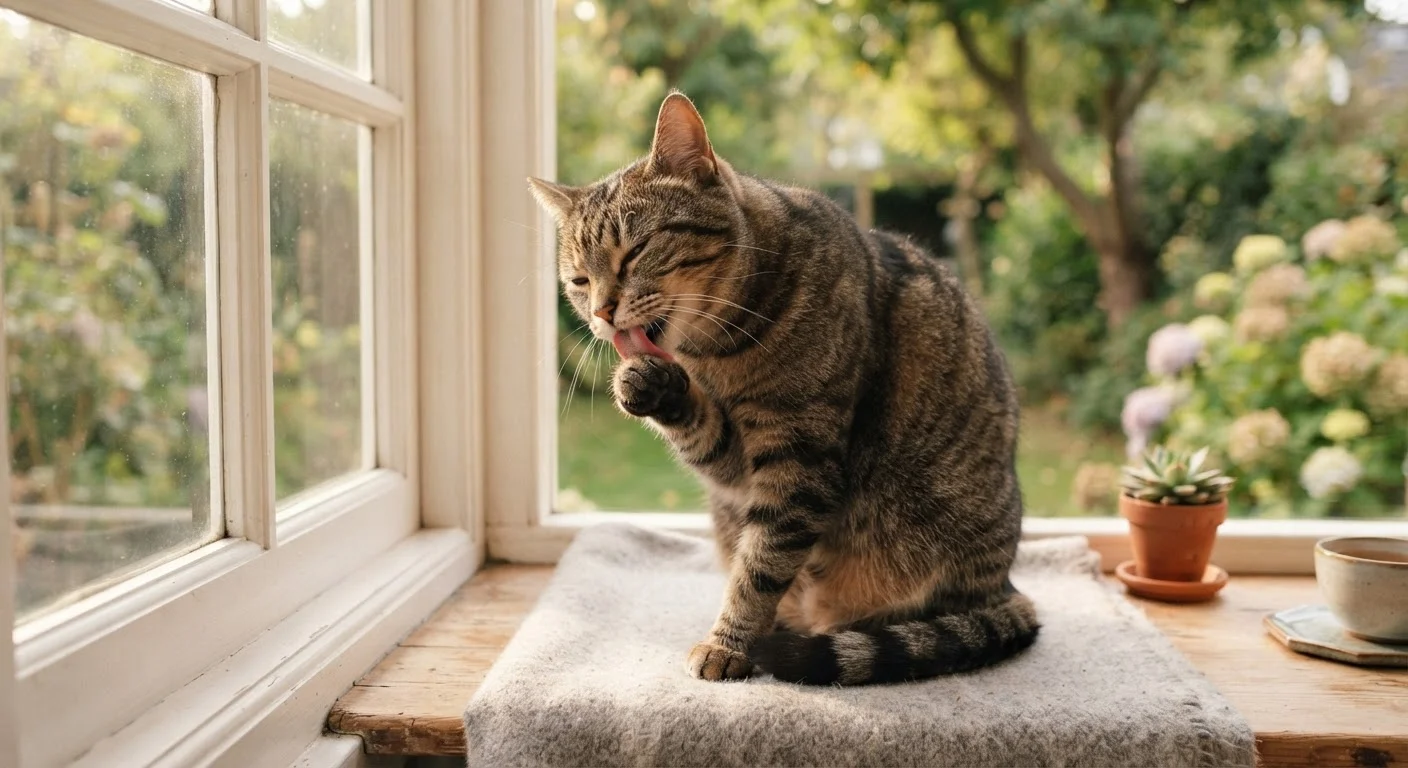
Self-grooming is the instinctive behavior cats use to clean their fur, regulate body temperature, distribute natural oils, and reduce stress. A healthy adult cat may spend anywhere from 30% to 50% of their waking hours grooming. It is a normal, essential behavior - not a quirk or indulgence.
Cats use their barbed tongues (covered in hollow, comb-like papillae) to detangle fur, remove debris, and spread sebum across the coat. This microstructure also helps with heat regulation through saliva evaporation.
Why Cats Groom: The Biology Behind the Behavior
Grooming isn't vanity - it's survival. Cats evolved as both predator and prey, and a well-maintained coat serves multiple functions: it removes scent that predators or prey could detect, helps regulate body temperature, and keeps the skin free from parasites and debris.
The tongue does most of the work. A cat's papillae - the tiny backward-facing spines you feel when a cat licks your hand - act like a built-in comb and applicator. They detangle fur and distribute sebum (the skin's natural oil) evenly across the coat, keeping it water-resistant and supple.
Grooming also has a calming, self-soothing function. After a startling event or a tense interaction, cats often groom themselves - a behavior sometimes called displacement grooming. Think of it as a reset button for the nervous system. This is normal in small doses; it only becomes a concern when it escalates into compulsion.
Watch for the 'reset groom' pattern
If your cat grooms briefly after a surprising noise, an encounter with another pet, or being handled, that's normal displacement grooming - not a problem. The concern arises when this behavior becomes prolonged, frequent, and focused on one spot. Track how often and how long these sessions last to give your vet useful context.
When Grooming Becomes Over-Grooming
Over-grooming - grooming so frequently or intensely that it damages the coat or skin - is one of the more common behavioral complaints in cats. Veterinarians sometimes refer to the extreme version as psychogenic alopecia (stress-induced hair loss), though physical causes must always be ruled out first.
Signs to watch for include:
- Thinning or bald patches, particularly on the belly, inner legs, or flanks
- Visible skin irritation, redness, or sores
- Frequent, prolonged licking of one specific area
- More frequent hairballs than usual
The triggers are often environmental: a new pet in the home, a change in household routine, construction noise, or inter-cat conflict. Behavioral stress in cats can manifest in multiple ways at once, so if you notice over-grooming alongside litter box changes, take both seriously.
Before attributing over-grooming to anxiety, a vet should check for fleas, mites, allergies, fungal infections, or pain - all of which can cause a cat to focus obsessively on a specific area.
Under-Grooming and Matting: The Other Side of the Problem
A cat that suddenly stops grooming - or dramatically reduces grooming - is sending a distress signal. Unlike over-grooming, under-grooming often points to a physical issue rather than a behavioral one.
Common causes include:
- Obesity: Overweight cats may be physically unable to reach their hindquarters, tail, or lower back.
- Arthritis or joint pain: Twisting to groom hurts, so they avoid it. Senior cats are especially vulnerable.
- Dental pain: A sore mouth makes licking uncomfortable. Dental health is frequently overlooked but directly affects grooming ability.
- Systemic illness: Conditions affecting energy or organ function can cause general neglect of coat care.
Matted fur is the visible result of under-grooming. Mats pull on the skin, trap moisture, and can hide wounds or parasites beneath them. If you find mats, do not attempt to cut them out with scissors - you risk cutting the skin. A professional groomer or veterinarian should handle significant matting safely.
Changes in your cat's coat are often the first visible indicator that something internal is wrong.
How Owners Can Support Healthy Grooming
Even though cats are largely self-sufficient groomers, owners play a meaningful supporting role - particularly for long-haired breeds like Persians or Maine Coons, or for senior cats whose self-grooming capacity has declined.
Practical steps include:
- Brush regularly. Brushing removes loose fur before it's ingested, reduces hairball frequency, and lets you check the skin for lumps, sores, or parasites. Our pet grooming calendar outlines realistic brushing schedules by coat type.
- Monitor without obsessing. Note changes in grooming habits - more, less, or focused on one spot - and raise them at your cat's next vet visit.
- Reduce environmental stressors. If you suspect anxiety-driven over-grooming, a consistent daily routine can help cats feel more secure.
- Schedule regular wellness exams. Many grooming-related problems - from parasites to arthritis - are caught early by a vet before they escalate.
Grooming is a window into your cat's wellbeing. Learning what's normal for your individual cat makes it easier to spot when something is off - and to act before a small issue becomes a larger one.
30-50%
Of waking hours cats spend grooming
Widely cited in veterinary behavioral literature as the normal grooming range for adult domestic cats.
~1 in 10
Cats affected by psychogenic alopecia
Stress-related over-grooming is among the more frequently seen behavioral dermatology cases in feline veterinary practice.
Up to 66%
Of ingested hair removed by papillae
Research on feline tongue structure suggests the hollow papillae efficiently wick saliva deep into the coat and remove substantial loose fur during grooming.
This article is for general informational purposes only and does not constitute veterinary medical advice. Always consult a licensed veterinarian for concerns about your cat's health or behavior.