

Key Takeaways
Why Cats Avoid the Litter Box
Litter box avoidance is one of the most common reasons cats are surrendered to shelters - yet in the vast majority of cases, it is both understandable and resolvable once the root cause is identified. The behavior is never about spite or revenge; cats lack the cognitive framework to behave vindictively. What looks like defiance is almost always a cat communicating discomfort, stress, or confusion.
Veterinary and animal behavior researchers generally categorize the causes into two broad groups: medical and behavioral/environmental. Medical causes - including urinary tract infections, kidney disease, arthritis, and diabetes - must be ruled out before behavioral strategies are applied. Once physical causes are cleared, the investigation shifts to what the cat is experiencing around the box itself.
Common behavioral and environmental triggers include:
- A box that is not cleaned frequently enough
- A litter type or fragrance the cat finds aversive
- A box that is too small, covered, or in a threatening location
- Competition or stress from other cats in the household
- A past negative experience associated with the box (pain during illness, being startled)
- Anxiety or significant routine disruption (a new pet, household move, schedule change)
Understanding which category applies to your cat is the foundation of any effective solution. Our guide to cat behavioral signals can help you read broader stress cues that may be contributing to the issue.
Rule Out Medical Causes First
Sudden litter box avoidance - especially with straining, blood in urine, or frequent trips to the box with little output - can indicate a urinary tract infection, blockage, or kidney issue. A urinary blockage is a medical emergency in cats. Do not attempt behavioral interventions until a veterinarian has cleared your cat of physical causes.
What You'll Need Before You Start
Resolving litter box avoidance is a systematic process, not a single fix. Having the right materials and a clear starting framework will make the process more efficient. Review the prerequisites and tools below before working through the steps.
What you will need
Enzymatic cleaner
Breaks down urine proteins at the molecular level so cats are not drawn back to the same spot by residual scent.
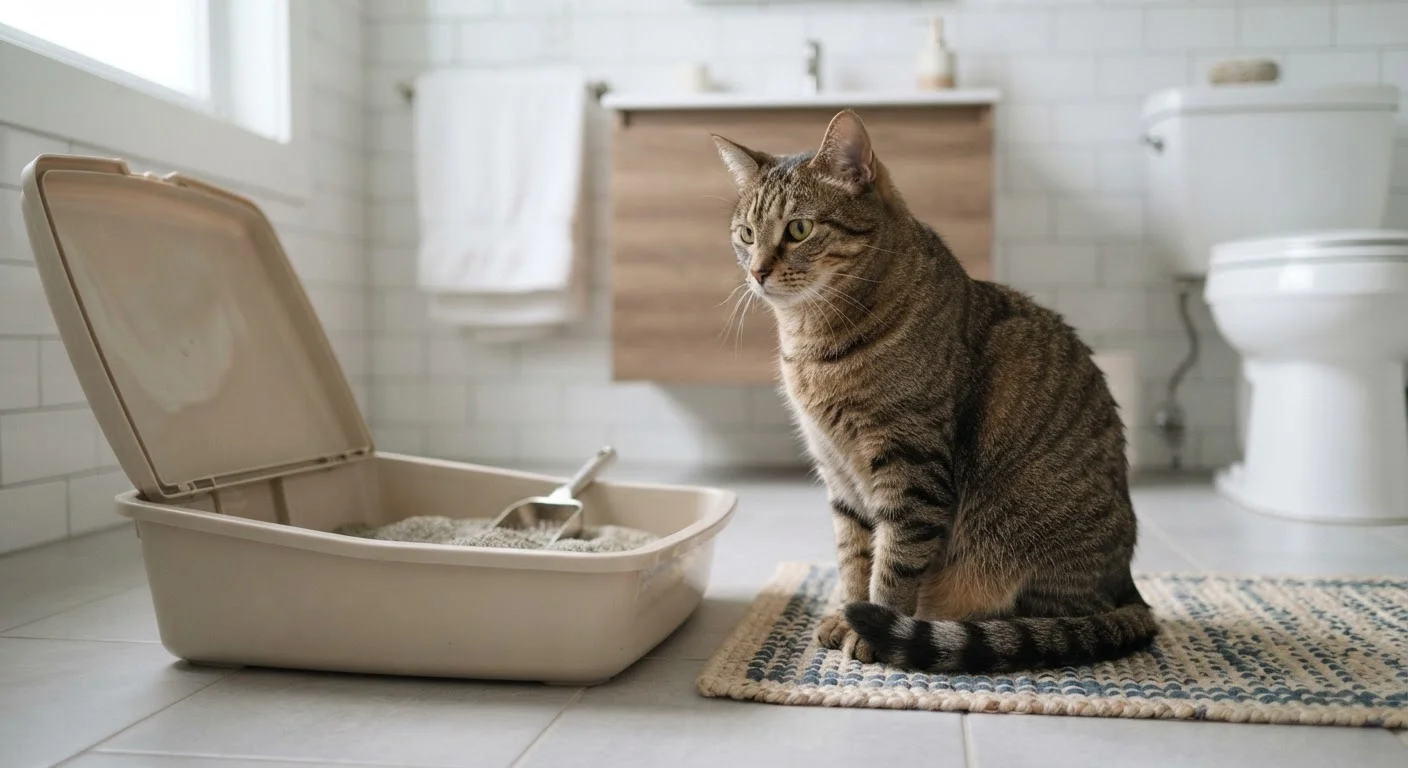
Large, uncovered litter box
Gives the cat adequate space and ventilation, reducing the likelihood of avoidance due to feeling trapped or confined.
Unscented, clumping litter
Closely mimics the fine-particle substrate cats prefer instinctively, and avoids fragrance irritants that deter some cats.
Litter mat
Catches tracked litter around the box and keeps the surrounding area tidy, making the location more inviting.
Second or additional litter box
Required in multi-cat households or large homes; ensures every cat has reliable, uncontested access.
Pheromone diffuser (feline synthetic)
May help reduce stress-related elimination issues by mimicking calming facial pheromones cats deposit naturally.
Track the Pattern Before You Change Everything
Before adjusting multiple variables at once, spend two to three days noting where, when, and how often your cat eliminates outside the box. Patterns - such as always choosing a specific corner or only going on soft surfaces - provide strong clues about the underlying trigger and help you make targeted, efficient changes.
It's also worth noting that stress - particularly around hydration, diet, or environmental changes - can compound elimination problems. Cats are sensitive animals, and issues rarely occur in complete isolation. For context on how physical comfort and hydration intersect with behavior, see our article on hydration in cats.
Step-by-Step: Identifying and Fixing the Problem
Work through the following steps in order. Skipping the veterinary step is one of the most common mistakes owners make - medical causes can mimic purely behavioral avoidance almost exactly.
Schedule a Veterinary Exam
Before anything else, contact your veterinarian. Conditions such as urinary tract infections, bladder inflammation (feline idiopathic cystitis), kidney disease, diabetes, and arthritis can all cause a cat to avoid the box - either because elimination is painful or because they cannot reach the box in time. A physical exam and urinalysis are typically the starting point. Behavioral solutions will not address a medical root cause.
Clean Soiled Areas Completely
Anywhere your cat has already eliminated outside the box will smell like a bathroom to them - even after standard cleaning. Use an enzymatic cleaner specifically formulated for pet urine; saturate the area and allow it to dry fully before the cat has access to the spot again. Avoid ammonia-based cleaners, which can mimic urine odor and make the spot more attractive, not less.
Audit the Litter Box Setup
Assess every aspect of the current box configuration against what cats generally prefer:
- Size: The box should be at least 1.5 times the length of your cat from nose to tail base. Most standard retail boxes are too small for adult cats.
- Cover: Covered boxes trap odor and can feel claustrophobic. Try removing the lid if one is present.
- Litter depth: Most cats prefer 2-3 inches of litter. Too shallow or too deep can discourage digging.
- Litter type: Unscented, fine-grained clumping litter is the most commonly accepted substrate. Scented litters can be aversive to cats even when owners find them pleasant.
- Liner: Plastic liners catch on claws and are frequently rejected by cats. Consider removing them.
Reassess Box Location
Location matters considerably. Cats prefer to eliminate somewhere quiet, with at least one unobstructed escape route, away from their food and water. Boxes placed next to noisy appliances (washing machines, furnaces) or in high-traffic hallways are commonly rejected. In multi-story homes, provide at least one box per floor. If your cat is older or has mobility challenges, ensure the box has low entry sides that do not require jumping or climbing to access.
Apply the One-Plus-One Rule in Multi-Cat Households
The broadly accepted guideline for multi-cat homes is one litter box per cat, plus one extra. So two cats need at minimum three boxes. This reduces inter-cat competition, litter box guarding, and the stress of a subordinate cat being denied access - all of which can manifest as inappropriate elimination. Distribute boxes in separate locations rather than clustering them together.
Stress from other cats is also worth monitoring through behavioral signals. Our guide to common cat signals can help you identify tension between housemates before it escalates.
Introduce Changes Gradually and Reinforce the Target Behavior
Once the box setup has been optimized, give your cat time to adjust. If you are switching litter types, do so by blending the new litter into the old over one to two weeks rather than making an abrupt swap. When you observe your cat using the box correctly, offer calm, quiet praise or a small treat immediately afterward. Do not interrupt the cat mid-use. Patience and consistency are essential - behavioral changes rarely resolve within one or two days.
Never Punish a Cat for Eliminating Outside the Box
Punishment - including scolding, spraying with water, or placing the cat in the box after the fact - does not teach a cat where to go. It creates fear and anxiety that can make the problem significantly worse. Behavioral science consistently shows that positive reinforcement and environmental modification are the effective approaches.
If your cat shows signs of stress-related overgrooming alongside litter box avoidance, these behaviors often share the same anxiety-based root. Our article on when grooming becomes a problem covers how to recognize that pattern. Similarly, some well-intentioned owner habits - like using strongly scented cleaning products near the box - can inadvertently make the problem worse.
This article provides general behavioral and environmental information for educational purposes only. It is not a substitute for professional veterinary advice. If your cat is showing signs of distress, pain, or sudden changes in elimination habits, consult a licensed veterinarian promptly.