

Key Takeaways
Feline Hydration
Feline hydration refers to the balance of water inside a cat's body that keeps organs, tissues, and cells functioning properly. Unlike many animals, cats have evolved with a relatively weak thirst drive, meaning they don't instinctively seek out water as readily as dogs or humans. This makes it easier for cats to become mildly dehydrated without showing obvious distress, and it places more responsibility on owners to monitor water intake actively.
Cats' kidneys are highly efficient at concentrating urine, an adaptation from desert-dwelling ancestors - but this efficiency has limits and does not protect against chronic low-level dehydration.
Why Cats and Water Have a Complicated Relationship
Cats are descended from desert-adapted ancestors who obtained most of their moisture from prey rather than standing water sources. That evolutionary history left domestic cats with a thirst drive that is notably weaker than that of dogs or humans. In practical terms, this means your cat may not seek out water even when their body could use more of it.
This isn't a flaw in the cat - it's an ancient adaptation. But it creates a real challenge in modern households, especially where dry kibble is the primary diet. Kibble typically contains only about 10% moisture, compared to the roughly 70% moisture found in a prey animal's body. A cat eating only dry food must drink considerably more water to compensate, yet their instincts don't push them to do so reliably.
The result is that many cats live in a state of mild, chronic under-hydration without owners - or even the cats themselves - realizing it. Over time, inadequate hydration is associated with increased risk of urinary and kidney problems, though individual outcomes vary widely and are influenced by genetics, diet, and overall health.
How Diet Shapes Hydration
One of the most direct ways owners can influence their cat's hydration is through diet. Wet or canned food, which contains 75-80% moisture, can substantially increase a cat's total daily water intake without requiring the cat to drink more from a bowl. Many veterinarians note that cats transitioned fully or partially to wet food tend to produce more dilute urine, which is generally considered a positive sign for urinary tract health.
That said, wet food is not automatically the right choice for every cat. Dental considerations, a cat's established preferences, and any existing medical conditions are all factors worth discussing with a veterinarian. The takeaway isn't that dry food is harmful, but that owners relying solely on dry food should be especially attentive to their cat's water intake. See our guide on dental disease in cats and dogs for context on how diet intersects with oral health.
A Simple Hydration Boost Worth Trying
Mixing a small amount of water directly into wet food is a simple method some owners use to increase moisture intake further, particularly for cats recovering from illness or living in hot climates. Start with just a teaspoon and adjust based on your cat's acceptance. It's a low-effort change that can add up over time.
Mixing a small amount of water directly into wet food is a simple method some owners use to increase moisture intake further, particularly for cats recovering from illness or living in hot climates.
Recognizing Signs of Dehydration
Because cats mask discomfort well, dehydration often isn't obvious until it becomes more significant. Early warning signs tend to be subtle:
- Reduced litter box output - fewer or smaller urine clumps than usual
- Dry or tacky gums - healthy gums should feel moist and slightly slippery
- Mild lethargy - less activity or interest in play than normal
- Skin turgor changes - when gently pinched, well-hydrated skin springs back quickly; dehydrated skin may be slower to return
The skin turgor test is commonly referenced but can be misleading in older cats or those with low body fat, so it shouldn't be the only indicator you rely on. If your cat shows any of these signs consistently, contact your veterinarian rather than waiting to see if it resolves. Our detailed guide on pet dehydration signs covers this in greater depth.
This article provides general pet care information and is not a substitute for professional veterinary advice. Always consult a licensed veterinarian for guidance about your specific cat's health.
Practical Ways to Encourage Drinking
Improving a cat's water intake often comes down to making drinking more accessible and appealing. Small adjustments in the environment can make a real difference:
- Place multiple water stations around the home, away from food bowls and litter boxes. Cats often prefer water sources that aren't near their food or waste areas.
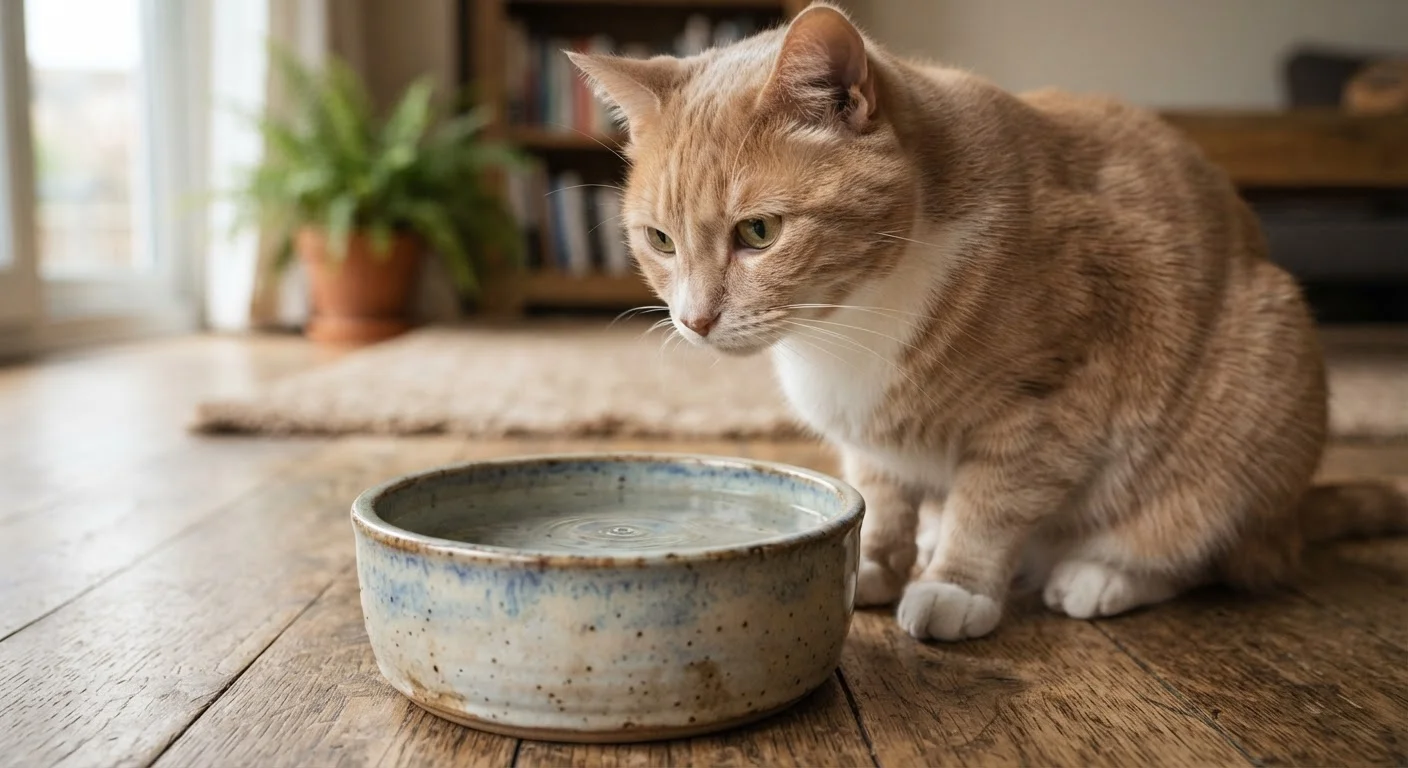
- Try different bowl materials. Some cats dislike plastic and prefer ceramic or stainless steel. Whisker fatigue - discomfort when sensitive whiskers brush bowl edges - can also discourage drinking from narrow or deep bowls.
- Keep water fresh. Cats are sensitive to taste and odor. Changing water daily and cleaning the bowl regularly reduces the buildup of bacteria and residue that may deter drinking.
- Consider a pet water fountain. Moving water appeals to many cats' instincts. Fountains don't suit every cat, but they're worth trying if your cat frequently drinks from running faucets.
Changes in litter box habits - including urine frequency or color - can sometimes be an early indicator of hydration status. Our article on litter box avoidance explores how to interpret these changes in context.